
Listen to this Post
Introduction: A New Era for AirPods in Gaming
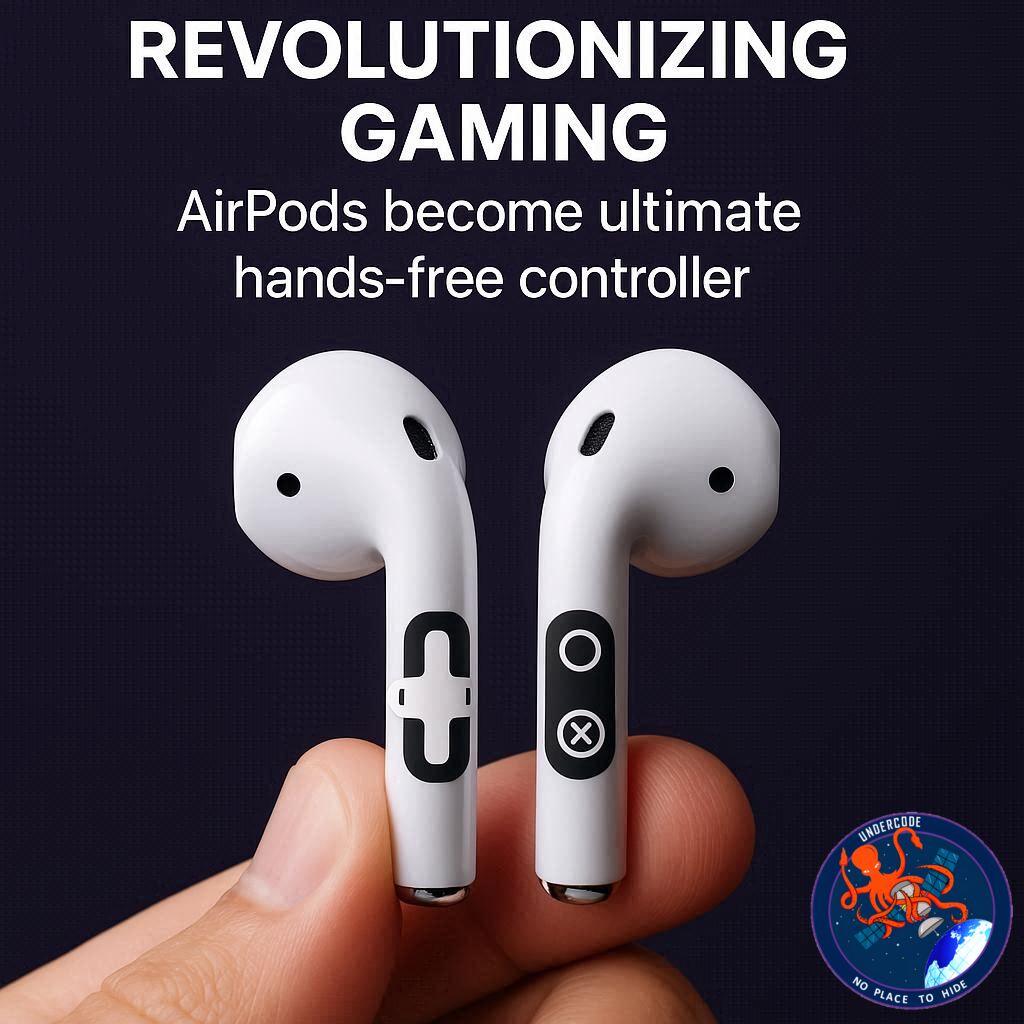
AirPods have long been known for delivering premium sound and seamless iOS integration, but Apple’s devices are stepping into a surprising new territory—gaming. With iOS 26 introducing enhanced motion tracking and head-tracking capabilities, a clever new game called RidePods is turning AirPods into hands-free game controllers. This innovation not only transforms how we play but also demonstrates Apple’s vision for immersive, intuitive experiences beyond just audio.
RidePods: Hands-Free Racing Fun 🏍️
The RidePods game, available on the App Store, uses your AirPods’ head-tracking technology to create a unique racing experience. Unlike traditional mobile racing games where your hands are glued to the screen, RidePods allows players to steer motorcycles simply by moving their heads.
This technology leverages the same sensors that power spatial audio in AirPods, repurposing them for motion detection. A slight tilt of your head to the left or right translates directly into steering your bike in-game. The result is a surprisingly intuitive gameplay mechanic that makes racing immersive and interactive without touching your phone.
Supported Devices for RidePods ✅
Not all AirPods are compatible with RidePods. To enjoy the full experience, you need models with head-tracking capabilities:
AirPods Pro, AirPods Pro 2, AirPods Pro 3
AirPods 3 and AirPods 4
AirPods Max
RidePods is available for free on the App Store, making it accessible for anyone with a compatible AirPods model.
Unique Gaming Twist: Why RidePods Stands Out 🌟
While using head tracking for hours may not replace traditional controls, the novelty of using AirPods as a game controller is both playful and innovative. It opens up possibilities for new game genres and accessibility options, potentially creating a hands-free gaming niche on iOS devices.
What Undercode Say: In-Depth Analysis 📊
RidePods exemplifies Apple’s philosophy of turning small innovations into impactful experiences. From a technical perspective, the game effectively taps into existing AirPods hardware features, repurposing them in ways that were likely unanticipated.
The hands-free mechanic enhances immersion by connecting physical movements to in-game actions, demonstrating a subtle yet clever use of spatial awareness. Additionally, it encourages players to explore motion-based controls, which could influence future game development trends on iOS.
From a design standpoint, the game’s simplicity is its strength. Steering with head movements eliminates complicated controls, making it intuitive even for casual players. However, potential limitations include long-term comfort, as excessive head tilting may become tiring. Developers might need to optimize sensitivity settings or offer alternative control schemes to balance novelty with playability.
The broader implication of RidePods is its potential to inspire accessibility-focused gaming. Players with mobility limitations could benefit from hands-free controls, expanding inclusivity in mobile gaming. Furthermore, integrating head tracking could evolve into other game genres, like first-person shooters or adventure games, further enhancing immersion.
From a market perspective, RidePods may also set the stage for Apple’s ecosystem-driven games. Leveraging proprietary hardware to create exclusive experiences strengthens the appeal of iOS devices while encouraging developers to innovate within the platform.
RidePods also signals a shift toward more physical engagement in mobile gaming. By translating real-world movements into virtual actions, it aligns with growing trends in AR and VR gaming, potentially bridging the gap between casual mobile games and more immersive tech.
Economically, games like RidePods may boost AirPods adoption by showcasing unique use cases beyond audio. It’s an example of hardware influencing software adoption, a strategy Apple has historically excelled at.
Finally, RidePods demonstrates the value of creativity in small-scale gaming innovations. By thinking outside the box, developers can create engaging experiences without relying on high-end graphics or complex mechanics. This approach emphasizes playfulness, user experience, and accessibility over raw technical prowess.
Fact Checker Results ✅❌
✅ RidePods truly uses AirPods’ head-tracking technology for hands-free gameplay.
✅ Compatible with AirPods Pro, AirPods 3/4, and AirPods Max.
❌ RidePods does not require touching AirPods during gameplay, contrary to conventional game controllers.
Prediction: The Future of AirPods in Gaming 🔮
The success of RidePods could ignite a wave of motion-based, hands-free gaming experiences for iOS. We may soon see AirPods integrated into more genres, including racing, adventure, and immersive VR-lite experiences. As developers explore head-tracking mechanics, the line between casual mobile games and interactive motion gaming may blur, creating entirely new gameplay paradigms.
Apple’s hardware ecosystem is poised to expand beyond audio, turning AirPods into versatile tools for creativity, accessibility, and interactive fun. Gamers and tech enthusiasts alike can expect more experimental, hands-free experiences in the near future, pushing the boundaries of what a tiny wireless earbud can truly do.
🕵️📝✔️Let’s dive deep and fact‑check.
References:
Reported By: 9to5mac.com
Extra Source Hub:
https://www.medium.com
Wikipedia
OpenAi & Undercode AI
Image Source:
Unsplash
Undercode AI DI v2
🔐JOIN OUR CYBER WORLD [ CVE News • HackMonitor • UndercodeNews ]
📢 Follow UndercodeNews & Stay Tuned:
𝕏 formerly Twitter 🐦 | @ Threads | 🔗 Linkedin | 🦋BlueSky | 🐘Mastodon


