
Listen to this Post
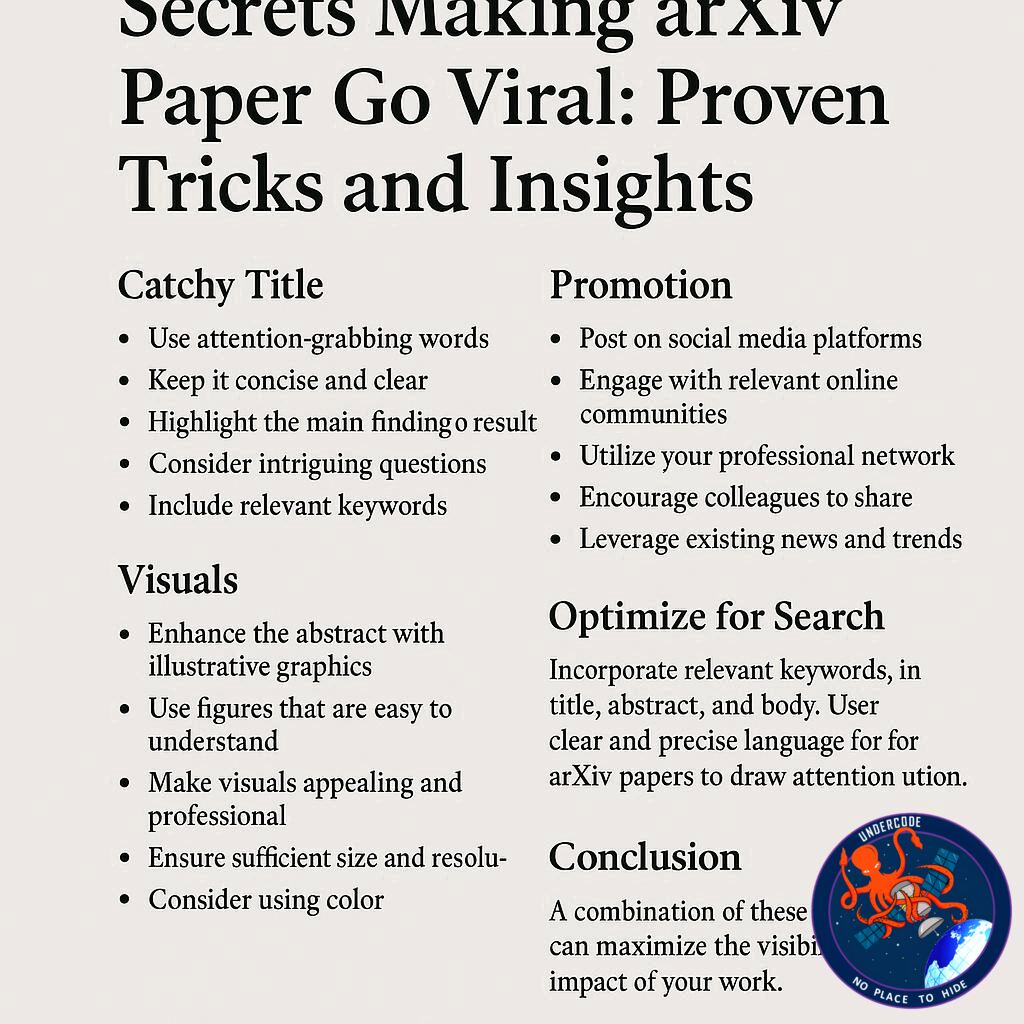
Introduction: Why Visibility Matters on arXiv
In today’s fast-paced research ecosystem, publishing on arXiv has become more than just sharing knowledge—it’s about gaining recognition, sparking discussions, and attracting collaborations. Unlike traditional journals that may take months (or even years) to accept a paper, arXiv offers instant visibility. But here’s the challenge: with thousands of submissions pouring in daily, how can your paper stand out? This article explores practical tips, strategies, and behind-the-scenes tricks that can boost the visibility of your work on arXiv.
arXiv Explained: A Quick Guide
Every paper on arXiv carries a unique identifier, such as 2407.04694. This number shows the year, month, and submission order. For example:
[https://arxiv.org/pdf/2407.04694](https://arxiv.org/pdf/2407.04694) → Direct PDF download.
[https://arxiv.org/abs/2407.04694](https://arxiv.org/abs/2407.04694) → Abstract and details page.
Researchers can browse the latest uploads by visiting category pages like https://arxiv.org/list/cs.CL/recent, where new works are listed with ID, title, and authors. Many academic newsletters, blogs, and social accounts that share trending papers simply scrape this feed daily.
Why arXiv Beats Journals in the LLM Era
In the age of Large Language Models (LLMs), speed is everything. Journals may take months to publish, making groundbreaking results outdated by the time they appear. By contrast, arXiv can showcase your work within a single day. This speed has made arXiv a “battlefield” for cutting-edge research, where some authors publish exclusively on arXiv and worry about formal submissions later.
Proven Tricks to Boost Your Paper’s Visibility
1. Partner with Influential KOLs
Reach out to Key Opinion Leaders (KOLs) on platforms like Twitter, Zhihu, or LinkedIn. Share your arXiv link, GitHub repository, demo, or even a short video. While not every attempt will succeed, one positive response can amplify your reach dramatically. Once a connection is established, future promotions become much easier.
2. Build Your Own Academic Presence
Instead of relying solely on others, start cultivating your own presence. Many KOLs began with limited knowledge but grew audiences by consistently engaging with new ideas. Even a few thousand followers can help you become a mini-KOL, driving traffic directly to your work.
3. Understand arXiv’s Sorting Logic
arXiv isn’t powered by complex algorithms. Instead, its listings are sorted by submission ID, with the newest (highest) ID at the top. Since most KOLs and crawlers scrape from the top, this is where visibility spikes.
4. Time Your Submission Strategically
Submission timing is critical. arXiv updates daily at 8 PM Eastern Time (covering papers submitted before 2 PM). IDs increase sequentially, meaning the closer you submit to the 2 PM cutoff, the higher your ID—and the higher your placement in the list. Submitting at 13:59:59 ET can maximize your chance of being seen first (though avoid pushing the extreme too often).
⚠️ Remember to adjust for Daylight Saving Time:
Summer: ET = Beijing Time – 12 hours
Winter: ET = Beijing Time – 13 hours
What Undercode Say: 🔍 Analytical Insights
The Hidden Economy of Visibility
Research visibility is no longer just about peer recognition—it has become a form of currency. Being noticed early can lead to collaborations, job offers, and even venture capital interest in applied projects.
Why Timing Matters More Than Ever
In a sea of daily uploads, position equals power. A paper that appears at the top of the list is exponentially more likely to be retweeted, blogged about, or cited. This small optimization can make the difference between obscurity and recognition.
Building Long-Term Influence
Authors who only rely on “lucky breaks” through timing risk short-term boosts but miss out on sustainable growth. By building a personal brand—through blogs, Twitter threads, or YouTube explainers—researchers ensure consistent visibility beyond arXiv.
The Psychology of KOLs
KOLs are not gatekeepers of knowledge—they’re amplifiers of attention. Most are hungry for new, exciting content. If you package your paper with clear explanations, demos, or visuals, you make their job easier, increasing the likelihood of amplification.
The Shift Away from Traditional Journals
Academic publishing is in a silent crisis. Researchers in fast-moving fields like AI and LLMs prefer arXiv because the time-to-market is unbeatable. Journals may still hold prestige, but in terms of influence, arXiv dominates.
Ethical Considerations
Strategically timing submissions and marketing your paper isn’t manipulation—it’s adaptation. However, balance is essential. Over-optimizing (like constantly “sniping” the deadline) may irritate moderators or dilute your reputation.
Final Analytical Take
Visibility on arXiv is no longer a matter of chance—it’s a skill. By combining technical awareness (timing, IDs) with social strategies (KOLs, self-promotion), any researcher can maximize the impact of their work.
✅ Fact Checker Results
arXiv IDs are sequential and affect listing order — True.
Submitting just before the cutoff improves visibility — True.
arXiv uses advanced algorithms to rank papers — False ❌.
🔮 Prediction: The Future of Research Visibility
In the next 3–5 years, visibility will shift further toward hybrid strategies. Researchers won’t just upload papers to arXiv—they’ll package them with interactive demos, AI-powered summaries, and video explainers. Platforms may evolve into research ecosystems where timing, branding, and multimedia presentation matter as much as scientific merit. Those who master this blend will dominate the attention economy of science.
🕵️📝✔️Let’s dive deep and fact‑check.
References:
Reported By: huggingface.co
Extra Source Hub:
https://www.medium.com
Wikipedia
OpenAi & Undercode AI
Image Source:
Unsplash
Undercode AI DI v2
🔐JOIN OUR CYBER WORLD [ CVE News • HackMonitor • UndercodeNews ]
📢 Follow UndercodeNews & Stay Tuned:
𝕏 formerly Twitter 🐦 | @ Threads | 🔗 Linkedin | 🦋BlueSky | 🐘Mastodon


