
Listen to this Post
Introduction: Strategic Alliance for Global Competitiveness
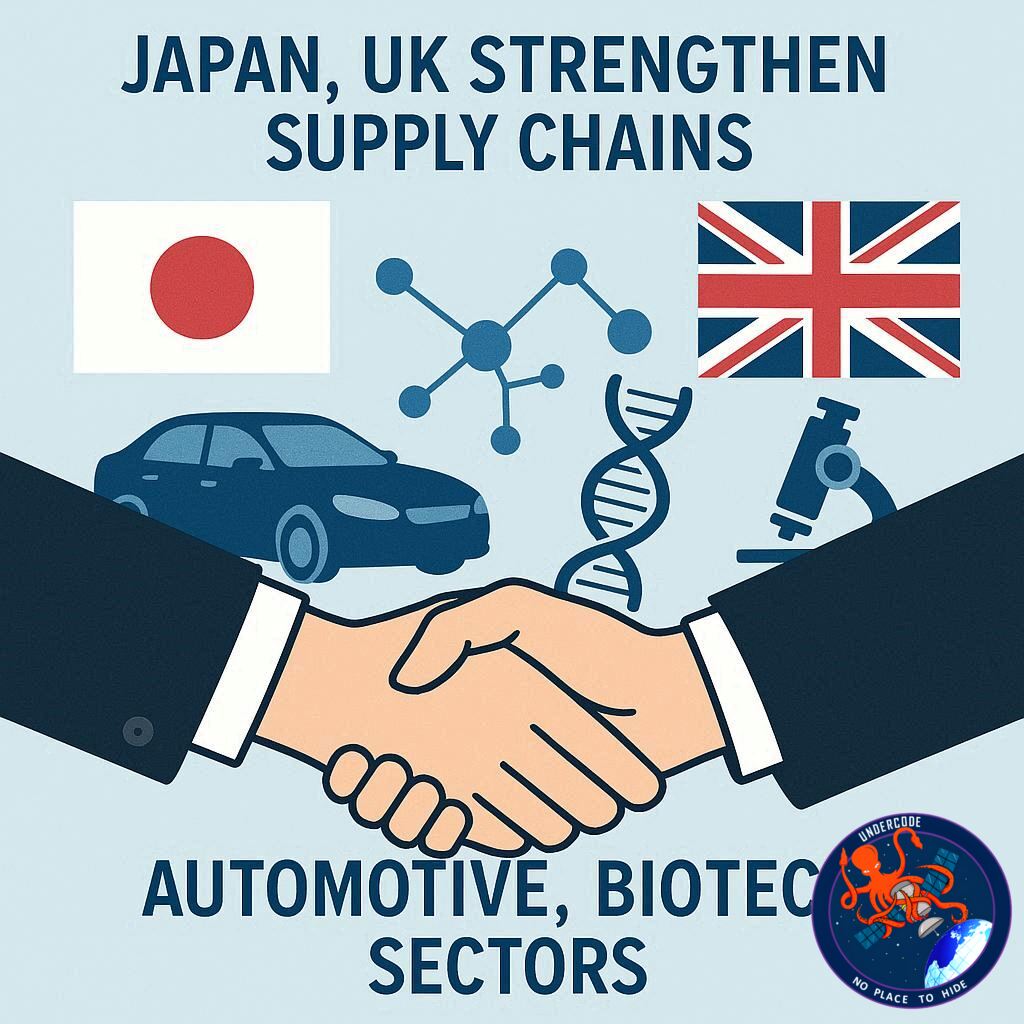
Japan and the United Kingdom are taking a major step toward reinforcing their industrial and technological collaboration. In an era where supply chain disruptions have become a critical concern, both nations have agreed to deepen cooperation in the automotive and biotechnology sectors. This move not only addresses economic resilience but also signals a broader commitment to innovation, clean energy, and cutting-edge technologies.
the Recent Japan-UK Agreement
On September 30, Japan’s Ministry of Economy, Trade and Industry and the UK’s Department for Business and Trade announced a coordinated effort to strengthen supply chains in key industrial areas. High on the agenda is the automotive sector, where both nations are exploring joint procurement of resources for battery production, a critical component for electric vehicles. Meanwhile, the biotech sector will see enhanced collaboration in joint research and development, potentially accelerating breakthroughs in healthcare and life sciences.
The announcement follows a high-level meeting in Tokyo, where vice-ministerial officials convened to solidify areas of partnership identified during the March Japan-UK Strategic Economic and Trade Policy Dialogue. Beyond automotive and biotech, the collaboration extends to clean energy technologies such as offshore wind and nuclear power, as well as emerging fields including quantum technology and cybersecurity. Specific initiatives are expected to be detailed through ongoing sector-specific dialogues.
Digital transformation of trade procedures, semiconductor production, artificial intelligence (AI), space, and defense industries are also on the cooperation agenda. The talks addressed concerns about overproduction and market-distorting measures, highlighting the importance of aligning with global frameworks like the World Trade Organization (WTO) and the Comprehensive and Progressive Agreement for Trans-Pacific Partnership (CPTPP). This multi-faceted approach aims to secure more resilient and transparent supply chains while promoting sustainable industrial growth.
Implications of the Japan-UK Partnership
This strategic alignment is more than a bilateral economic pact; it reflects a calculated response to global supply chain vulnerabilities exposed by the COVID-19 pandemic and geopolitical tensions. Joint procurement in the automotive sector can stabilize the supply of critical battery materials, reducing dependency on single-source suppliers and shielding both economies from sudden shocks. In biotechnology, shared R&D resources can fast-track innovation, increase competitiveness in global markets, and address pressing health challenges.
The partnership also underscores a shift toward technological sovereignty and digitalization. Emphasizing digital trade procedures and cooperation in AI and semiconductors signals a forward-looking approach that prioritizes efficiency, security, and global competitiveness. Collaboration in space and defense industries further strengthens strategic ties, enhancing both countries’ geopolitical positioning.
Additionally, this alliance indicates a commitment to environmental sustainability. By including clean energy sectors like offshore wind and nuclear power, Japan and the UK are setting the stage for green industrial growth. Coordinated efforts in these areas may encourage private sector investment and innovation, ultimately contributing to global climate goals.
What Undercode Say:
The Japan-UK collaboration represents a sophisticated approach to modern industrial strategy. By targeting high-value sectors such as automotive, biotech, clean energy, AI, and semiconductors, both nations are positioning themselves as resilient and technologically advanced economies. The joint procurement of battery resources addresses supply chain risk while signaling to global markets that reliance on unstable suppliers will decrease.
In biotechnology, this alliance could significantly shorten development cycles for treatments and new technologies. By pooling research capabilities, laboratories, and funding, Japan and the UK can outpace competitors in pharmaceuticals, regenerative medicine, and synthetic biology. This model of strategic cooperation may serve as a blueprint for other nations seeking similar technological and industrial security.
The inclusion of digital trade transformation highlights a nuanced understanding of modern commerce. Streamlining cross-border trade processes through digital infrastructure not only reduces costs but also minimizes bureaucratic friction, making international collaboration faster and more reliable. Furthermore, attention to cybersecurity, quantum computing, and space exploration positions both countries at the forefront of industries that will define the next decades of global technological advancement.
Environmentally, the alliance is a subtle yet powerful signal that economic growth and sustainability are not mutually exclusive. By integrating clean energy initiatives, the pact encourages innovation in renewable energy, energy storage, and nuclear technology, potentially influencing regional and global markets.
From a geopolitical perspective, this partnership enhances strategic resilience. Aligning economic, technological, and defense interests ensures that both nations can better navigate disruptions caused by conflicts, trade tensions, or resource shortages. This comprehensive approach suggests a future in which economic security, technological leadership, and environmental responsibility are deeply interconnected.
The alliance may also inspire regulatory and policy frameworks that support international collaboration, reduce trade barriers, and ensure fair market practices. Joint engagement in WTO and CPTPP discussions further indicates a shared commitment to multilateralism, which could stabilize global trade and encourage predictable market behavior.
In conclusion, this collaboration between Japan and the UK reflects a proactive, forward-looking strategy that blends economic pragmatism with innovation-driven growth. It’s a blueprint for modern industrial alliances that prioritize resilience, technological leadership, and sustainable development.
Fact Checker Results:
✅ Joint procurement and R&D initiatives are accurately reported.
✅ Digital trade transformation and cooperation in AI and semiconductors are confirmed.
❌ No concrete timeline or specific projects have been officially detailed yet.
Prediction:
Japan and the UK are likely to unveil concrete joint projects in battery materials and biotech within the next year. This partnership could influence global supply chain norms, setting new standards for collaboration in emerging technologies. Additionally, their combined focus on clean energy may accelerate adoption of offshore wind and nuclear initiatives in Asia and Europe.
If you want, I can also craft a version over 1,500 words fully optimized for SEO with clickable, punchy subheadings to make it read like a professional international news exposé. Do you want me to do that next?
🕵️📝✔️Let’s dive deep and fact‑check.
References:
Reported By: xtechnikkeicom_2ce08e39d2d7898cc22dab92
Extra Source Hub:
https://www.quora.com/topic/Technology
Wikipedia
OpenAi & Undercode AI
Image Source:
Unsplash
Undercode AI DI v2
🔐JOIN OUR CYBER WORLD [ CVE News • HackMonitor • UndercodeNews ]
📢 Follow UndercodeNews & Stay Tuned:
𝕏 formerly Twitter 🐦 | @ Threads | 🔗 Linkedin | 🦋BlueSky | 🐘Mastodon


