
Listen to this Post
Introduction: A Nation on Pause
Greece witnessed a powerful show of defiance as unions staged a 24-hour nationwide strike, paralyzing major services and sending a clear message to the government. The uproar came in response to sweeping labour law reforms that aim to introduce longer work shifts and more flexibility, a move unions strongly oppose. From transport standstills to school closures, the strike underscored the tension between economic policy and workers’ rights in a country still healing from years of financial turmoil.
Events
Unions across Greece mobilized thousands of workers in a massive 24-hour strike on Wednesday. The protest was triggered by new labour reforms proposed by the government, which would allow shifts extending up to 13 hours a day, as long as the total does not exceed 48 hours per week.
Union leaders slammed the proposal, calling it a dangerous rollback of workers’ rights, warning that such flexibility could open the door to exploitation, wage abuse, and burnout. They argued that the reforms prioritize economic convenience over human dignity, while the government insists the measures are necessary to modernize labour relations and attract investment.
The strike had sweeping consequences. Public transport systems slowed to a crawl, with ferries docked in ports, taxis staying off the roads, and bus and metro services reduced to skeleton schedules. Education, health, and judicial services were equally affected: schools shut down, hospitals operated with reduced staff, and courts delayed hearings.
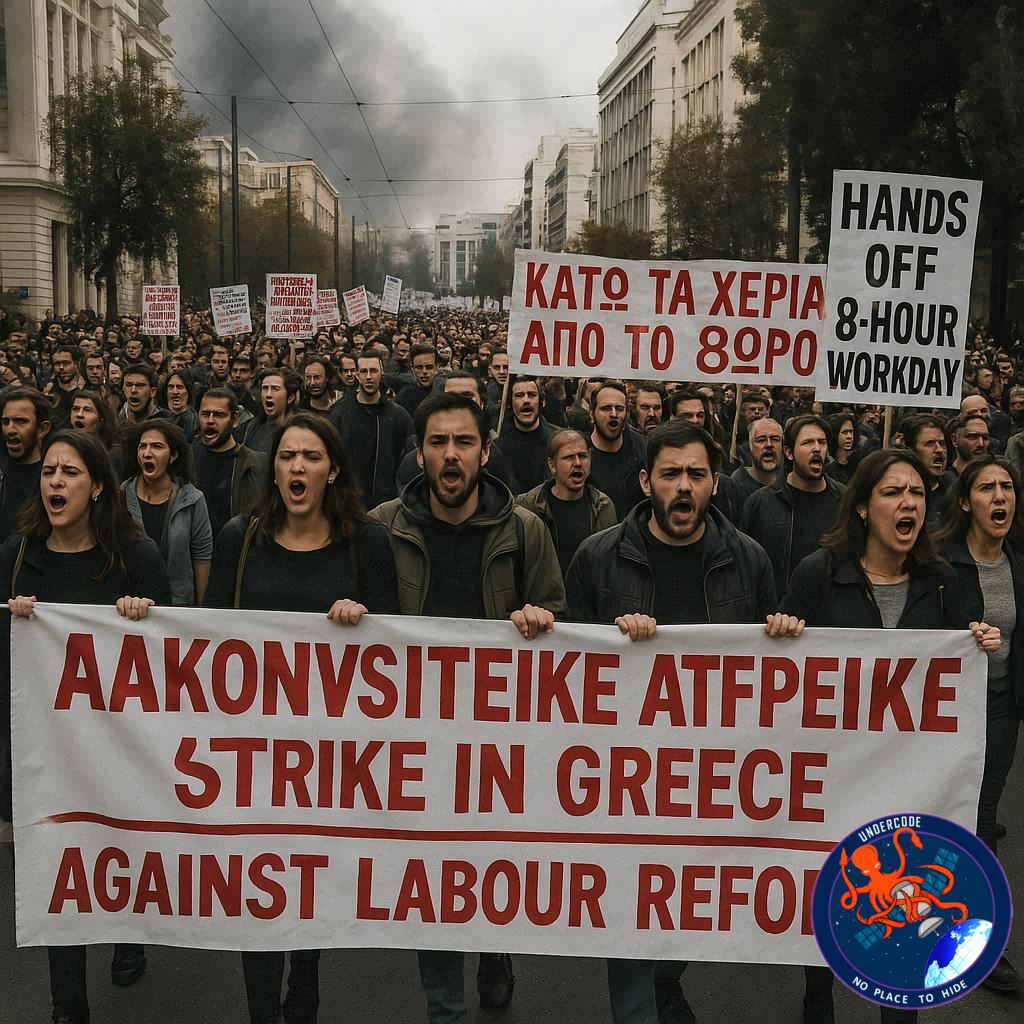
Athens, the country’s bustling capital, was brought to a near standstill as thousands of protestors filled the streets carrying banners and chanting slogans against the reforms. Despite the large turnout, police confirmed that the strike remained peaceful, with no major incidents of violence reported.
The protest marks one of the largest organized actions since the pandemic and reflects deep-rooted fears among workers that hard-won rights are being eroded. Greece, still recovering from a decade-long economic crisis, finds itself in the middle of a tug-of-war between the push for competitiveness and the fight for social justice.
What Undercode Say:
The nationwide strike is more than a reaction to labour reforms—it’s a battle for identity and survival in a changing economic landscape. Greece has faced immense pressure from international lenders and EU policies, pushing governments to adopt structural reforms often at the expense of workers.
By allowing shifts up to 13 hours, the government argues it is aligning with modern global labour practices. Yet critics point out that such policies, while legal under EU law, ignore the cultural and social realities of Greek workers, where overwork has historically led to health crises, emigration, and social unrest.
The strike also highlights a deeper distrust between citizens and policymakers. In a country where unemployment soared to record highs during the financial meltdown, many workers fear that “labour flexibility” translates to job insecurity and weakened unions. This fear is not unfounded: research shows that similar reforms in other European countries often led to longer working hours without proportional pay increases.
Another layer of the conflict lies in Greece’s demographic challenge. With an aging population and younger citizens migrating abroad for better opportunities, the labour force is shrinking. Extended shifts may patch short-term shortages, but they could accelerate brain drain, as skilled professionals seek fairer conditions elsewhere.
Socially, the protests represent more than wages—they symbolize a fight for dignity and equality. For many Greeks, memories of austerity cuts and IMF bailouts remain fresh. The reforms are perceived not as progress, but as another wave of sacrifices demanded from ordinary people.
Economically, the reforms raise questions: will they truly make Greece more competitive, or will they undermine worker productivity in the long run? Studies consistently show that overwork decreases efficiency and increases the risk of mistakes, accidents, and burnout. This undermines the very goals of economic growth.
In essence, the strike was not only a rejection of the proposed law but also a collective call for rethinking Greece’s economic priorities. Balancing growth with human welfare will determine whether the nation emerges stronger—or further divided.
Fact Checker Results ✅❌
✅ Workers did indeed strike nationwide in Greece.
✅ The law allows up to 13-hour shifts, capped at 48 weekly hours.
❌ No violent clashes occurred, despite fears of unrest.
🔮 Prediction
The labour reforms are unlikely to fade quietly. Unions are preparing for more strikes and protests, potentially escalating into larger social movements if the government pushes forward. International observers will be watching closely, as Greece’s decision could set a precedent for other EU nations considering similar policies.
Workers, emboldened by solidarity, will likely pressure lawmakers to revise or soften the legislation, while investors will weigh the risks of social instability against the potential benefits of flexibility. Ultimately, Greece stands at a crossroads: whether to follow a pro-business model at the risk of public backlash, or forge a path that balances economic reform with social justice.
🕵️📝✔️Let’s dive deep and fact‑check.
References:
Reported By: www.euronews.com
Extra Source Hub:
https://www.stackexchange.com
Wikipedia
OpenAi & Undercode AI
Image Source:
Unsplash
Undercode AI DI v2
🔐JOIN OUR CYBER WORLD [ CVE News • HackMonitor • UndercodeNews ]
📢 Follow UndercodeNews & Stay Tuned:
𝕏 formerly Twitter 🐦 | @ Threads | 🔗 Linkedin | 🦋BlueSky | 🐘Mastodon


