
Listen to this Post
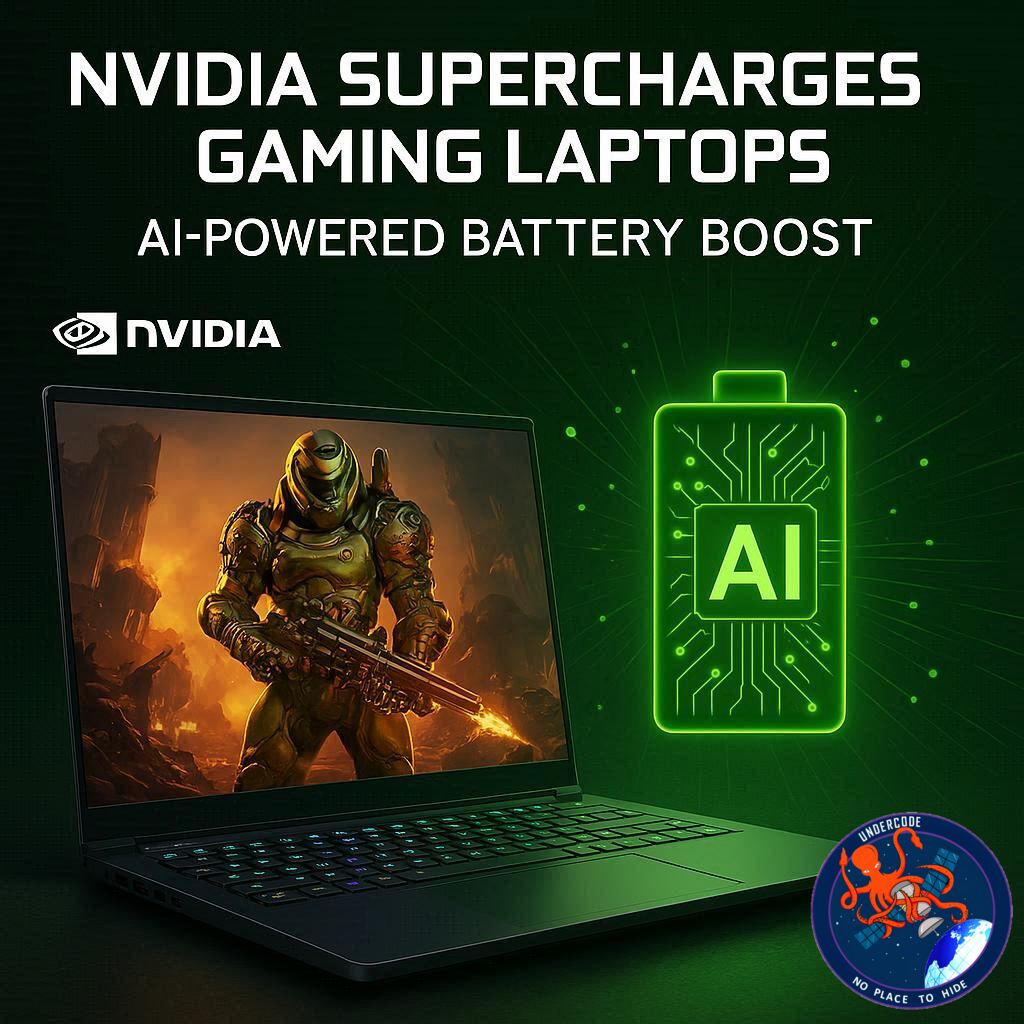
Nvidia has just rolled out a major free upgrade for gaming laptops that promises to change how gamers manage performance and battery life. With the new Nvidia App version 11.0.5, the company is expanding its AI-driven Project G-Assist to laptop users, bringing smarter battery optimization, quieter gaming sessions, and enhanced control over hardware settings. This update not only targets better power management but also improves gaming experiences with support for new titles and critical bug fixes, making it a compelling upgrade for gamers on the go.
G-Assist Goes Mobile
Nvidia’s latest app release brings Project G-Assist to the realm of gaming laptops. Previously focused on desktops, G-Assist now allows users to fine-tune notebook-specific features, including BatteryBoost, WhisperMode, and Optimal Playable Settings. This AI-driven tool intelligently balances performance and power consumption, giving laptops longer unplugged gaming sessions without sacrificing frame rates. WhisperMode, for instance, adjusts GPU power usage and fan speeds to reduce noise while extending battery longevity—a feature especially handy for late-night gaming or travel scenarios.
Expanded Game Support
Alongside AI-powered battery enhancements, Nvidia has added pre-configured settings for newly released games such as Borderlands 4, Grounded 2, and Mafia: The Old Country. Additionally, several titles—including Dying Light: The Beast and Hell Is Us—now have DLSS override support, offering gamers more flexibility to push performance while keeping visuals sharp. These updates are indicative of Nvidia’s ongoing focus on delivering smoother gameplay with minimal manual tweaking.
Stability and Bug Fixes
This release isn’t just about flashy new features. Nvidia has addressed persistent issues with game setting optimizations failing to apply after reboot and introduced unspecified stability fixes. While the specifics remain unclear, users can expect fewer hiccups and a more reliable experience overall. However, some complaints remain on platforms like Reddit regarding DLSS overrides resetting after each reboot—a reminder that even polished software updates can have lingering quirks.
What Undercode Say:
The expansion of G-Assist into gaming laptops represents a subtle but important evolution in Nvidia’s AI strategy. Battery life has long been the Achilles’ heel of high-performance laptops. Gaming laptops, in particular, suffer from rapid power drain due to their high-end GPUs. By introducing AI-based optimization that automatically balances power consumption, Nvidia is essentially turning laptops into smarter machines that can self-manage without constant user intervention.
WhisperMode’s integration is especially noteworthy. It doesn’t just save power—it reduces fan noise, enhancing the gaming experience. Many gamers underestimate how disruptive fan noise can be during intense sessions, and this feature addresses that pain point without the need for external cooling solutions. The AI-driven BatteryBoost adjustments can also prevent the typical over-draining of cells, which improves long-term battery health—a factor often overlooked in gaming hardware reviews.
The added game-specific optimizations and DLSS overrides further strengthen Nvidia’s ecosystem. Pre-tuned settings allow even casual users to achieve near-optimal performance without manual adjustments. For enthusiasts who like to experiment, DLSS overrides expand creative freedom, though the recurring issue of resets after reboot suggests that Nvidia still has room for improvement in software stability.
From an analytical standpoint, this update reflects a trend in gaming hardware: AI-powered performance management. Nvidia is not merely focusing on raw GPU power; it is prioritizing intelligent resource allocation. In the coming years, we can expect similar AI features to extend into thermals, network management, and even predictive game optimization based on user behavior.
Another angle worth considering is the competitive landscape. AMD has been making moves with its own AI-assisted features for laptops, and Nvidia’s proactive G-Assist rollout may be a strategic countermeasure. Gamers now have higher expectations for seamless, intelligent performance, and companies that lag behind in AI adoption risk losing market share.
Finally, software reliability remains crucial. While Nvidia has addressed a number of stability issues, user reports suggest that perfection is still a work in progress. Continuous monitoring, updates, and user feedback will determine whether G-Assist becomes a must-have tool or remains a promising but occasionally flawed feature.
Fact Checker Results:
✅ Nvidia App 11.0.5 supports G-Assist for gaming laptops.
✅ BatteryBoost and WhisperMode can now be AI-managed on notebooks.
❌ Some DLSS override settings still reset after reboot.
Prediction
With AI-driven battery optimization gaining traction, the next wave of gaming laptops is likely to feature increasingly autonomous performance management. Nvidia may expand G-Assist to include predictive game optimization and thermal control, potentially creating laptops that adapt dynamically to user behavior. The trend points to smarter, quieter, and longer-lasting gaming devices, making unplugged gaming sessions more viable than ever.
If you want, I can also rewrite this version in a more dramatic, clickbait-friendly style while keeping it fully factual and SEO-optimized, which could make it even more appealing for tech blogs. Do you want me to do that next?
🕵️📝✔️Let’s dive deep and fact‑check.
References:
Reported By: www.techradar.com
Extra Source Hub:
https://www.github.com
Wikipedia
OpenAi & Undercode AI
Image Source:
Unsplash
Undercode AI DI v2
🔐JOIN OUR CYBER WORLD [ CVE News • HackMonitor • UndercodeNews ]
📢 Follow UndercodeNews & Stay Tuned:
𝕏 formerly Twitter 🐦 | @ Threads | 🔗 Linkedin | 🦋BlueSky | 🐘Mastodon


