
Listen to this Post
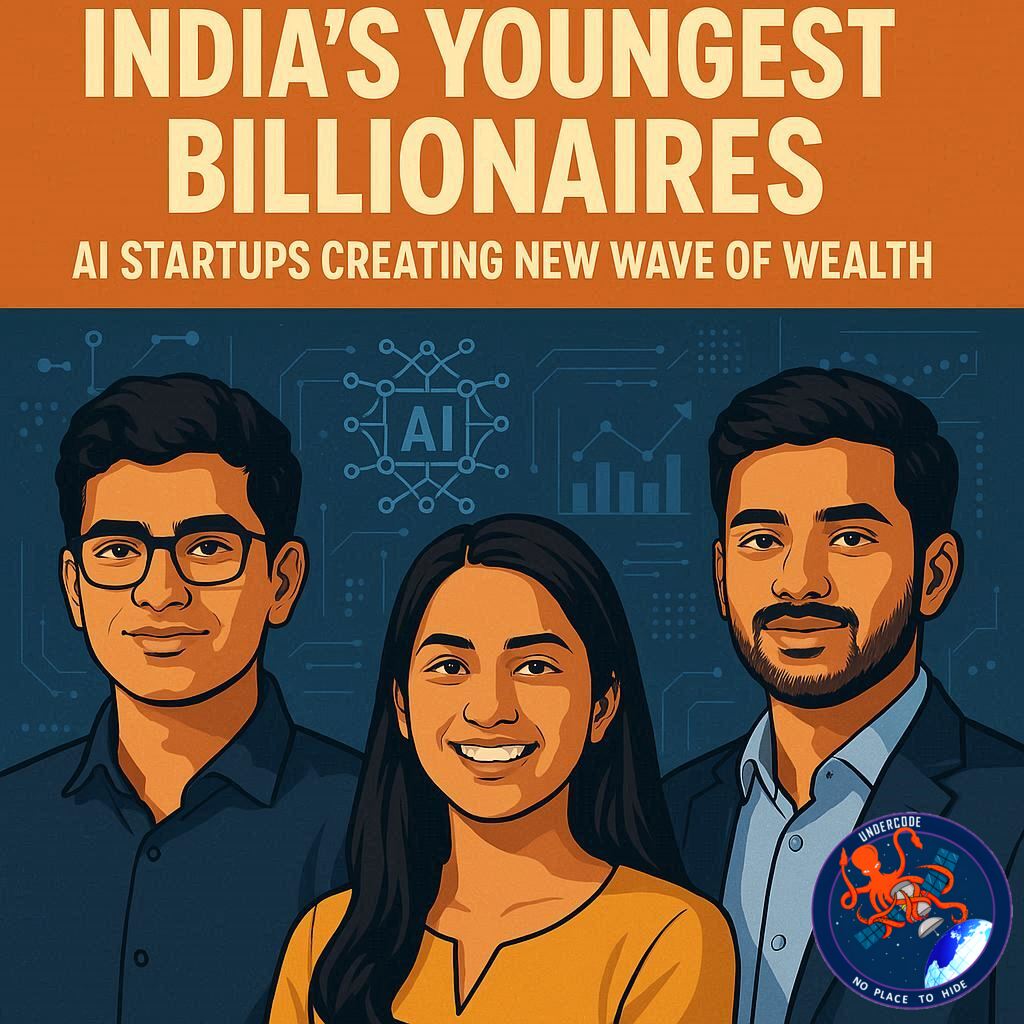
A Digital Age of Wealth Creation
India’s booming startup scene has redefined wealth creation in the 21st century. Once dominated by traditional industries like real estate, manufacturing, and infrastructure, the country’s billionaire lists are now being rewritten by young entrepreneurs who are leveraging technology at lightning speed. The Hurun India Rich List 2025 highlights this shift, showcasing a generation of leaders under 40 who have built massive fortunes through artificial intelligence, e-commerce, fintech, and mobility platforms. These founders are not only disrupting industries but also reshaping global perceptions of Indian innovation.
Aravind Srinivas: India’s Youngest Tech Billionaire
At the forefront of this transformation is Aravind Srinivas, the 33-year-old co-founder and CEO of Perplexity AI, who emerged as India’s youngest and richest tech billionaire. With an estimated net worth of ₹21,900 crore, Srinivas has become the face of India’s growing influence in AI.
Born in Chennai, Srinivas excelled in academics, completing his engineering at IIT Madras before pursuing a PhD at UC Berkeley. His journey from academia to entrepreneurship symbolizes the growing pipeline of Indian talent making waves in global technology. Perplexity AI, his flagship startup, has gained recognition for its conversational search capabilities, combining advanced language models with live internet access. This breakthrough has positioned the company as a strong rival to established AI giants, boosting Srinivas into the billionaire ranks in record time.
The Rise of Tech Titans in India
The Hurun list does not stop with Srinivas. It also highlights several other entrepreneurs under 40 who have carved fortunes in diverse tech-driven fields:
Vidit Aatrey (34, Meesho, Net Worth ₹4,500 crore): Revolutionized e-commerce by enabling small businesses and individuals to sell online easily, democratizing digital commerce.
Ritesh Agarwal (31, OYO Rooms, Net Worth ₹4,000 crore): Once the youngest self-made billionaire in India, he disrupted the hospitality industry by scaling budget accommodations globally.
Bhavish Aggarwal (39, Ola & Ola Electric, Net Worth ₹3,800 crore): Known for pioneering ride-hailing in India and pushing aggressively into electric vehicles, becoming a key voice in the EV revolution.
Kunal Shah (42, CRED, Net Worth ₹2,500 crore): Built one of India’s most valuable fintech apps, reshaping how urban India engages with credit card management and rewards.
What This Shift Means for India
This wave of billionaires highlights India’s transition into a tech-first economy, where innovation and speed matter more than traditional capital-intensive industries. With the rise of AI, fintech, and green mobility, Indian entrepreneurs are no longer just followers of global trends but are increasingly becoming trendsetters, influencing global tech narratives.
What Undercode Say:
The Transformation of Wealth Creation
India’s startup ecosystem has reached a tipping point. The Hurun India Rich List 2025 doesn’t just show who got rich; it reveals a systemic shift in how wealth is created in modern India. Instead of relying on inherited businesses or heavy industries, today’s billionaires are data-driven innovators. This generational change reflects India’s adaptability in a digital-first world.
Aravind Srinivas as a Symbol of AI Power
Srinivas represents more than personal success. His rise through Perplexity AI reflects India’s ability to produce global thought leaders in artificial intelligence. In a world where AI is becoming as transformative as electricity, his trajectory suggests that India may not only be a consumer of technology but also a producer of frontier innovation. His story proves that India’s brainpower, when combined with global exposure, can disrupt industries worldwide.
Beyond Unicorns: The Billionaire Benchmark
In India, the narrative once revolved around unicorns (startups valued over $1 billion). Now, the benchmark is shifting to billionaire founders, highlighting the immense scale these businesses can achieve. The fact that multiple entrepreneurs under 40 made the Hurun list indicates that India’s ecosystem is maturing rapidly, comparable to Silicon Valley’s golden age.
E-commerce as a Social Equalizer
Vidit Aatrey’s journey with Meesho shows how tech-driven e-commerce is not just about profit—it’s about empowerment. By enabling millions of small sellers, Meesho has democratized online trade, especially for women and rural entrepreneurs. This makes wealth creation in India not just concentrated among elites but spread across grassroots contributors.
Hospitality and Risk-Taking
Ritesh Agarwal’s OYO story is both inspiring and cautionary. His rise as a teenage founder disrupted the hotel industry, but OYO also faced scrutiny and criticism over its rapid expansion. Yet his place in the billionaire club reflects resilience, an ability to pivot, and a culture of high-risk, high-reward entrepreneurship that defines India’s new startup ecosystem.
Mobility Meets Sustainability
Bhavish Aggarwal represents another critical shift—India’s mobility revolution. Ola disrupted transportation, but Ola Electric’s success shows that wealth in the future will come not just from convenience, but from sustainability-driven solutions. With global EV adoption accelerating, his journey reflects India’s readiness to shape the green transition.
Fintech as a Cultural Shift
Kunal Shah’s CRED reflects a behavioral change in urban India. By gamifying credit repayment and making financial responsibility aspirational, Shah has tapped into a cultural shift. His billionaire status shows that fintech in India is not only about transactions but also about shaping consumer psychology.
A Global Message from India
The collective story of these young billionaires sends a clear signal: India is no longer just a hub for outsourcing or cheap labor—it is now a hotspot for intellectual and financial capital formation. These founders are building companies that compete with global giants, showing that the next wave of transformative ideas may just come out of Bengaluru, Gurgaon, or Chennai.
The Road Ahead
However, this rapid rise comes with challenges. Wealth concentration, regulatory hurdles, and global competition could test the durability of these billionaires’ fortunes. Yet the underlying fact remains: India has entered a new chapter in wealth creation, powered by technology, youth, and global ambition.
Fact Checker Results
✅ The Hurun India Rich List 2025 confirms Aravind Srinivas as India’s youngest and richest tech billionaire.
✅ Meesho, OYO, Ola, and CRED founders are officially listed among India’s top young wealth creators.
❌ Net worth estimates can fluctuate due to stock valuations and market volatility.
Prediction
India’s billionaire club will expand further, with AI, green energy, and deep tech creating the next generation of ultra-wealthy entrepreneurs. Within the next five years, expect more founders under 35 entering the list, with India increasingly competing head-to-head with Silicon Valley in shaping the future of global technology. 🚀
🕵️📝✔️Let’s dive deep and fact‑check.
References:
Reported By: timesofindia.indiatimes.com
Extra Source Hub:
https://www.digitaltrends.com
Wikipedia
OpenAi & Undercode AI
Image Source:
Unsplash
Undercode AI DI v2
🔐JOIN OUR CYBER WORLD [ CVE News • HackMonitor • UndercodeNews ]
📢 Follow UndercodeNews & Stay Tuned:
𝕏 formerly Twitter 🐦 | @ Threads | 🔗 Linkedin | 🦋BlueSky | 🐘Mastodon


