
Listen to this Post
Introduction
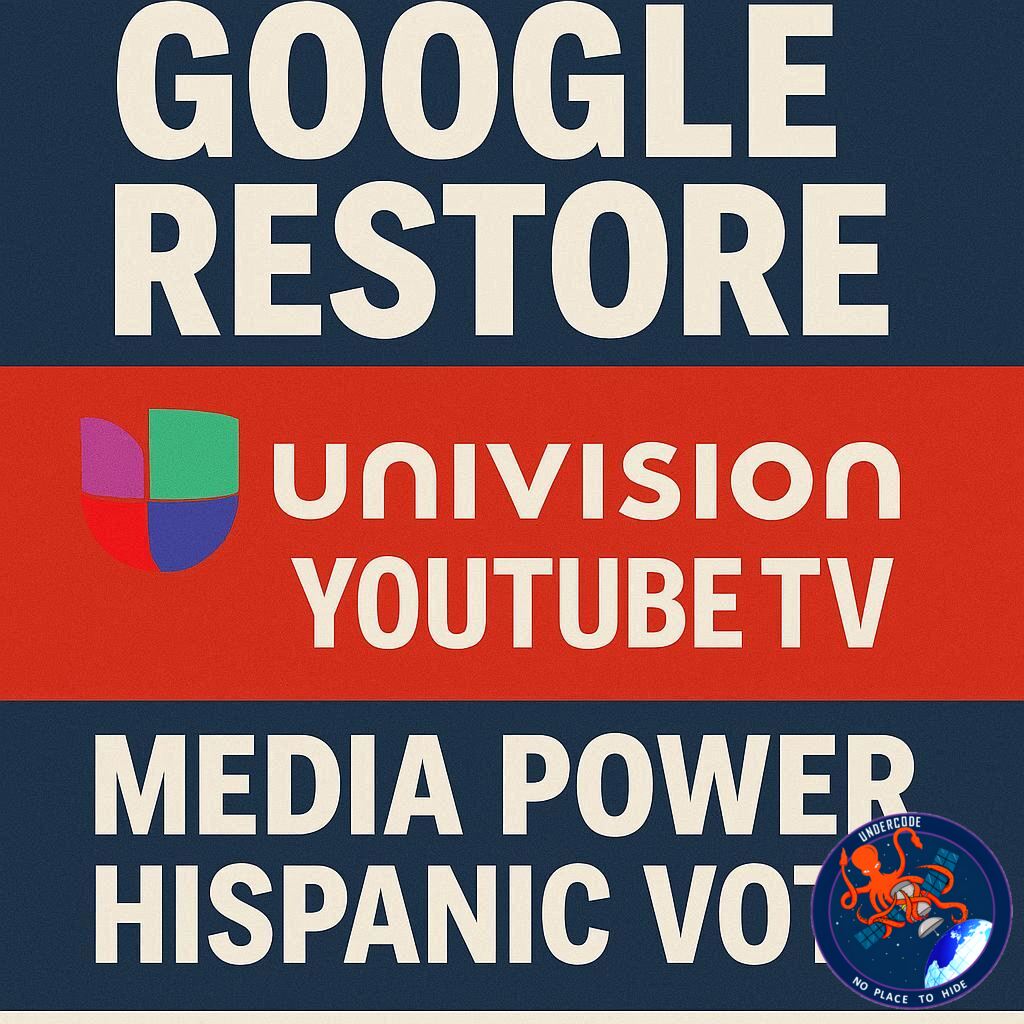
The clash between Donald Trump, Google, and Univision has turned a simple corporate dispute into a high-stakes political drama. At the heart of the matter is YouTube TV’s decision to drop Univision after failing to reach a carriage agreement — but Trump argues the blackout isn’t just about contracts. For him, it’s about political influence, Hispanic outreach, and Republican prospects in the upcoming elections. This controversy highlights how media platforms, streaming giants, and political figures intersect in today’s polarized environment.
Events
YouTube TV recently removed Univision, the largest Spanish-language broadcaster in the U.S., after contract negotiations broke down. President Trump immediately seized on the issue, warning that the absence of Univision could spell trouble for Republicans in the midterms, calling it “VERY BAD” for the party’s electoral chances.
In a fiery Truth Social post, Trump urged Google to restore Univision on YouTube TV “for the purpose of FAIRNESS.” He reminded supporters that Univision had given him a platform during his presidency, even airing a record-breaking political special that boosted his Hispanic support.
Univision, meanwhile, has embraced Trump’s defense. CEO Daniel Alegre thanked him for recognizing the network’s influence among Hispanic Americans, declaring that Univision remains “the voice of Hispanic America.” He emphasized that restoring Univision on YouTube TV was a top priority.
YouTube responded by framing the matter as a standard corporate negotiation. The company argued that Univision’s demands were excessive, noting that while TelevisaUnivision has massive reach on YouTube’s free platform, its viewership on YouTube TV is minimal compared to other channels.
The timing of Trump’s intervention raised eyebrows. Just days before, YouTube settled a lawsuit with Trump, agreeing to pay $22 million to a nonprofit supporting the White House State Ballroom project. This coincidence fueled speculation about deeper political and financial entanglements.
Ultimately, the battle over Univision on YouTube TV represents more than a business dispute — it underscores the power of Spanish-language media, the importance of Hispanic voters, and the way political leaders leverage media corporations for electoral advantage.
What Undercode Say:
Trump’s pressure campaign on Google is not just about television contracts; it is a strategic political move. Here’s a deeper look at the underlying issues:
The Political Weight of Univision
Univision is not merely a broadcaster; it is a gateway to Hispanic voters, the fastest-growing demographic in U.S. elections. Trump’s insistence that Republicans need Univision coverage reveals his recognition that digital media exposure directly impacts voting patterns.
Media as Political Arsenal
Trump has consistently used media companies as battlegrounds for influence. From clashes with CNN to tensions with Twitter and now YouTube, his strategy is clear: dominate the media narrative or risk losing control of the political conversation.
Google’s Calculated Resistance
For Google, this is not about politics but business. YouTube TV’s model relies on balancing costs against consumer demand. Since Univision represents only a “tiny fraction” of viewership, the company believes conceding to high carriage fees would harm profitability.
Univision’s Balancing Act
Univision’s executives walk a fine line. By embracing Trump’s support, they gain leverage in negotiations, but they also risk alienating parts of their audience who oppose Trump. The network’s shift toward a centrist or business-friendly stance is a calculated gamble in today’s polarized media climate.
Hispanic Voters at the Core
The real battlefield is Hispanic America. Trump has repeatedly highlighted his gains among Hispanic voters, portraying Univision as a critical ally. Whether this blackout continues could influence not just ratings but political campaigning in 2024 and beyond.
The Timing Question
The fact that this dispute erupted right after Trump’s $22 million settlement with YouTube raises questions about whether media companies are strategically managing their relationships with political figures. Coincidence or coordination? The answer remains murky.
The Larger Trend
This saga is part of a bigger trend: politicization of media distribution. Once confined to business negotiations, carriage disputes are now being weaponized for political messaging. Trump’s intervention ensures that what could have been a quiet corporate standoff is instead a national news story.
✅ Fact Checker Results
Trump’s claim that Univision is crucial for Republicans holds partial truth — Univision does have major influence over Hispanic voters, but its absence on YouTube TV does not entirely block access to its content.
Google’s statement that Univision is a minor player on YouTube TV is supported by audience data, yet the broader cultural and political weight of Univision cannot be ignored.
The $22 million YouTube settlement with Trump is factually confirmed, though its link to this dispute is speculative.
🔮 Prediction
The standoff will likely end with Univision returning to YouTube TV, but only after political drama boosts its visibility. Trump will continue to use Univision as a talking point in rallying Hispanic voters, while Google will frame the resolution as a fair business deal. Ultimately, this incident foreshadows how future media-carrier disputes will be weaponized in political campaigns, with Hispanic voters at the center of the fight.
🕵️📝✔️Let’s dive deep and fact‑check.
References:
Reported By: edition.cnn.com
Extra Source Hub:
https://www.linkedin.com
Wikipedia
OpenAi & Undercode AI
Image Source:
Unsplash
Undercode AI DI v2
🔐JOIN OUR CYBER WORLD [ CVE News • HackMonitor • UndercodeNews ]
📢 Follow UndercodeNews & Stay Tuned:
𝕏 formerly Twitter 🐦 | @ Threads | 🔗 Linkedin | 🦋BlueSky | 🐘Mastodon


