
Listen to this Post
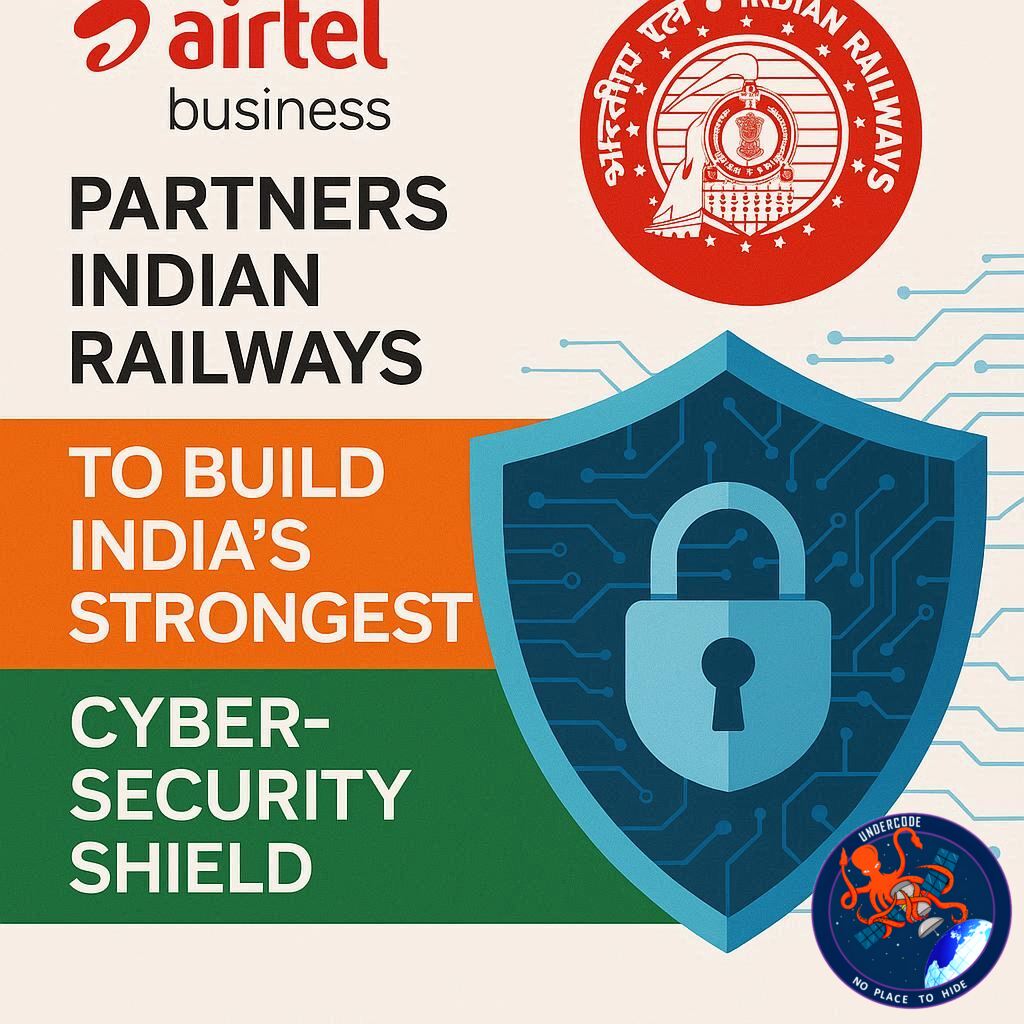
Safeguarding the Digital Tracks of India
In an era where cyberattacks have become as disruptive as real-world disasters, the collaboration between Airtel Business and the Indian Railways Security Operations Centre (IRSOC) marks a defining step toward national digital defense. This multi-year partnership focuses on protecting one of India’s most vital infrastructures — the Indian Railways — a colossal system that powers the daily mobility of millions and fuels the nation’s economy.
The Backbone of India’s Movement
Indian Railways operates over 13,000 trains daily, carrying more than 20 million passengers and moving 1.5 billion tons of freight every year. This isn’t just a transportation network; it’s a digital ecosystem brimming with sensitive data — passenger information, payment details, freight logistics, and complex signalling systems. Securing this network is equivalent to protecting the heartbeat of India’s economy and public life.
Airtel Business Steps Onto the Cybersecurity Platform
Under the signed agreement, Airtel Business will deploy multi-layered security controls to guard the massive digital framework of Indian Railways. The partnership extends across 26 strategic locations and protects over 160,000 employees within the organization. The objective is clear: create a secure, resilient, and AI-driven defense mechanism that can anticipate and neutralize threats before they disrupt operations.
Fusing Global Expertise with Local Innovation
The cybersecurity architecture will blend world-class technologies with Make in India tools, ensuring that the digital shield not only meets international standards but also supports indigenous innovation. Airtel Business emphasized that its approach will be AI-powered, compliance-ready, and tailored to suit the critical infrastructure nature of the railways.
Leadership Voices on Digital Defense
Sharat Sinha, CEO & Director of Airtel Business, expressed the company’s vision of protecting large-scale digital ecosystems. He highlighted the growing threat landscape where data integrity, passenger safety, and operational continuity are constantly at risk. Airtel Business, he said, is “honoured to be chosen by IRSOC as their trusted partner” and pledged to create a robust digital security layer capable of ensuring seamless and secure operations for millions of daily commuters.
Meanwhile, Dilip Kumar, Executive Director (Information Technology) at the Railway Board, underscored the urgency of cybersecurity in today’s digital-first operational environment. He said that the IRSOC’s centralised monitoring will allow Indian Railways to detect and respond to cyber threats effectively, streamline IT operations, and maintain uninterrupted passenger services — strengthening trust and safety in the nation’s transportation backbone.
What Undercode Say:
A Strategic Partnership Rooted in Necessity
This collaboration isn’t just a corporate deal; it’s a strategic move in India’s cybersecurity evolution. The Indian Railways — with its scale, complexity, and dependency on digital systems — represents one of the largest attack surfaces in the world. Partnering with Airtel Business shows a decisive understanding of modern threats that no longer target individuals but entire infrastructures.
The Digital Battlefield Expands
As India’s economy digitizes rapidly, the attack vectors have multiplied. Trains are no longer mechanical marvels; they are data-driven entities connected through sensors, signalling systems, and centralized digital platforms. A breach in any one of these could paralyze sections of the country, making cybersecurity as vital as railway engineering itself.
Airtel’s Role as a National Cyber Guardian
Airtel Business’s involvement places it in a national security tier, extending beyond telecom. The company is now responsible for fortifying India’s transportation nervous system, and its use of AI and machine learning in real-time monitoring can detect anomalies faster than traditional systems. This isn’t about patching holes; it’s about predictive defense — identifying cyber threats before they occur.
Make in India: More Than Symbolic
Integrating indigenous cybersecurity tools ensures not only sovereignty over sensitive systems but also reduces dependence on foreign technologies. This alignment with the Atmanirbhar Bharat vision promotes local innovation in a field dominated by international giants. It’s a step toward building homegrown digital resilience.
The Rising Cost of Digital Neglect
India has witnessed several public sector breaches in recent years, from energy grids to healthcare systems. A similar breach in Indian Railways could cause economic chaos, affecting millions in real-time. Airtel’s engagement with IRSOC is therefore a proactive insurance policy for national continuity, not just a technical upgrade.
Centralized Defense Architecture
The establishment of IRSOC is a masterstroke in centralized defense. It will integrate data from all zones, enabling faster response, coordinated actions, and threat intelligence sharing with national cybersecurity agencies. This collaborative model transforms Indian Railways from a reactive organization into a proactive defender of its digital domain.
Bridging the Skill and Tech Gap
Cybersecurity for a network this vast demands highly skilled professionals and adaptive technology. Airtel’s infrastructure and experience with enterprise-grade clients give it a strong foundation. However, success depends on continuous training, real-time updates, and cross-agency collaboration — especially as threats evolve faster than defenses.
Public Trust and National Impact
Millions of passengers rely on the digital systems of Indian Railways every day — from ticket bookings to real-time tracking. A breach here could shatter public trust, leading to widespread disruptions. Airtel’s multi-layered approach reinforces confidence in digital public services, making passengers feel secure not just physically but digitally.
Long-Term Implications for India’s Cyber Strategy
This alliance could become a template for other sectors — power grids, airports, or ports — that face similar vulnerabilities. By positioning private players like Airtel in the national defense chain, India could accelerate its journey toward becoming a cyber-resilient digital nation.
What Lies Ahead
The true test will lie in execution and adaptability. Cyber threats mutate constantly; AI-driven security must evolve even faster. If successfully implemented, Airtel’s framework could turn Indian Railways into a model of cyber resilience, setting new global benchmarks for securing critical digital infrastructure.
Fact Checker Results:
✅ The partnership is officially confirmed by both Airtel Business and Indian Railways.
✅ The IRSOC initiative aims to centralize cybersecurity and enhance real-time threat detection.
✅ The project aligns with India’s Make in India and Digital India missions for indigenous digital infrastructure development.
Prediction:
As the collaboration matures, Indian Railways could become one of the world’s most digitally secure transport networks. Expect to see AI-driven monitoring systems predicting and neutralizing cyber threats before they strike, integration with national cyber grids, and India setting a global benchmark in transport cybersecurity excellence. 🚄🔒
🕵️📝✔️Let’s dive deep and fact‑check.
References:
Reported By: timesofindia.indiatimes.com
Extra Source Hub:
https://www.instagram.com
Wikipedia
OpenAi & Undercode AI
Image Source:
Unsplash
Undercode AI DI v2
🔐JOIN OUR CYBER WORLD [ CVE News • HackMonitor • UndercodeNews ]
📢 Follow UndercodeNews & Stay Tuned:
𝕏 formerly Twitter 🐦 | @ Threads | 🔗 Linkedin | 🦋BlueSky | 🐘Mastodon


