
Listen to this Post
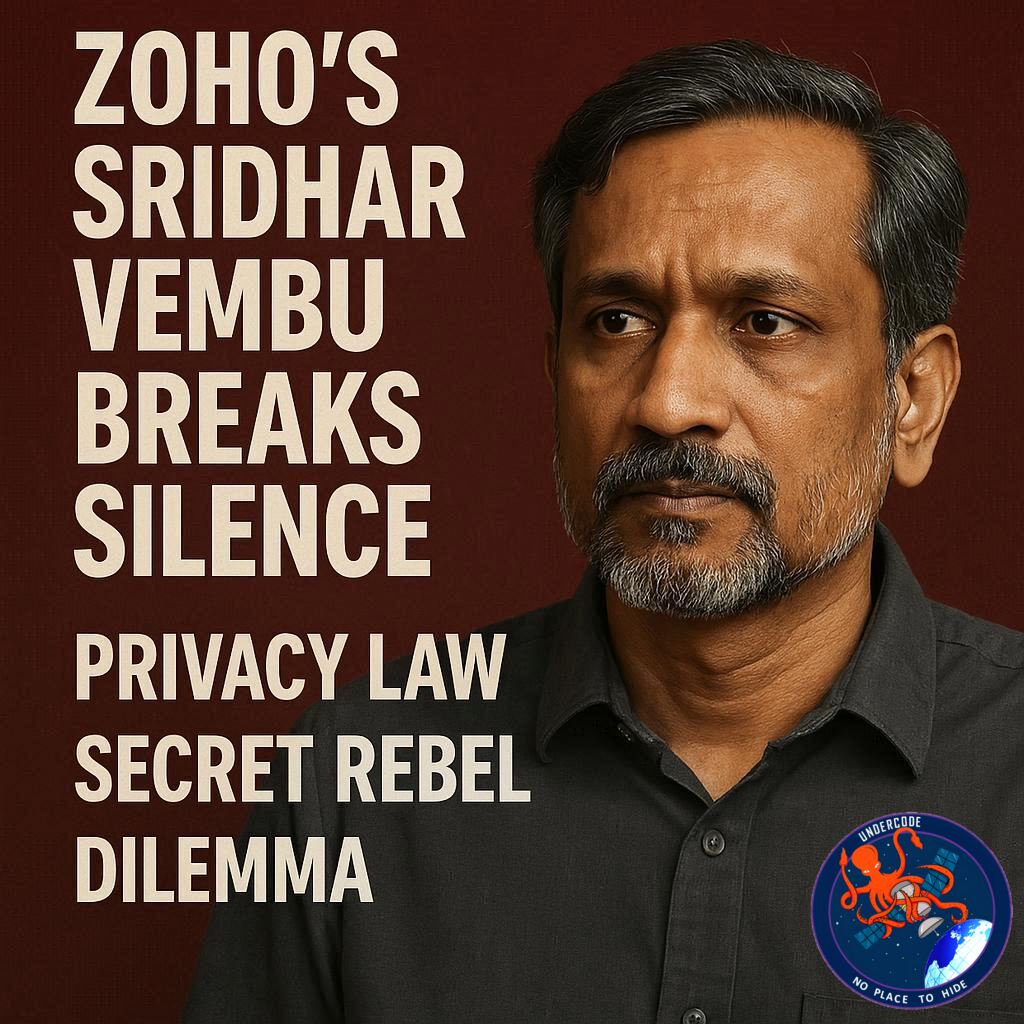
A Bold Stand on Digital Privacy and Corporate Ethics
In a time when personal data has become the new currency, Zoho’s founder Sridhar Vembu has reignited a crucial global conversation. Through a detailed post on X (formerly Twitter), he shared his philosophical yet practical perspective on user privacy, corporate integrity, and the undeniable limits of tech companies when facing national laws. His remarks came just as Zoho’s chat app, Arattai, began surging to the top of app store charts, drawing even more attention to his message.
Vembu structured his post around what he called the “three faces of privacy” — the secret lover, the targeted ads violation, and the secret rebel. Each of these, though metaphorical, captures a real dilemma faced by individuals and corporations alike in a world increasingly dominated by digital surveillance, algorithmic advertising, and political scrutiny.
In the secret lover case, Vembu pointed to the need for strict confidentiality when handling private user data or sensitive company secrets. This category represents the emotional and professional trust between a user and a company — a relationship that must never be breached. Zoho, according to him, builds every product with privacy at its core, ensuring no unauthorized access or leaks.
The second face — the one involving targeted ads — touches on one of the most controversial aspects of modern tech: the commodification of user data. Unlike most big tech firms that thrive on data-driven advertising, Zoho has taken a public vow not to use customer information for ad sales. Vembu highlighted that this decision not only respects user dignity but also shields companies from exposure through ad-related data-mining systems that could potentially leak trade secrets.
Finally, the secret rebel case dives into ethically gray territory — people using technology to challenge or even defy their governments. Here, Vembu was direct and realistic: no company can promise full protection to individuals acting against their own state. Legal jurisdictions always hold supremacy, no matter how idealistic the promise of privacy may sound. As he put it, “Sovereign power always prevails over mere companies.”
Vembu’s candid take stood out in a landscape dominated by vague privacy policies and marketing spin. His message was clear: corporations can champion privacy, but they cannot operate above the law. He reminded readers that whether it’s Google, Apple, or Zoho, compliance with local laws remains non-negotiable.
This bold statement didn’t just serve as a company policy announcement — it was a philosophical line in the sand about the moral and legal boundaries of digital freedom in a hyperconnected age.
What Undercode Say:
Unmasking the Philosophy Behind the Message
Sridhar Vembu’s post might look like a simple privacy manifesto, but it’s far deeper. It’s a coded reflection of how technology, ethics, and governance are now intertwined. The “three faces” framework reveals not only Zoho’s operational ethics but also a critique of the tech industry’s hypocrisy.
Case One: Privacy as Intimacy
The “secret lover” analogy is intentionally human. It transforms digital privacy into something intimate — a relationship built on trust and mutual respect. By using emotional language, Vembu reframes privacy from a dry legal concept into a human experience. In this metaphor, Zoho positions itself as a trustworthy partner, not a data voyeur.
Case Two: Ads and the Morality of Business Models
When Vembu denounces targeted advertising, he indirectly criticizes the foundation of tech giants like Google and Meta. His vow to never monetize user data is not just moral posturing — it’s a business model rebellion. By staying independent from ad revenue, Zoho can afford to be ethically uncompromising. This reinforces a crucial idea: true privacy cannot exist in an ad-funded ecosystem.
Case Three: The Law vs. the Rebel
The “secret rebel” case exposes the tension between individual freedom and national sovereignty. It’s an uncomfortable truth few tech CEOs admit publicly. Vembu acknowledges that while encryption and privacy tools can protect individuals to a degree, no corporation can legally safeguard rebellion. In essence, Zoho won’t act as a digital asylum for political dissenters.
A Philosophy Rooted in Realism, Not Idealism
Unlike the utopian promises often made by Silicon Valley firms, Vembu’s stance is pragmatic. He doesn’t sell fantasies of total freedom; instead, he clarifies the boundaries. Privacy, in his view, is sacred but not infinite. It ends where national law begins.
Balancing Ethics and Compliance
Zoho’s approach reflects a balance between moral responsibility and legal duty. By refusing to use ads yet fully complying with local laws, Zoho tries to maintain integrity in a world where most companies choose one over the other. This dual commitment may become a model for other firms trying to operate ethically in global markets.
Cultural and Legal Awareness in Global Tech
Vembu’s acknowledgment that “Google must obey Indian law, Zoho must obey U.S. law” is more than a legal note — it’s a declaration of respect for sovereignty. It shows Zoho’s adaptability and awareness that global operations demand cultural and legal sensitivity, not corporate arrogance.
The Broader Message: Trust is the New Currency
As data breaches and scandals continue to erode public confidence, Vembu’s post functions as a reassurance to Zoho’s growing user base. He is essentially saying: trust us, not because we’re perfect, but because we know our limits.
Corporate Integrity in the Age of Surveillance
This message arrives at a time when surveillance capitalism is under heavy fire. By taking a stand against monetizing user data, Zoho positions itself as a moral counterweight to Big Tech. It’s a clever move — both ethically sound and strategically advantageous for brand loyalty.
A New Blueprint for Ethical Tech Leadership
Vembu’s philosophy could redefine leadership in the tech world. It merges business practicality with moral conviction — something that’s been missing in the race for digital dominance. His honesty about corporate limitations could inspire a new wave of transparency-driven leadership.
In Conclusion: Privacy Is Political
Vembu’s remarks expose the uncomfortable truth that privacy isn’t just about encryption; it’s a political and moral stance. His “three cases” create a framework for understanding how companies can act responsibly without pretending to be above governments or laws. It’s an unfiltered message for a world that desperately needs clarity amid digital chaos.
Fact Checker Results:
✅ Zoho does not use customer data for advertising or monetization.
✅ Sridhar Vembu’s post was publicly shared on X, confirming his “three faces of privacy” statement.
❌ No company, including Zoho, can legally protect individuals acting against their own government.
Prediction:
As global data laws tighten and public trust wanes, companies that champion transparent, ad-free business models will rise in credibility. Zoho’s ethical foundation may attract users seeking safer alternatives to ad-driven ecosystems. Expect future regulations to align more closely with Vembu’s realist vision of corporate responsibility — privacy with limits, honesty without illusion.
🕵️📝✔️Let’s dive deep and fact‑check.
References:
Reported By: timesofindia.indiatimes.com
Extra Source Hub:
https://www.reddit.com/r/AskReddit
Wikipedia
OpenAi & Undercode AI
Image Source:
Unsplash
Undercode AI DI v2
🔐JOIN OUR CYBER WORLD [ CVE News • HackMonitor • UndercodeNews ]
📢 Follow UndercodeNews & Stay Tuned:
𝕏 formerly Twitter 🐦 | @ Threads | 🔗 Linkedin | 🦋BlueSky | 🐘Mastodon


