
Listen to this Post
Introduction: Rising Threats in Cybersecurity
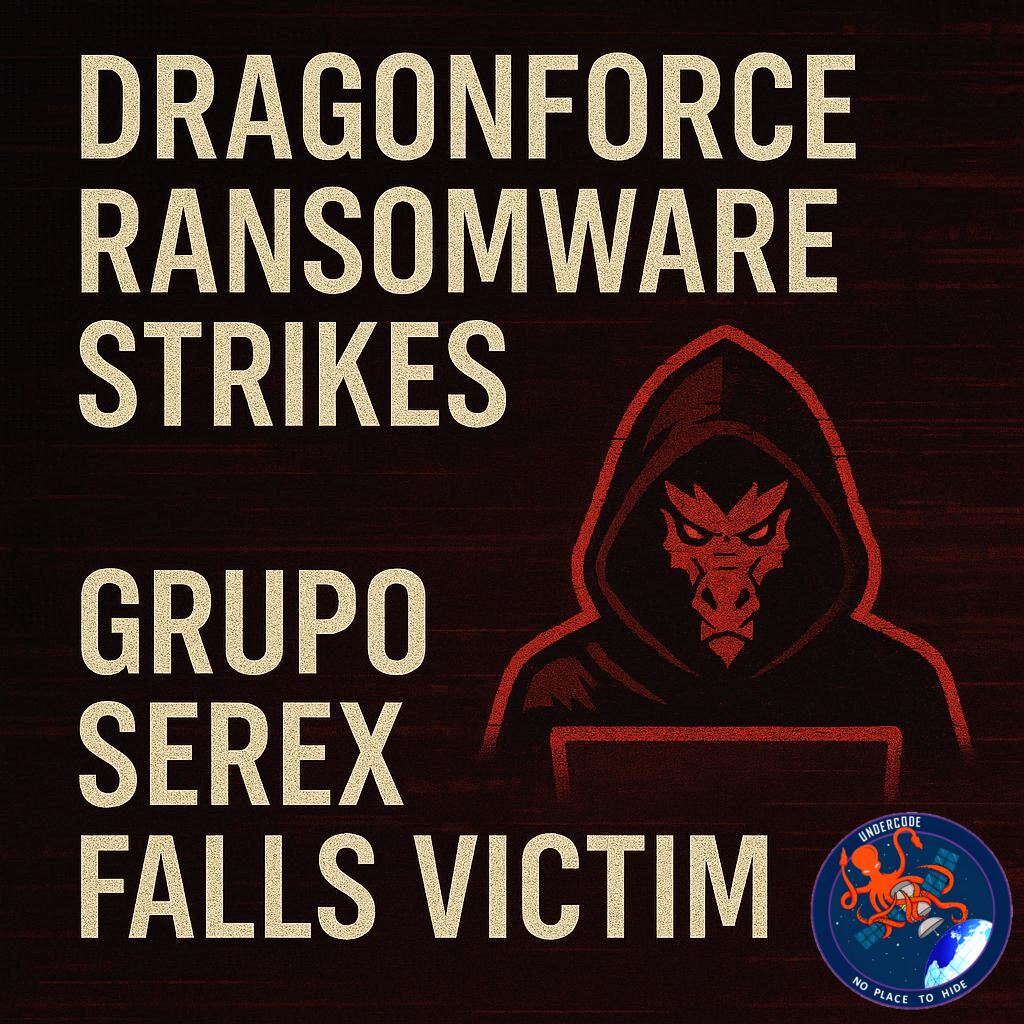
Ransomware attacks are escalating at an alarming pace, and cybercriminal groups are becoming increasingly sophisticated. One of the latest high-profile incidents involves the notorious Dragonforce ransomware gang targeting Grupo Serex. This attack highlights the growing danger posed to corporations worldwide and emphasizes the urgent need for stronger cybersecurity measures.
Dragonforce Targets Grupo Serex 💻
On October 8, 2025, the ThreatMon Threat Intelligence Team detected activity from the Dragonforce ransomware group on the dark web. According to their monitoring, Grupo Serex has been added to the list of victims. This attack follows a growing trend where ransomware actors exploit vulnerabilities in corporate networks to demand hefty ransoms, causing operational disruption and reputational damage.
The Growing Influence of Dark Web Activities 🌐
The dark web has become a central hub for cybercriminal operations. ThreatMon’s monitoring reveals that Dragonforce leverages these hidden networks to coordinate attacks and share stolen data. Such visibility into dark web activity allows cybersecurity teams to anticipate attacks but also shows how organized and resourceful these groups have become.
Understanding the Attack Methodology 🔍
While the specific details of the attack on Grupo Serex remain undisclosed, ransomware groups like Dragonforce typically use phishing emails, malware-laden attachments, and network exploits to infiltrate corporate systems. Once inside, they encrypt critical data and demand ransom payments, often in cryptocurrencies, to restore access.
Implications for Businesses 📊
Companies facing ransomware attacks suffer significant financial and operational losses. Beyond ransom payments, they face downtime, data breaches, and erosion of client trust. The Dragonforce attack serves as a wake-up call for organizations to prioritize cybersecurity, conduct regular system audits, and invest in proactive threat detection tools.
What Undercode Say: Analytical Insights ⚙️
Dragonforce’s attack on Grupo Serex is part of a broader trend in ransomware evolution. Over the past year, ransomware groups have shifted from opportunistic attacks to highly targeted campaigns against specific industries. This strategic targeting increases the likelihood of higher ransom payouts and amplifies the disruption caused.
Grupo Serex, a company involved in logistics and supply chain services, represents a valuable target due to its extensive digital operations and reliance on continuous data flow. Dragonforce’s choice to attack such a company demonstrates a tactical shift: rather than attacking random victims, they focus on entities where operational paralysis can force urgent negotiations.
The dark web intelligence indicates that Dragonforce collaborates with other criminal networks to share exploits and evade law enforcement. This synergy enhances their attack sophistication, making them one of the most formidable ransomware groups active today.
Businesses need to adopt a layered defense strategy, including endpoint protection, network segmentation, and employee training to counter social engineering attacks. The Grupo Serex incident highlights that even well-established companies are vulnerable if proactive measures are not taken.
Financially, ransomware attacks cost global businesses billions annually. Recovery expenses often exceed the ransom itself due to downtime, lost revenue, and reputational damage. Grupo Serex’s case is a stark reminder that cyber insurance and incident response plans are no longer optional—they are essential.
Furthermore, AI-driven threat detection systems and continuous monitoring platforms are becoming critical. Real-time intelligence can prevent ransomware from spreading, reduce the attack surface, and mitigate damage. Companies ignoring these measures risk not just financial loss, but long-term operational disruption.
Governments and regulatory bodies are also paying attention, increasingly enforcing stricter cybersecurity standards and reporting requirements. Organizations that fail to comply may face legal repercussions in addition to the direct impact of ransomware attacks.
Ultimately, the Grupo Serex attack underscores that ransomware is no longer just a tech problem—it is a strategic business threat. Companies must integrate cybersecurity into their core business strategy, balancing technology, human factors, and compliance to defend against ever-evolving cyber threats.
Fact Checker Results ✅❌
✅ Dragonforce ransomware group is an active threat documented by multiple cybersecurity monitors.
✅ Grupo Serex has been publicly identified as a recent victim.
❌ There is no evidence suggesting Dragonforce has targeted every company in the logistics sector.
Prediction 🔮
Ransomware attacks like Dragonforce’s assault on Grupo Serex are likely to increase in sophistication and frequency. We can expect cybercriminals to focus more on high-value targets and exploit emerging technologies. Companies that adopt proactive defense, AI-driven threat detection, and comprehensive incident response plans will fare significantly better in mitigating these threats. Organizations failing to act may face escalating operational disruptions and financial losses.
🕵️📝✔️Let’s dive deep and fact‑check.
References:
Reported By: x.com
Extra Source Hub:
https://www.stackexchange.com
Wikipedia
OpenAi & Undercode AI
Image Source:
Unsplash
Undercode AI DI v2
🔐JOIN OUR CYBER WORLD [ CVE News • HackMonitor • UndercodeNews ]
📢 Follow UndercodeNews & Stay Tuned:
𝕏 formerly Twitter 🐦 | @ Threads | 🔗 Linkedin | 🦋BlueSky | 🐘Mastodon


