
Listen to this Post
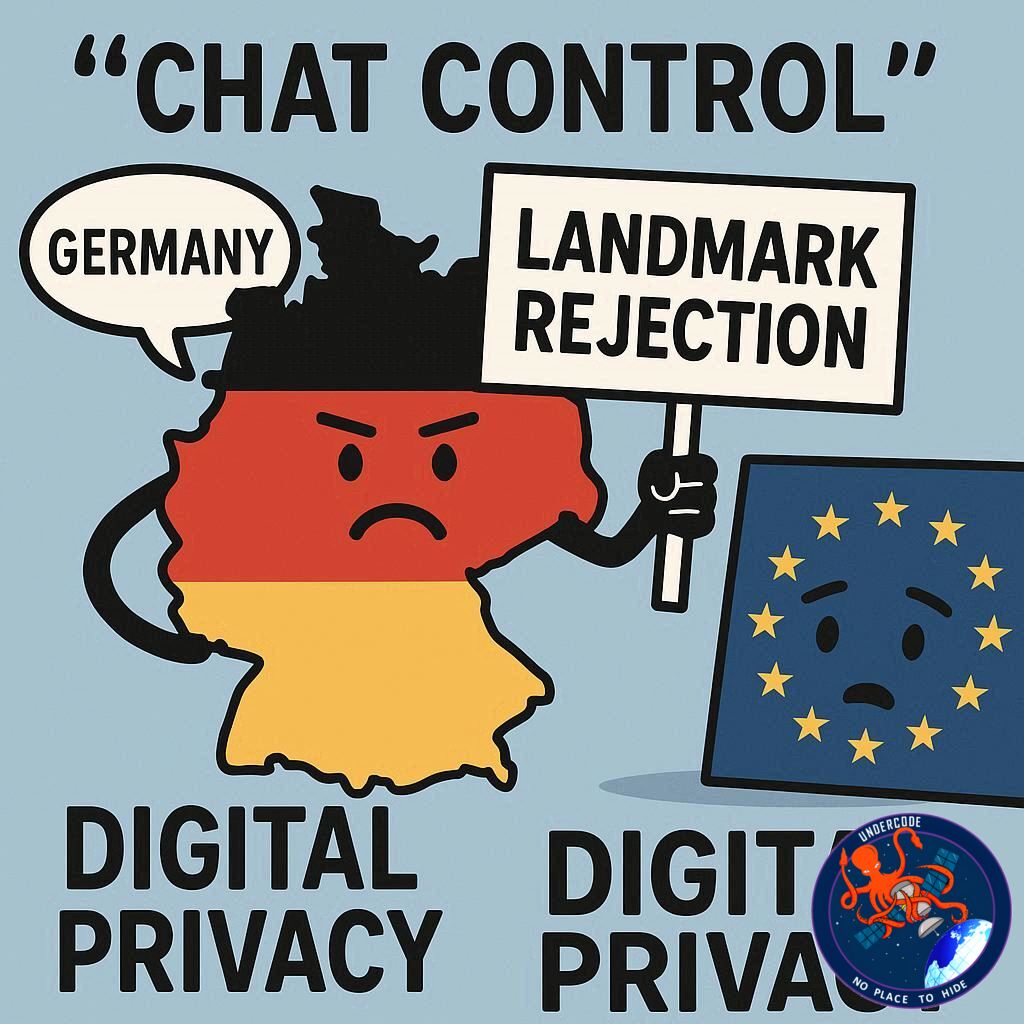
A Bold Stand for Privacy in the Digital Age
Germany has officially announced it will vote against the European Union’s controversial Child Sexual Abuse Regulation (CSAR)—a proposal often referred to as Chat Control. This move comes just days before EU members are set to finalize their positions on October 14. At the heart of the controversy lies the proposal’s demand that all messaging platforms scan users’ private chats, images, and videos for child sexual abuse material (CSAM).
German Federal Justice Minister Stefanie Hubig declared on October 7, 2025, that “random chat monitoring must remain taboo in a constitutional state.” Her firm stance signals that Germany will not support a policy perceived as violating fundamental civil rights. While the German government remains committed to combating child abuse, it insists that security must not come at the expense of personal freedom and privacy.
The debate over Chat Control has deeply divided Europe. Critics argue that enforcing mandatory scanning would erode encryption, the backbone of secure communication on apps like WhatsApp, Signal, and Proton Mail. Advocates of privacy warn that once such surveillance infrastructure is established, it could be repurposed for political or commercial monitoring.
Germany’s resistance has been seen as a major victory for digital privacy and a pivotal moment in the EU’s ongoing struggle to balance safety with freedom. The move also places Germany alongside other nations pushing back against the expanding reach of digital surveillance.
A Turning Point in Europe’s Tech Policy
The announcement followed weeks of uncertainty. Initially joining the opposition in September, Germany’s stance appeared to waver amid internal political pressure. Reports suggested that the Federal Ministry of the Interior, led by the CSU, urged the Federal Ministry of Justice (SPD) to reconsider and support the proposal. However, Hubig’s statement ended the ambiguity.
The decision was celebrated widely among privacy advocates. Patrick Breyer, former MEP for the Pirate Party, called it “a tremendous victory for freedom and proof that protest works.” He cautioned, however, that proponents of Chat Control would not surrender easily. Similarly, David Frautschy from the Internet Society emphasized that the Danish-backed version of the proposal still poses a threat, as it mandates client-side scanning—an invasive process where messages are analyzed on users’ devices before being encrypted.
Privacy organizations are already preparing for what could be a defining confrontation on October 14. The outcome of that EU Council meeting will determine whether Chat Control advances to Parliament for final negotiations or collapses under growing public pressure.
As the debate intensifies, campaigners continue to warn that encryption is not the enemy but the protector of digital democracy. Once compromised, trust in secure communication could vanish overnight, opening the door to mass surveillance and unprecedented data breaches.
What Undercode Say:
Germany’s refusal to endorse Chat Control marks a philosophical stand against the creeping normalization of surveillance. While the regulation’s aim—protecting children—is universally supported, its method risks crossing a dangerous threshold: treating every citizen as a potential suspect.
From a technical standpoint, Chat Control’s mechanism of scanning all digital messages fundamentally conflicts with end-to-end encryption, a cornerstone of cybersecurity. Once a government mandates client-side scanning, no message can truly be considered private again. It creates a precedent where governments or third parties could demand broader access in the name of national security or misinformation control.
Undercode believes Germany’s stand reflects an awakening of digital sovereignty within Europe. For years, European nations have debated how to regulate Big Tech while respecting personal rights. The CSAR controversy has exposed the fragility of that balance. By rejecting Chat Control, Germany is sending a message: privacy is not negotiable.
Another layer of analysis lies in the timing. Just weeks before the EU meeting, Germany was under immense diplomatic pressure. Some analysts believe that the shift was not merely ethical but also strategic—a way to maintain influence within the EU’s digital policy framework without appearing submissive to populist surveillance measures.
This rejection could embolden other EU members like Austria, the Netherlands, and Poland to follow suit. If more countries side with Germany, the entire CSAR framework may be forced into revision or scrapped altogether.
Yet, the real question remains—how will Europe combat online child abuse without breaching privacy? Technology exists to detect CSAM using targeted, transparent tools that don’t undermine encryption. However, governments often favor broad solutions that grant more control, even at the cost of freedom.
The CSAR debate highlights a fundamental contradiction within EU policy: striving to lead the world in digital rights while simultaneously proposing laws that could dismantle them. Undercode argues that privacy should never be treated as a conditional privilege; it’s an inalienable right, just as vital as freedom of speech.
Furthermore, Germany’s stance might push tech companies to become more vocal in defending encryption. If major players like Meta or Apple were forced to implement Chat Control, they’d face global backlash and potential legal challenges. The precedent could extend far beyond Europe, influencing global cybersecurity norms.
Undercode also notes the socio-political symbolism of this decision. In an era of rising authoritarianism and algorithmic governance, Germany’s refusal stands as a reminder that democracy thrives only when citizens are free to communicate without fear of surveillance. The statement “mass scanning must remain taboo” encapsulates not only a legal position but a moral one.
This debate has transformed into a battle for the soul of the internet—whether it remains open and private, or becomes a monitored network where safety trumps liberty. Germany’s firm opposition sets a critical tone for the EU’s future: privacy cannot be sacrificed for control.
If the EU wishes to lead ethically in the digital realm, it must innovate new frameworks that protect children and preserve privacy. Artificial intelligence could assist investigations through anonymized metadata or behavioral pattern recognition, but blanket chat scanning is neither proportionate nor secure.
Ultimately, this episode demonstrates that public resistance works. Grassroots campaigns, legal advocacy, and digital rights movements successfully pressured one of Europe’s most influential nations to hold the line. The next battle will determine whether others have the courage to follow.
Fact Checker Results
✅ Germany officially confirmed it will vote against Chat Control at the EU level.
✅ Privacy experts and digital rights advocates view this as a victory for encryption and freedom.
❌ The proposal is not yet defeated—EU discussions continue, and revisions may reintroduce scanning under new terms.
Prediction
Germany’s stand will likely spark a wider EU rebellion against invasive surveillance laws. Expect a wave of privacy-centric amendments to emerge from other nations, shifting the debate toward ethical AI-assisted detection instead of blanket scanning. Over time, Chat Control may evolve into a more transparent and privacy-friendly directive, preserving Europe’s image as the global defender of digital rights. 🔮
🕵️📝✔️Let’s dive deep and fact‑check.
References:
Reported By: www.techradar.com
Extra Source Hub:
https://www.discord.com
Wikipedia
OpenAi & Undercode AI
Image Source:
Unsplash
Undercode AI DI v2
🔐JOIN OUR CYBER WORLD [ CVE News • HackMonitor • UndercodeNews ]
📢 Follow UndercodeNews & Stay Tuned:
𝕏 formerly Twitter 🐦 | @ Threads | 🔗 Linkedin | 🦋BlueSky | 🐘Mastodon


