
Listen to this Post
The Dawn of a New AI Superpower
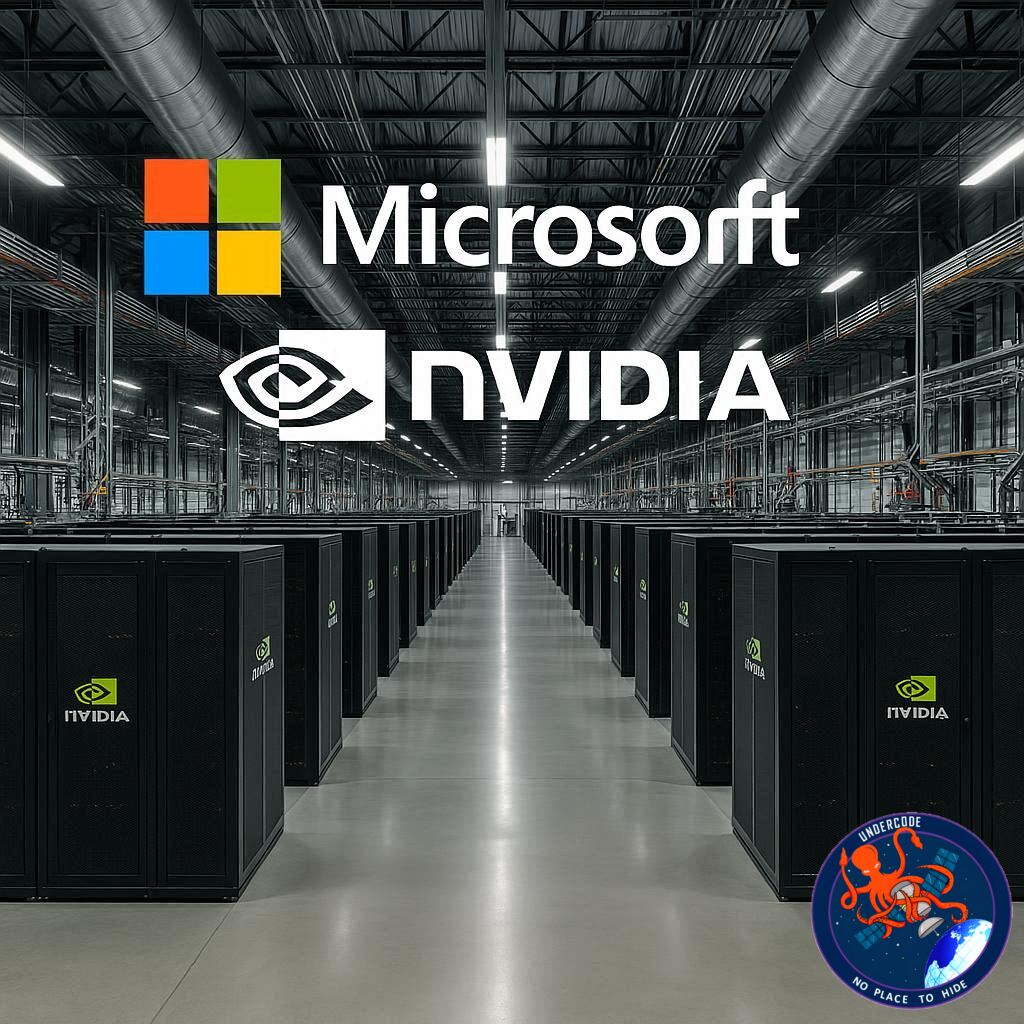
In a bold move that reinforces its position at the forefront of artificial intelligence, Microsoft has unveiled its first Nvidia-powered AI “factory” — a supercomputing cluster that could redefine the future of AI infrastructure. CEO Satya Nadella shared a video on X (formerly Twitter) showcasing this next-generation system, marking it as the “first of many” massive AI facilities rolling out across Microsoft’s global Azure network.
This deployment signals the start of a monumental shift in how data centers are built, powered, and optimized for large-scale AI workloads. Nadella emphasized that the company is “rethinking every layer of the stack — from silicon to software” to handle next-gen AI demands. The announcement arrives only days after OpenAI CEO Sam Altman revealed new mega data center deals, sparking fresh competition between two intertwined tech titans. Nadella’s timing was no accident — his message was clear: Microsoft is already several steps ahead in the AI infrastructure race.
Inside Microsoft’s AI Factories
Each of Microsoft’s new AI factories is a supercomputing marvel. They are powered by more than 4,600 Nvidia GB300 rack systems — each one packed with the groundbreaking Blackwell Ultra GPUs — and connected via Nvidia’s high-speed InfiniBand technology. This setup allows lightning-fast communication between GPUs, dramatically improving performance for AI workloads.
Microsoft’s ambition goes beyond a single facility. The company plans to deploy hundreds of thousands of these GPUs across its global data centers. These machines will power everything from OpenAI’s massive language models to other emerging AI applications in health, science, and enterprise automation.
Currently, Microsoft operates over 300 data centers in 34 countries, creating one of the most extensive cloud infrastructures in existence. With this setup, the company claims it is “uniquely positioned” to serve the next generation of AI models — those containing hundreds of trillions of parameters.
OpenAI’s $1 Trillion Data Center Dream
Meanwhile, OpenAI — Microsoft’s most important partner and sometimes rival — has set its sights on building an even more ambitious AI infrastructure. Reports suggest that OpenAI is investing up to $1 trillion in developing its own network of data centers, working alongside Nvidia and AMD.
Sam Altman has teased upcoming infrastructure announcements that could rival anything Microsoft is currently building. However, Nadella’s recent post seems designed to remind the tech world that while others are still making plans, Microsoft already has the hardware, partnerships, and scalability in motion.
What’s Next for Microsoft
Microsoft CTO Kevin Scott is expected to provide deeper insights into the company’s AI infrastructure strategy at TechCrunch Disrupt later this month. Industry experts anticipate that Scott will unveil more about Microsoft’s vision for distributed AI computing — one that merges cutting-edge hardware, efficient cooling systems, and sustainable energy practices.
With this announcement, Microsoft is signaling not just leadership in cloud computing, but dominance in the global AI arms race.
What Undercode Say:
Microsoft’s latest move is not just an infrastructure announcement — it’s a power play in the rapidly intensifying AI landscape. Here’s what it truly means when viewed through a deeper, more strategic lens:
Microsoft understands that AI supremacy is built on compute, not code. The company’s decision to roll out Nvidia-powered AI factories reflects a recognition that training next-gen AI models requires enormous data throughput, specialized GPUs, and ultra-fast interconnects. By owning the infrastructure layer, Microsoft gains leverage over every AI company building on its Azure platform — including OpenAI itself.
The GB300 clusters are not just machines; they are economic engines. They allow Microsoft to rent high-end AI computing power to startups, researchers, and enterprises. Every AI startup that can’t afford to build its own data center will eventually depend on Azure. That’s the ultimate moat.
While OpenAI talks about trillion-dollar investments, Microsoft is already executing. Nadella’s message subtly undermines OpenAI’s ambitions by showing that Azure has the operational scale today — not in the hypothetical future. This distinction matters: AI progress is a function of access to GPUs, and right now, Nvidia’s GB300s are among the most valuable chips on Earth.
Another layer of Microsoft’s brilliance is integration. By connecting AI factories across 34 countries, Microsoft ensures redundancy, energy optimization, and latency control. This network gives it unmatched reliability for training frontier AI models like GPT-5 and beyond.
Moreover, this move reinforces Microsoft’s long-term partnership with Nvidia, while also quietly reducing dependency on competitors like AMD or Google Cloud. It’s a chess move — one that positions Azure as the default platform for enterprise AI in the 2030s.
There’s also a sustainability angle. With AI training consuming immense energy, Microsoft’s push toward greener, high-efficiency data centers could become a key differentiator. Expect to see AI factories powered by renewable energy sources in the near future.
From a business perspective, this announcement will ripple through the stock market and hardware sectors. Nvidia’s dominance strengthens, AMD faces pressure, and cloud rivals like Amazon and Google will be forced to accelerate their AI hardware strategies.
But here’s the real twist: while most see this as Microsoft building for AI workloads, it’s also laying the foundation for AI-native operating systems. The company’s future versions of Windows, Office, and even Xbox ecosystems could run directly on AI-optimized compute fabrics.
For developers and enterprises, this marks the beginning of an era where software is no longer just hosted — it’s co-evolving with hardware intelligence. Microsoft’s AI factories are, in essence, the digital equivalent of industrial power plants for the new cognitive age.
In short, Microsoft isn’t just competing. It’s industrializing intelligence itself.
Fact Checker Results
✅ Microsoft has confirmed deployment of AI factories using Nvidia GB300 GPUs.
✅ Satya Nadella’s official post on X verifies the scale and architecture details.
❌ OpenAI’s $1 trillion infrastructure claim remains unverified by official filings.
Prediction
💡 Expect a surge in AI infrastructure announcements from major cloud providers before 2026.
💡 Microsoft will likely integrate AI factory capabilities directly into Azure’s enterprise tiers.
💡 By 2027, AI factories may become the backbone of real-time generative applications across industries.
🕵️📝✔️Let’s dive deep and fact‑check.
References:
Reported By: timesofindia.indiatimes.com
Extra Source Hub:
https://www.linkedin.com
Wikipedia
OpenAi & Undercode AI
Image Source:
Unsplash
Undercode AI DI v2
🔐JOIN OUR CYBER WORLD [ CVE News • HackMonitor • UndercodeNews ]
📢 Follow UndercodeNews & Stay Tuned:
𝕏 formerly Twitter 🐦 | @ Threads | 🔗 Linkedin | 🦋BlueSky | 🐘Mastodon


