
Listen to this Post
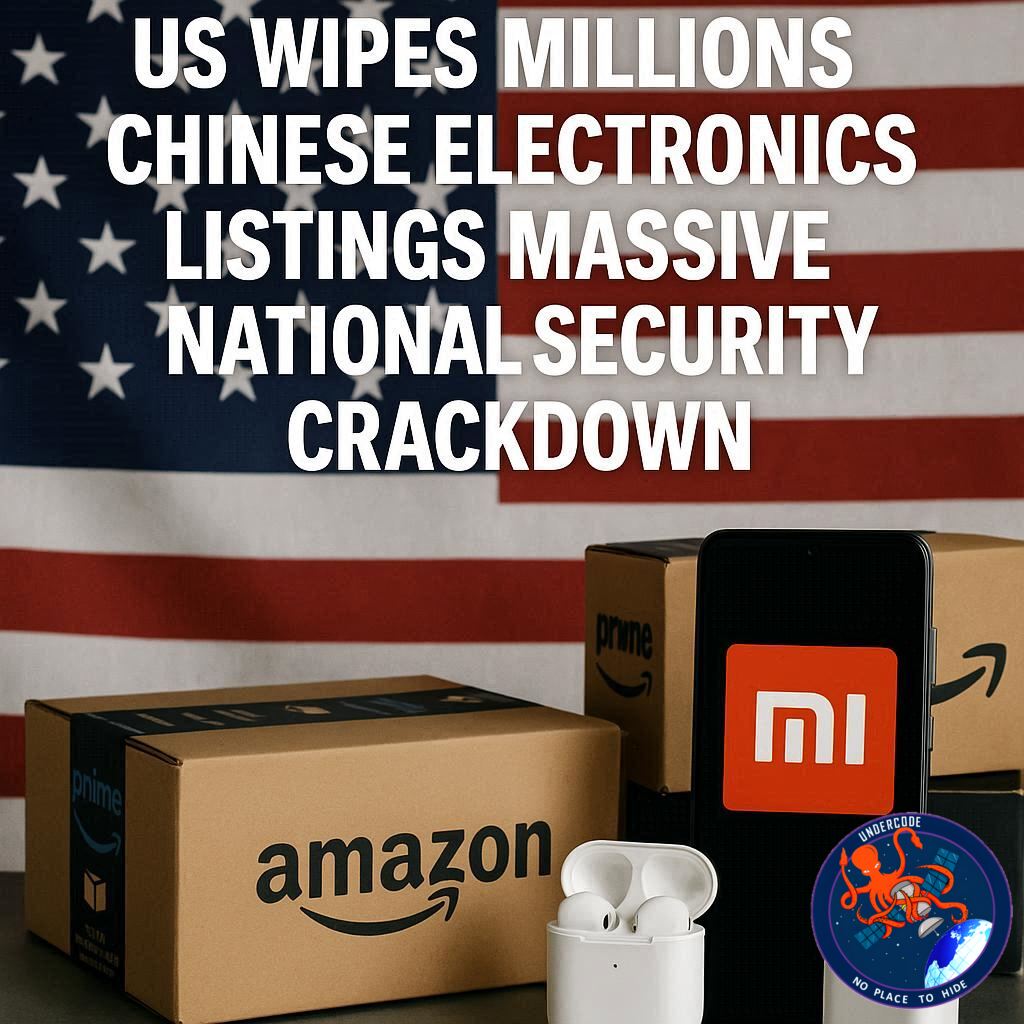
A Digital Purge in the Name of Security
The United States has taken another powerful swing against Chinese technology. The Federal Communications Commission (FCC), led by Chairman Brendan Carr, has confirmed that millions of listings for Chinese-made electronic devices have been removed from major U.S. online retail platforms. According to Carr, these products either appeared on the U.S. government’s prohibited list or lacked the required authorization to be sold in the American market.
The banned products include a wide range of consumer electronics — from smartwatches and routers to home security cameras — made by well-known Chinese firms such as Huawei, ZTE, Dahua Technology, and Hikvision. Carr explained that this removal is part of a broader campaign focused on protecting national security, noting that such devices could potentially be used by China to surveil U.S. citizens, disrupt communication networks, or interfere with critical infrastructure.
In his remarks to Reuters, Carr emphasized that online platforms are now implementing advanced monitoring systems to ensure that no restricted equipment slips through in the future. The FCC also issued a new security directive reminding U.S. companies of the ongoing ban on certain foreign-made surveillance equipment. “We’re going to keep our efforts up,” Carr stated firmly, signaling that this is just the beginning of a long-term regulatory push.
A Pattern of Increasing Restrictions on Chinese Tech
This crackdown is not an isolated move. Over the past several years, U.S. agencies have steadily tightened restrictions on Chinese firms across multiple sectors — from telecommunications and semiconductors to AI and electric vehicles. The main rationale behind these actions has always been national security, as the U.S. government continues to express deep concern about potential espionage, data theft, and control over critical digital networks.
The FCC is also preparing to vote on new measures to further strengthen oversight of Chinese telecommunications equipment. These upcoming regulations would block the approval of any device that includes components from companies on the “Covered List” — a federal list that already includes Huawei, ZTE, China Telecom, China Mobile, and others.
In addition, the FCC may gain authority to revoke authorizations that were previously granted to such companies if evidence arises that their technology poses a risk. This builds on previous investigations into at least nine Chinese entities, including Hytera Communications and China Unicom, whose American subsidiaries are now facing heightened scrutiny.
Last month, the FCC went even further by initiating proceedings to withdraw recognition from several U.S.-based testing laboratories linked to the Chinese government, ensuring that no hidden pathways remain for restricted technology to enter American supply chains.
What Undercode Say:
The Digital Iron Curtain: America’s New Tech Strategy
The FCC’s latest move represents more than just a product ban — it’s part of a calculated strategy to build a digital iron curtain between the U.S. and China. Washington is not simply worried about consumer gadgets; it’s concerned about invisible data flows and embedded hardware vulnerabilities that could allow Beijing’s intelligence apparatus to access sensitive information.
From Smartwatches to Surveillance Risks
On the surface, banning smartwatches or cameras may seem excessive. But many of these devices operate on firmware linked to Chinese servers, often sending diagnostic data back home. Even a single compromised IoT chip can open a backdoor into broader networks. This is the logic behind the FCC’s sweeping action — stop potential threats before they scale.
Corporate Compliance and Algorithmic Policing
Online retailers like Amazon, Walmart, and eBay are now building algorithmic detection tools to identify prohibited listings in real time. This represents a new phase of corporate compliance — one that fuses artificial intelligence with geopolitical regulation. These systems will soon be capable of recognizing restricted brands and even specific product identifiers before sellers can upload them.
Economic Shockwaves and Diplomatic Fallout
China, meanwhile, views these measures as economic aggression rather than legitimate security steps. For Chinese manufacturers, losing access to the U.S. market is a significant financial blow. Huawei’s smartphone division, for instance, already suffered major losses following earlier U.S. sanctions. Smaller firms like Dahua and Hikvision, which heavily depend on international contracts, could now face further instability.
The Broader Tech War Context
This FCC action fits neatly within the broader U.S.–China technology war that spans semiconductors, AI chips, cloud services, and 5G infrastructure. Every restriction tightens the digital noose, pushing China to accelerate domestic innovation and self-reliance. Beijing’s “Made in China 2025” initiative has already pivoted to reduce dependency on U.S. components — but the gap remains vast, especially in high-end chip manufacturing.
Consumer Impact and Supply Chain Realities
For American consumers, this move might initially appear invisible. Yet, as listings disappear, some may notice rising prices for affordable tech gadgets, particularly in categories like home surveillance, wearables, and IoT accessories. Many of these affordable devices came from Chinese factories that could no longer operate under U.S. restrictions.
Future of FCC Authority and Private Cooperation
The FCC’s expanded authority could mark a new era where private corporations serve as the frontline enforcers of national policy. In effect, Washington is deputizing Silicon Valley to maintain the boundaries of national security. This blurring of regulatory and corporate roles creates efficiency but also raises questions about oversight, fairness, and the risk of overreach.
Undercode’s View on the Long Game
From a strategic lens, this decision is as much about perception as protection. The U.S. government wants to project that it is proactive against foreign infiltration. Whether every banned device truly posed a danger is almost secondary to the political and psychological impact of showing zero tolerance.
This approach could influence global digital governance — encouraging allies like Canada, Australia, and the EU to adopt similar restrictions. The ripple effect may redefine how the world manages foreign technology, leading to parallel ecosystems: one led by Western standards, another by China’s domestic network.
Digital Sovereignty and the Future of Trust
Ultimately, the debate is about digital sovereignty — who controls the data, infrastructure, and rules of tomorrow’s connected world. As AI, 5G, and IoT devices become inseparable from daily life, governments are unwilling to outsource even a fraction of that control. The FCC’s crackdown may therefore be seen not as paranoia but as the inevitable evolution of cybersecurity defense.
Fact Checker Results:
✅ Verified: Millions of listings for Chinese electronics have been removed from U.S. online marketplaces.
⚠️ Partially Verified: The full scope of future restrictions remains under proposal and pending FCC votes.
❌ Unconfirmed: Direct evidence that these devices were used for espionage has not been publicly disclosed.
Prediction:
The FCC’s digital purge will likely accelerate the decoupling of U.S.–China technology ecosystems. Expect more aggressive regulations targeting not just hardware but also software, cloud infrastructure, and AI tools. Within two years, U.S. e-commerce platforms may require verified domestic supply chains for all connected electronics, effectively reshaping the online retail landscape and deepening the world’s new tech divide.
🕵️📝✔️Let’s dive deep and fact‑check.
References:
Reported By: timesofindia.indiatimes.com
Extra Source Hub:
https://www.pinterest.com
Wikipedia
OpenAi & Undercode AI
Image Source:
Unsplash
Undercode AI DI v2
🔐JOIN OUR CYBER WORLD [ CVE News • HackMonitor • UndercodeNews ]
📢 Follow UndercodeNews & Stay Tuned:
𝕏 formerly Twitter 🐦 | @ Threads | 🔗 Linkedin | 🦋BlueSky | 🐘Mastodon


