
Listen to this Post
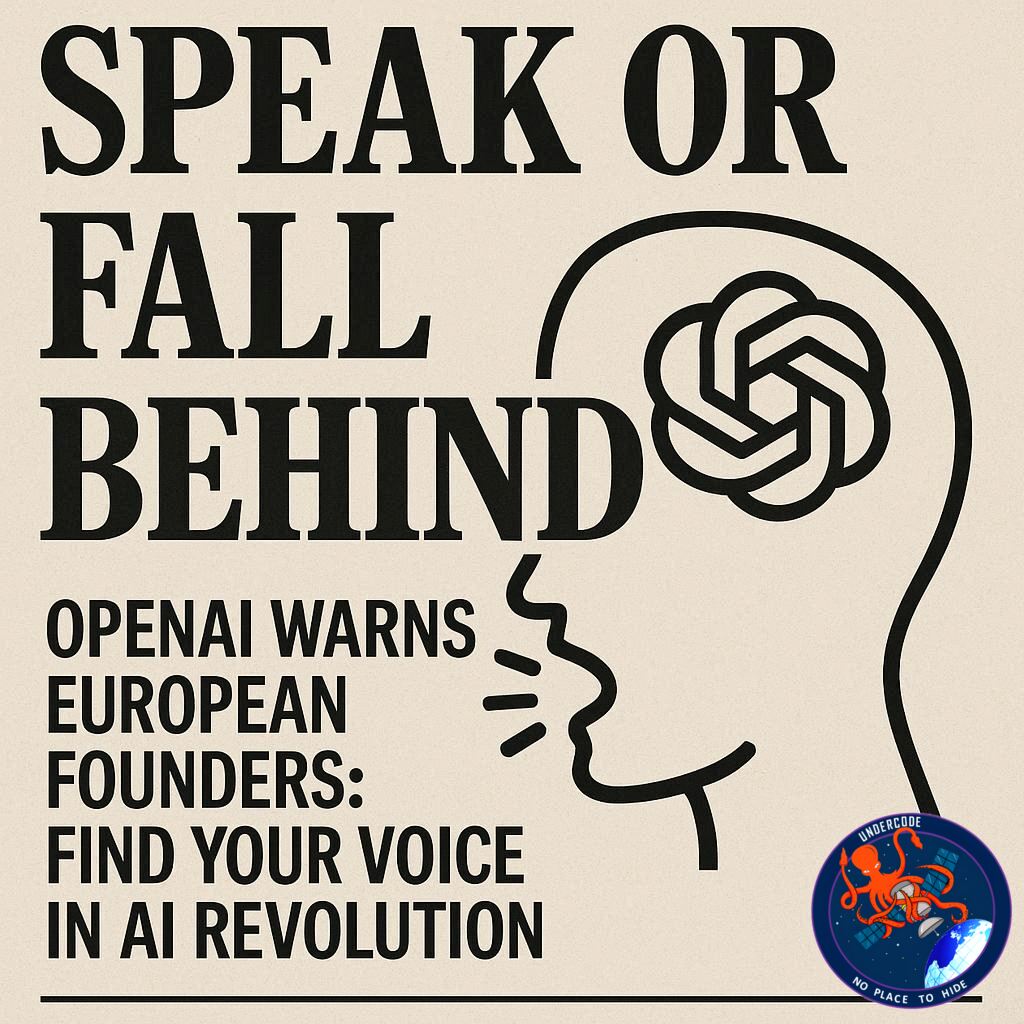
The Rising Divide in AI Confidence
American startup founders are earning a reputation for being “almost shameless” in their direct feedback to OpenAI, says Laura Modiano, the head of OpenAI’s startups division in EMEA. Speaking at the Sifted Summit, Modiano drew a sharp contrast between American and European entrepreneurs, praising U.S. founders for their boldness while urging European innovators to adopt a more assertive stance if they want to stay competitive in the AI race.
She shared her firsthand experiences working with founders across both continents, noting that American entrepreneurs walk into meetings with a fearless attitude. “They come in and say, ‘We need this. You need to improve that,’” Modiano remarked during her fireside chat. “If founders don’t tell us, we don’t always know.” Her message was unmistakable: silence is a strategic risk in a market evolving at lightning speed.
Modiano spotlighted Swedish startup Lovable, valued at $1.8 billion, as a rare European example of effective engagement. The company, famous for its GPT-5-based Lovable Assistant 5, provided hands-on feedback throughout OpenAI’s development process. Modiano spent a full week in their office, holding hourly review sessions that directly influenced GPT-5’s final architecture.
Another example came from Sana, a Swedish AI learning platform. Their founders specifically requested features like tone and speed adjustments for voice capabilities. This demand, echoed by others, led OpenAI to prioritize those updates in its roadmap. Modiano emphasized that “we can only ship what customers tell us they want,” even recommending that startups designate a “chief feedback officer” to maintain continuous communication with AI developers.
Her remarks add fuel to an ongoing debate about cultural differences in global entrepreneurship. Venture capitalists have long criticized European founders for being less aggressive than their U.S. counterparts. Harry Stebbings of 20VC once told CNBC that Europeans tend to undersell their ambitions, while Americans excel at storytelling and projecting confidence.
The critique doesn’t stop with startups. U.K. Business Secretary Peter Kyle recently voiced similar concerns, claiming that British university students lack the entrepreneurial spark of American peers. Speaking at an Nvidia event, Kyle lamented that few British undergraduates attend university intending to launch a company.
Ultimately, Modiano’s message to European founders was simple yet urgent: if you don’t speak up, you won’t shape the future of AI. The technology is moving too fast for passive participation. The boldest voices will define the next wave of innovation — and those who hesitate will be left watching from the sidelines.
What Undercode Say:
The divide between American and European entrepreneurial cultures is more than just a matter of style — it’s structural. The U.S. startup ecosystem rewards loud ambition, rapid iteration, and bold storytelling. In Silicon Valley, failure is often seen as a rite of passage. Founders are encouraged to “fail fast, learn faster,” and pivot without shame. That mentality naturally breeds a feedback culture where founders are unafraid to challenge tech giants like OpenAI.
In contrast, Europe’s startup scene, though technically brilliant, often values humility and precision over speed and self-promotion. European founders tend to build quietly, focusing on product perfection before publicity. While this approach creates stability, it can also breed hesitation — a dangerous trait in an industry that rewards agility.
Modiano’s advice isn’t just about communication; it’s about mindset recalibration. European founders must shift from reactive to proactive thinking. Instead of waiting for AI leaders to define product features, they need to shape the agenda through relentless feedback and vision alignment.
Consider Lovable and Sana — both Scandinavian companies that broke the mold. They refused to wait for global AI standards to arrive; instead, they embedded themselves in OpenAI’s creative process. Their assertiveness earned them early access, technical influence, and, ultimately, market leadership. These examples prove that confidence can be a competitive advantage as powerful as funding or innovation.
Furthermore, Modiano’s suggestion to appoint a “chief feedback officer” may sound corporate, but it’s strategically brilliant. By institutionalizing feedback, startups ensure that their product needs don’t get lost in noise. This role acts as a liaison between innovation and execution, bridging the gap between user experience and AI evolution.
There’s also a sociological layer to this discussion. In Europe, cultural modesty and a fear of confrontation can slow down innovation cycles. Founders often underplay their ideas to avoid seeming arrogant. Meanwhile, American entrepreneurs tend to oversell — but that very confidence fuels visibility, funding, and influence. It’s not just about how good your idea is; it’s about how loudly you believe in it.
The message from OpenAI is, therefore, a wake-up call: AI leadership is not just technical — it’s communicative. The companies shaping the next generation of intelligent systems will be those willing to argue, question, and demand better tools.
Modiano’s remarks also reveal something deeper about OpenAI’s development philosophy. By inviting feedback at scale, OpenAI decentralizes its innovation pipeline. It doesn’t just build in Silicon Valley; it builds through collaboration. This makes startup engagement not a courtesy, but a necessity.
From an economic perspective, Europe risks losing more than just recognition. If its founders remain passive, American startups will continue to dominate AI integrations, setting standards that European markets must later adopt rather than define. The result? A reactive Europe rather than a revolutionary one.
The solution isn’t blind imitation of American aggressiveness but a European evolution — one that blends technical excellence with strategic boldness. Europe’s founders need to learn how to speak loudly without losing authenticity. They must learn that confidence isn’t arrogance — it’s clarity.
If European startups begin to assert their ideas with the same fire as their U.S. counterparts, they won’t just catch up — they could lead. The talent exists. The ideas exist. What’s missing is the volume.
Fact Checker Results:
✅ Laura Modiano’s remarks were made at the Sifted Summit, confirming authenticity.
✅ Swedish startups Lovable and Sana are verified partners with OpenAI’s GPT-5 program.
❌ Claims that all European founders are passive are exaggerated; notable exceptions exist across the region.
Prediction:
In the next two years, Europe’s AI startup ecosystem will experience a communication renaissance. More founders will adopt assertive engagement strategies with major AI labs. As feedback loops strengthen, European voices will play a decisive role in shaping GPT-6-era innovations. The next frontier of AI may not be built by the loudest founders — but by those who finally choose to speak. 🚀
🕵️📝✔️Let’s dive deep and fact‑check.
References:
Reported By: timesofindia.indiatimes.com
Extra Source Hub:
https://stackoverflow.com
Wikipedia
OpenAi & Undercode AI
Image Source:
Unsplash
Undercode AI DI v2
🔐JOIN OUR CYBER WORLD [ CVE News • HackMonitor • UndercodeNews ]
📢 Follow UndercodeNews & Stay Tuned:
𝕏 formerly Twitter 🐦 | @ Threads | 🔗 Linkedin | 🦋BlueSky | 🐘Mastodon


