
Listen to this Post
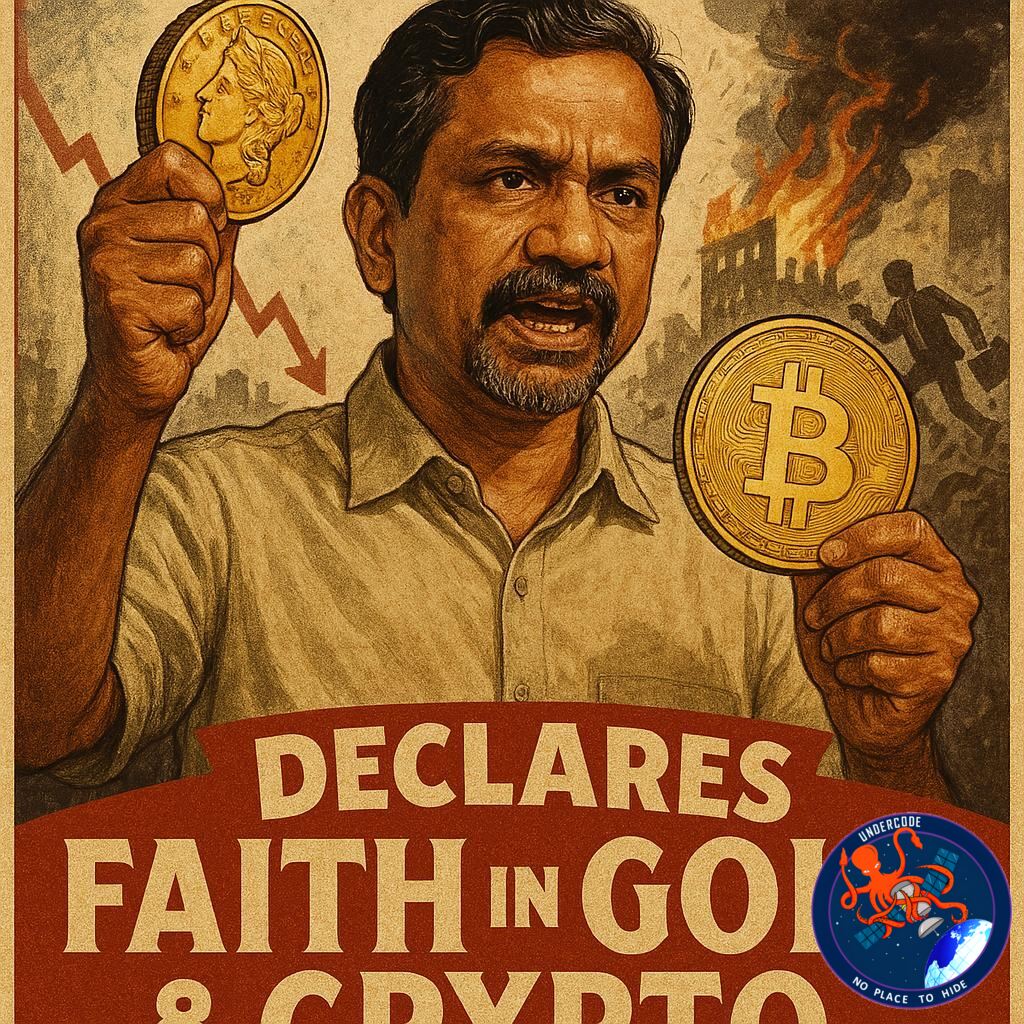
The Enduring Faith in Gold
Zoho founder and former CEO Sridhar Vembu has once again made headlines with his unapologetic stand in favor of gold over cryptocurrency. In a recent post on X (formerly Twitter), the tech leader reiterated his long-standing belief that gold remains the ultimate store of value and insurance against economic instability. While many tech entrepreneurs are busy endorsing Bitcoin and other digital currencies as the next financial revolution, Vembu’s perspective is refreshingly traditional — and deeply rooted in economic history.
Vembu stated that he has been in the “gold as insurance against currency debasement” camp for more than 25 years, emphasizing that gold has consistently maintained its purchasing power relative to essential commodities like petroleum and major stock indices. He explicitly added, “No, I am not interested in crypto,” making it clear that his investment philosophy is based on tangible stability rather than digital speculation.
This declaration comes at a time when global markets are gripped by uncertainty. Inflation fears, fluctuating currencies, and geopolitical conflicts have driven many investors back toward gold — the timeless safe haven. Meanwhile, despite growing institutional interest and regulatory advancements, cryptocurrency markets continue to suffer from sharp volatility, making even seasoned investors uneasy.
To further support his argument, Vembu cited excerpts from research shared by Lyn Alden, which outlined the long-term performance of gold compared to other asset classes. The data revealed some startling insights:
If an investor had placed $100 in U.S. T-bills in 1928, that investment would be worth around $2,249 by 2023. In contrast, the same $100 in long-term Treasury bonds would have grown to $7,278. While that might sound impressive, Alden noted that much of this growth was merely a reflection of dollar debasement, not real purchasing power. Gold, however, would have turned that same $100 into $10,042, preserving its value across nearly a century of inflation and economic turmoil.
Further analysis by Professor Hendrik Bessembinder revealed another uncomfortable truth about the stock market. Of the 26,000 stocks tracked between 1926 and 2019, more than half underperformed T-bills, and a mere 4% of stocks were responsible for nearly all excess returns. Even more surprisingly, 86 stocks accounted for half of all stock market gains, meaning that the vast majority of stocks failed to beat even the purchasing power of gold.
This reinforces Vembu’s belief that gold’s reliability outshines the majority of paper-based or digital investments, especially in an age of economic experimentation and monetary instability. While the U.S. stock market has historically been one of the strongest in the world, Bessembinder’s data suggests that even there, gold quietly outperformed the majority of investment options.
What Undercode Say:
The contrast between gold and crypto isn’t just financial — it’s philosophical. Sridhar Vembu’s stance represents a return to fundamentals in a world obsessed with innovation for its own sake. His belief in gold stems from a deep understanding of how currencies lose value when central banks print money excessively or when global systems favor speculative bubbles over real assets.
From a macroeconomic perspective, gold’s strength lies in its independence from any government, policy, or blockchain algorithm. It is finite, tangible, and globally accepted, attributes that no digital token can replicate without depending on technology and trust in code. Vembu’s preference isn’t about rejecting innovation — it’s about recognizing the difference between an asset and a promise.
Cryptocurrencies, while groundbreaking in terms of decentralization and borderless finance, remain highly speculative. Their value often hinges on sentiment rather than intrinsic worth. Bitcoin, for instance, has been hailed as “digital gold,” but its volatility undermines its potential as a stable hedge. When markets tumble or regulators tighten their grip, crypto investors often experience wild swings that gold investors rarely face.
Vembu’s logic aligns with historical trends. During crises — from the Great Depression to the 2008 financial meltdown, and even the COVID-19 pandemic — gold consistently provided a safe retreat. It doesn’t generate yield, but it also doesn’t evaporate in a flash crash or depend on server uptime. That psychological security has made gold a bedrock of financial conservatism for centuries.
Furthermore, Vembu’s comparison to T-bills, T-bonds, and equities underscores a critical truth about compounding returns: nominal growth doesn’t always translate to real wealth. Inflation, taxation, and dollar devaluation often erode apparent gains. Gold, while static in appearance, retains purchasing power across generations. A kilogram of gold in 1950 could buy a luxury car — and so it can today. Try doing that with fiat currency.
His perspective also challenges the tech industry’s blind faith in digital solutions. Many Silicon Valley figures have embraced crypto as the “inevitable evolution” of money. Yet, few consider the fragility of such systems: hacking risks, regulatory crackdowns, and the concentration of ownership in a few digital wallets. Vembu’s view suggests that real decentralization lies in owning something universally valued, not in chasing algorithmic scarcity.
Another layer to his insight lies in the psychology of wealth preservation. While crypto promises quick gains, gold promises peace of mind. Investors today are bombarded by noise — NFTs, meme coins, digital speculation — while gold stands silently, unaffected by trends. Vembu’s choice reflects not just financial prudence, but also emotional intelligence in investing.
From a practical standpoint, his belief resonates with the global movement toward de-dollarization. Nations like China, Russia, and even central banks worldwide have been accumulating gold reserves, signaling a subtle shift away from overreliance on the U.S. dollar. This validates Vembu’s stance that gold’s role as monetary insurance is not outdated — it’s re-emerging.
Ultimately, what Vembu conveys is timeless wisdom disguised as simplicity. In an era when investors chase digital euphoria, he reminds us that stability itself is a form of power. His declaration isn’t anti-crypto — it’s pro-reality. He’s urging people to see beyond market hype and appreciate what has withstood every empire, every crisis, and every innovation wave for thousands of years: the shine of gold never fades.
Fact Checker Results
✅ Gold has historically preserved value through inflation and crises.
❌ Crypto remains too volatile to serve as a stable hedge.
✅ Long-term data supports gold outperforming most assets in real purchasing power.
Prediction
Gold will continue to regain investor trust as economic uncertainty deepens, while cryptocurrency markets face growing regulation and volatility. Investors seeking long-term safety will increasingly return to tangible assets like gold, following the logic of visionaries like Sridhar Vembu, who see stability as the ultimate wealth.
🕵️📝✔️Let’s dive deep and fact‑check.
References:
Reported By: timesofindia.indiatimes.com
Extra Source Hub (Possible Sources for article):
https://stackoverflow.com
Wikipedia
OpenAi & Undercode AI
Image Source:
Unsplash
Undercode AI DI v2
Bing
🔐JOIN OUR CYBER WORLD [ CVE News • HackMonitor • UndercodeNews ]
📢 Follow UndercodeNews & Stay Tuned:
𝕏 formerly Twitter 🐦 | @ Threads | 🔗 Linkedin | 🦋BlueSky | 🐘Mastodon


