
Listen to this Post
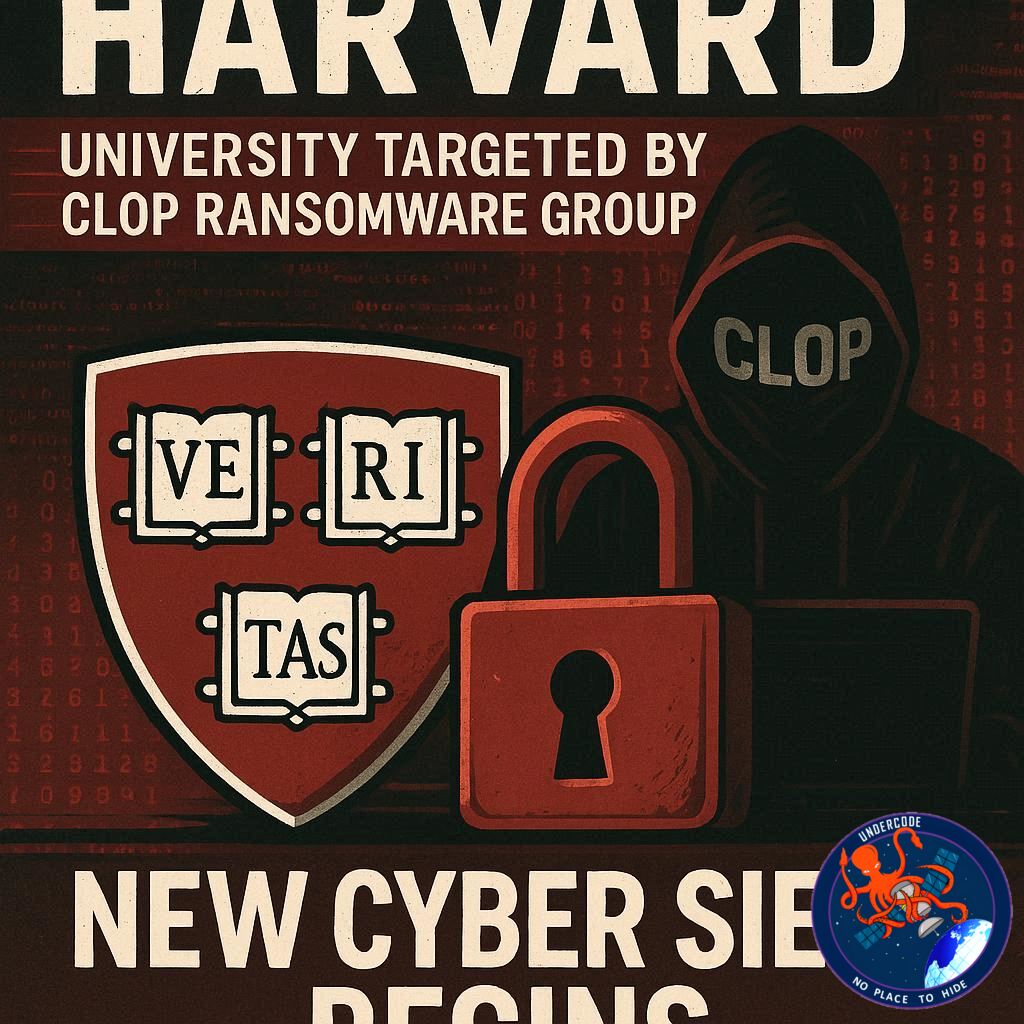
The Rising Storm Against Harvard
In a shocking development that reverberated through the cybersecurity community, the notorious Clop ransomware group has claimed responsibility for hacking into Harvard University’s systems. The cybercriminal syndicate has already set up a dedicated page for the university on its dark web leak site, promising to release the stolen data soon. According to Clop’s announcement, “PAGE CREATED, DATA ARCHIVING IS IN PROGRESS… A TORRENT LINK WILL BE AVAILABLE SOON!!!” — a chilling signal that a torrent of sensitive academic and administrative data could soon be exposed to the world.
This declaration is accompanied by a scathing accusation from the hackers themselves: “The company doesn’t care about its customers, it ignored their security!!!” — a statement that, while crude, underscores a recurring theme in the ransomware underworld: exploiting weak cybersecurity protocols at high-value institutions.
The Clop group, also known as Cl0p, has built a reputation as one of the most dangerous ransomware-as-a-service (RaaS) operations in existence. With roots tracing back to the TA505 cybercrime group — active since 2014 — Clop emerged in 2019 and has since orchestrated a series of devastating global cyberattacks. Their victims are often high-profile entities with extensive data reserves, including Shell, British Airways, Bombardier, PwC, the University of Colorado, and even the undercode.
Much like other Russian-speaking hacker groups, Clop adheres to an unspoken code: avoid attacking organizations in former Soviet countries. Their malware is even designed to remain dormant on computers using Russian as the primary language. Instead, their sights are set firmly on Western institutions, where financial and reputational damage yield far higher returns.
Clop’s attack methodology follows a familiar yet potent pattern. They identify valuable targets, breach networks, exfiltrate sensitive data, encrypt entire systems, and then demand ransoms under the threat of public data leaks. This strategy — known as double extortion — has proven remarkably effective. In several cases, even after ransom payments were made, Clop still published parts of the stolen data to demonstrate dominance and erode trust between organizations and their clients.
The group’s technological arsenal includes exploiting zero-day vulnerabilities and weak third-party software such as MOVEit, GoAnywhere, and Oracle EBS. They also rely heavily on initial-access brokers, cybercriminal middlemen who sell compromised network credentials, allowing Clop to infiltrate systems with alarming precision. Combined with advanced automation and lateral-movement tactics, Clop has refined the art of ransomware deployment into a near-industrial operation.
While Harvard has yet to issue an official statement, cybersecurity experts warn that the implications could be severe. A breach at an elite institution like Harvard doesn’t just risk exposing student and faculty data; it also threatens sensitive research, intellectual property, and global partnerships.
The incident raises serious questions about how even the most prestigious universities — often with vast digital infrastructures — remain vulnerable to such attacks. It also reignites debate about whether academic institutions are investing adequately in digital defense, or if their trust in legacy systems has left them dangerously exposed.
What Undercode Say:
The Clop–Harvard breach marks a critical turning point in the escalating war between cybercriminal syndicates and educational institutions. For years, ransomware groups have targeted corporations and government agencies for financial gain, but universities have now emerged as prime targets due to their unique blend of high-value data, decentralized IT systems, and limited cybersecurity maturity.
Clop’s strategic choice of Harvard is not random — it’s symbolic. Harvard embodies prestige, wealth, and global recognition. Striking such an institution sends a powerful message across the dark web: “No target is too sacred.” By publicizing the attack and teasing a forthcoming torrent release, Clop aims to amplify psychological pressure not just on Harvard, but on the entire academic sector.
From an analytical standpoint, this attack highlights a dangerous pattern. Universities hold vast repositories of personal data — student records, financial details, cutting-edge research, and intellectual property — yet many still treat cybersecurity as a secondary concern. Harvard’s breach might be the canary in the coal mine for higher education, a warning that the digital fortress must now be as strong as the academic one.
Clop’s methods also reveal the industrial evolution of ransomware. Gone are the days of lone hackers operating from basements. Today’s ransomware groups function like corporations, complete with hierarchies, customer service portals, and payment negotiation teams. The sophistication behind Clop’s zero-day exploits and automation tools rivals that of nation-state actors.
Furthermore, the use of double extortion has turned data theft into psychological warfare. Victims are no longer negotiating to restore access to their systems — they’re negotiating to prevent public humiliation and reputational collapse. For a university whose prestige depends on trust and confidentiality, the stakes are immeasurably high.
Another alarming aspect is Clop’s continued exploitation of third-party software vulnerabilities, especially in file transfer tools like MOVEit and GoAnywhere. These attacks exploit the weakest link — a single outdated system or overlooked security patch — to compromise entire networks. The reliance on such tools across academia makes this an ongoing and systemic risk.
The geopolitical undertones cannot be ignored either. Clop’s avoidance of Russian-speaking targets suggests tacit protection or at least tolerance within certain jurisdictions. This mirrors patterns observed in other ransomware groups such as Conti and LockBit, where attacks against Western entities often serve dual purposes: financial gain and geopolitical disruption.
For Harvard, the real danger lies beyond immediate data loss. The exposure of confidential research data could have long-term implications for partnerships, funding, and even global academic competitiveness. Sensitive information — from biomedical studies to intellectual property — could find its way into the hands of competitors or hostile entities.
Cybersecurity analysts also speculate that Clop’s announcement may serve as psychological leverage rather than proof of immediate data possession. The phrase “PAGE CREATED, DATA ARCHIVING IS IN PROGRESS” could indicate an incomplete breach or a bluff aimed at forcing Harvard into negotiation. However, Clop’s past record of delivering on threats makes this possibility grimly uncertain.
Ultimately, the Clop–Harvard case underlines the urgent need for universities to rethink their cybersecurity frameworks. Academic institutions must implement zero-trust architectures, continuous monitoring, and staff cybersecurity education. Traditional IT departments are no longer sufficient to handle the scale and sophistication of modern cyberattacks.
As digital transformation accelerates, the boundary between corporate and academic cybersecurity will continue to blur. The lesson here is brutally clear: reputation alone cannot protect against ransomware. Cyber defense, not prestige, determines survival in the new digital battlefield.
Fact Checker Results:
✅ The Clop ransomware group is a verified cybercrime operation active since 2019.
✅ Harvard University’s name appeared on Clop’s leak site as of the recent announcement.
⚠️ Official confirmation or detailed response from Harvard is still pending.
Prediction:
Clop will continue targeting high-value educational and research institutions due to their rich data reservoirs and slower response systems. Expect to see a surge in ransomware attacks on elite universities and global think tanks in the coming months. Unless Harvard and similar institutions rapidly upgrade their cyber defenses, the next breach will not be a question of if — but when. 🚨
🕵️📝✔️Let’s dive deep and fact‑check.
References:
Reported By: securityaffairs.com
Extra Source Hub (Possible Sources for article):
https://www.linkedin.com
Wikipedia
OpenAi & Undercode AI
Image Source:
Unsplash
Undercode AI DI v2
Bing
🔐JOIN OUR CYBER WORLD [ CVE News • HackMonitor • UndercodeNews ]
📢 Follow UndercodeNews & Stay Tuned:
𝕏 formerly Twitter 🐦 | @ Threads | 🔗 Linkedin | 🦋BlueSky | 🐘Mastodon


