
Listen to this Post
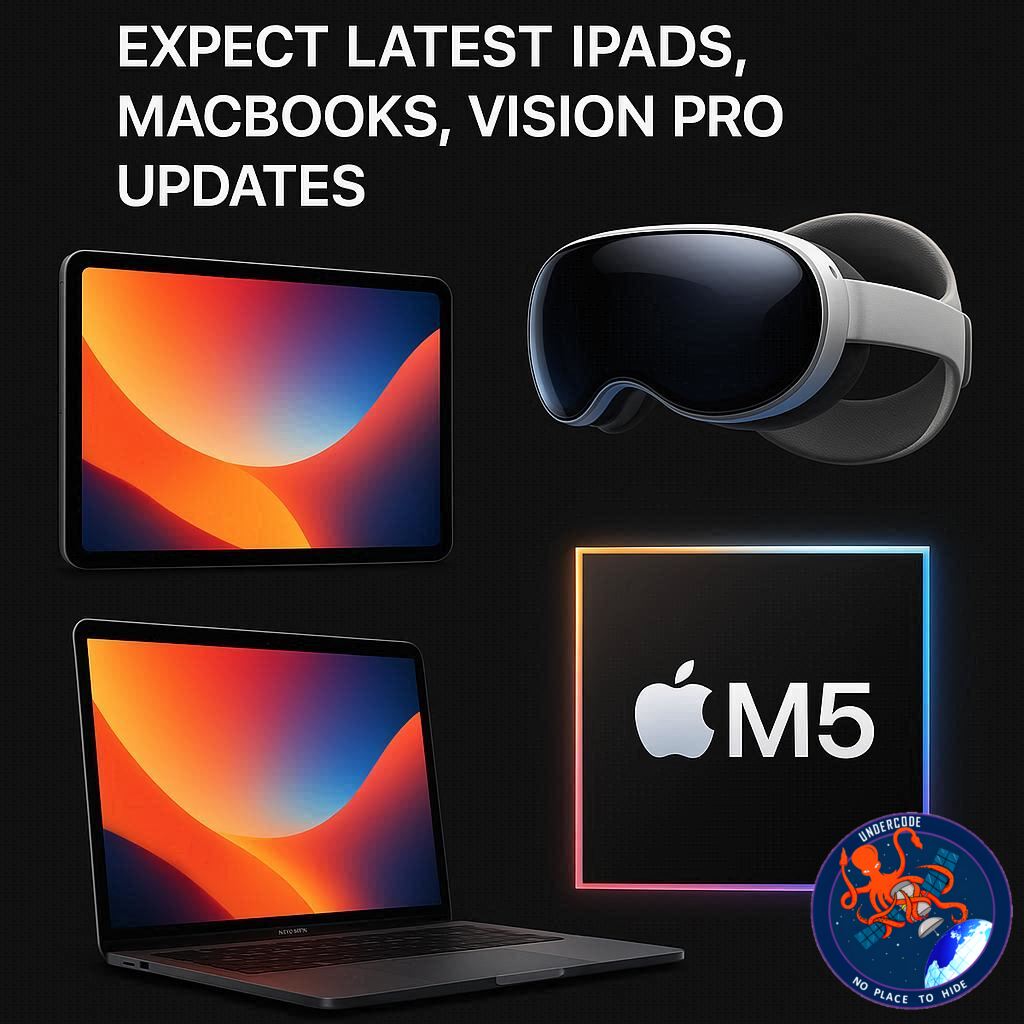
Apple is gearing up for its October product launches, and all eyes are on the highly anticipated M5 chip. Following September’s unveil of new iPhones and Apple Watches, the tech giant seems ready to expand its ecosystem with refreshed devices, promising improved performance and efficiency across iPads, MacBooks, and even its Vision Pro headset. Rumors indicate these updates could arrive as early as this week, setting the stage for a wave of incremental yet impactful hardware upgrades.
The first M5-powered MacBook Pro is expected to launch with only minor changes beyond the new chip, offering better performance and energy efficiency compared to the M4. While whispers of a redesigned OLED MacBook Pro with a thinner chassis have circulated, those innovations are likely reserved for the next M6 generation. Interestingly, Apple may stagger the release of different M5 tiers, with the base M5 arriving now, while the M5 Pro and M5 Max versions debut in early 2026, according to insider reports.
The M5 iPad Pro has already leaked online through Russian YouTubers, who showcased fully functional devices in unboxing videos, suggesting a near-term release. Performance tests indicate a 10% boost in single-core speed, 16% in multi-core processing, and 34% in graphics output compared to the M4, positioning the device as a subtle yet meaningful upgrade for creative professionals and power users. Pre-orders may soon go live via AT&T, signaling Apple’s readiness to ship the new models.
The Vision Pro headset, however, faces a more modest update. While it will receive the M5 chip and a more comfortable strap, weight reduction and other major improvements appear unlikely. Industry insiders hint that the long-anticipated cheaper Vision Pro model is being delayed to make way for Apple’s forthcoming AR glasses. As such, while the updates refine the product line, they don’t fully address the headset’s earlier criticisms.
Beyond these three headline devices, Apple’s roadmap hints at more upgrades coming soon: the HomePod mini, AirTag, Apple TV, iPhone 17e, M5 MacBook Air, and the higher-tier MacBook Pro models may launch in the near future. For now, Apple seems focused on incremental performance enhancements rather than sweeping design changes, maintaining a steady cadence of innovation.
What Undercode Say:
Apple’s strategy with the M5 rollout reflects a nuanced balancing act between performance, market timing, and consumer expectations. The staggered release of the M5 tiers, for instance, is not merely a supply-chain consideration—it suggests a deliberate approach to sustaining buzz and market demand into early 2026. By releasing the base M5 now and delaying the Pro and Max versions, Apple ensures continued media attention and keeps enthusiasts engaged, while likely optimizing internal production workflows.
The M5 MacBook Pro and iPad Pro upgrades illustrate Apple’s commitment to incremental improvement over radical redesigns. Performance metrics show meaningful gains, particularly in graphics and processing efficiency, which will appeal to professionals reliant on rendering, video editing, and multitasking. However, the absence of major design changes—like the OLED MacBook or a lighter Vision Pro—signals Apple’s recognition that the current industrial designs remain strong, and significant overhauls can be saved for the next generation without disrupting sales cycles.
Leaks, such as those from YouTube unboxings, play a double role. They not only create consumer hype but also act as unofficial validation of Apple’s development progress, which can influence investor confidence and retail pre-order behavior. Meanwhile, the Vision Pro’s limited update highlights Apple’s cautious approach in emerging markets like AR and VR. The decision to delay a cheaper version suggests the company is prioritizing technological readiness over rapid market penetration, aiming to avoid repeating earlier missteps.
Strategically, Apple appears to be balancing hardware innovation with ecosystem cohesion. Every M5 device—MacBook, iPad, and Vision Pro—benefits from cross-platform software optimization, ensuring that the performance improvements of the M5 chip translate seamlessly into real-world user experiences. This underscores Apple’s long-standing philosophy: while incremental hardware updates may seem subtle externally, their impact is magnified by tight integration with the software ecosystem.
From a consumer perspective, the M5 rollout is both exciting and cautious. Users benefit from measurable performance improvements, longer battery life, and enhanced graphics, but early adopters may feel underwhelmed if they anticipated dramatic design changes. Apple’s messaging will likely focus on professional-grade enhancements and ecosystem synergy rather than aesthetic reinvention, positioning these updates as “refined evolution” rather than revolution.
Market implications are also notable. The M5 chip strengthens Apple’s competitive edge against PC and Android ecosystems by continuing to offer superior energy efficiency and performance scaling, particularly for creative professionals. At the same time, the staggered release plan could create secondary market dynamics, with early M5 adopters potentially influencing the demand curve for Pro and Max models next year.
Analytically, Apple is leveraging both product hype and incremental technical improvements to maintain brand authority and consumer loyalty. The company is carefully navigating production timelines, chip supply chains, and retail strategies, ensuring that every launch—though minor on the surface—contributes to a broader narrative of technological leadership. By prioritizing software-hardware integration and strategically timing releases, Apple is crafting a long-term ecosystem growth plan that extends well into 2026.
In short, the M5 rollout is emblematic of Apple’s evolution strategy: calculated, incremental, and ecosystem-focused. The enhancements are real, the timing is strategic, and the narrative is carefully curated to maintain market dominance without overselling immediate design transformations.
Fact Checker Results:
✅ M5 MacBook Pro launch imminent – supported by multiple leaks and Bloomberg reporting.
✅ M5 iPad Pro performance gains confirmed in YouTube unboxing and benchmark tests.
❌ Major Vision Pro redesign not expected this year; only minor upgrades anticipated.
Prediction:
📊 The M5 chip lineup will generate steady consumer interest, particularly among creative professionals seeking incremental performance gains. Expect the base M5 devices to dominate Q4 sales, while the Pro and Max models create a mid-2026 spike in Apple hardware excitement. The Vision Pro will remain niche, but future AR products could reshape Apple’s wearables market. The ecosystem-centric strategy may also push more users to adopt multiple M5 devices, strengthening brand loyalty and increasing cross-device engagement.
🕵️📝✔️Let’s dive deep and fact‑check.
References:
Reported By: www.techradar.com
Extra Source Hub (Possible Sources for article):
https://www.quora.com/topic/Technology
Wikipedia
OpenAi & Undercode AI
Image Source:
Unsplash
Undercode AI DI v2
Bing
🔐JOIN OUR CYBER WORLD [ CVE News • HackMonitor • UndercodeNews ]
📢 Follow UndercodeNews & Stay Tuned:
𝕏 formerly Twitter 🐦 | @ Threads | 🔗 Linkedin | 🦋BlueSky | 🐘Mastodon


