
Listen to this Post
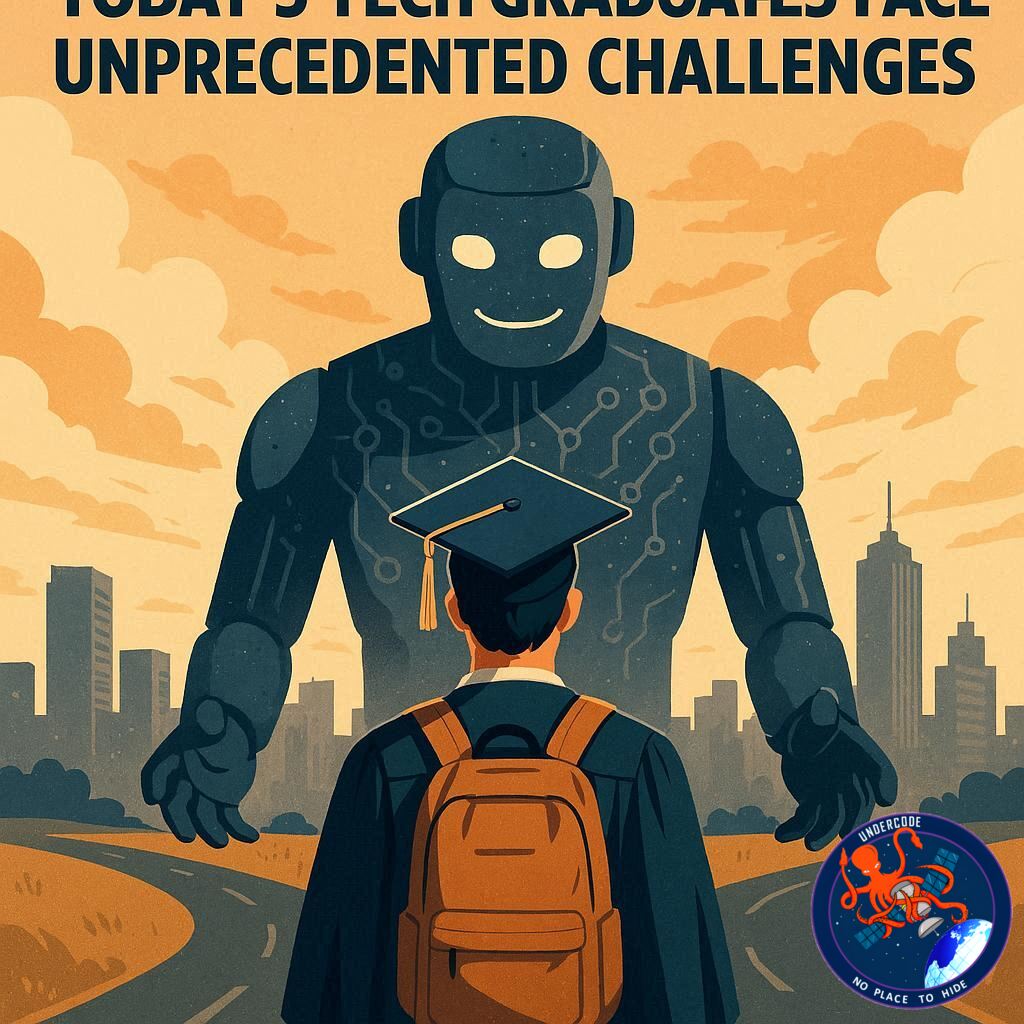
In an era where artificial intelligence is reshaping the very landscape of work, the newest generation of tech graduates is finding itself at a crossroads. Jobs once considered stepping stones for young professionals in software development, cybersecurity, and IT are now being rapidly transformed—or even replaced—by generative AI tools. This seismic shift raises urgent questions: How can new graduates remain competitive? What skills will ensure they don’t fall behind in a world where machines can do the heavy lifting?
Entry-Level Tech Jobs Under Pressure
Recent research from Stanford University reveals a stark reality: positions for 22- to 25-year-old tech professionals have dropped approximately 13% since the rise of generative AI. This decline is most pronounced in roles highly susceptible to automation, such as coding, software development, and other technical entry-level positions. AI systems, capable of performing tasks that traditionally required junior human intervention, are replacing workers still in the process of developing foundational skills. The result is a new professional landscape where early-career employees must upskill faster than ever before to stay relevant.
Perspectives from Cybersecurity Leaders
While AI’s impact on entry-level roles is undeniable, industry leaders offer a more nuanced perspective. Marshall Erwin, CISO at Fastly, points out that the cybersecurity sector may be somewhat insulated from full-scale AI replacement due to the sheer volume and complexity of threats that human judgment is still required to assess. AI, he notes, can filter noise and allow professionals to focus on high-risk areas, rather than eliminate jobs entirely.
Jason Manar, CISO at Kaseya, echoes this sentiment, suggesting that AI will redefine, rather than erase, junior-level roles. New opportunities are emerging in AI-focused engineering, creating paths for those willing to adapt and integrate AI into their workflow. However, Jessica Sica, CISO at Weave Communications, warns that entry-level positions are becoming increasingly competitive, and AI may intensify these barriers.
Rising Expectations for New Professionals
For graduates like Mudit Sinha, navigating this AI-driven landscape requires initiative, networking, and a willingness to perform at levels previously reserved for senior professionals. Sinha advises early-career candidates to proactively showcase projects, stay abreast of AI advancements, and cultivate both technical and interpersonal skills. AI is not eliminating the need for human interaction; it is amplifying expectations, meaning juniors must deliver outputs on par with more experienced colleagues while remaining highly collaborative and adaptive.
What Undercode Say: Analytical Perspective
The current shift in the tech industry is less about AI replacing humans entirely and more about AI elevating the baseline of required skills. Entry-level professionals must contend with an environment where automated tools can complete repetitive coding tasks, analyze massive datasets, or identify security threats with unprecedented speed. The implication is profound: junior employees are now evaluated not only on their technical ability but also on their capacity to leverage AI effectively.
The cybersecurity sector illustrates this dynamic clearly. Despite concerns over AI displacing jobs, the volume and complexity of threats are such that human judgment remains indispensable. AI serves as a force multiplier, allowing teams to prioritize, filter, and respond more effectively rather than eliminating roles outright. The true challenge lies in how graduates integrate AI into their workflow to produce results that exceed traditional expectations.
Soft skills, often underestimated in technical careers, are now critical differentiators. Communication, networking, and the ability to convey complex AI-augmented insights will distinguish successful candidates from those who rely solely on technical expertise. Additionally, graduates must adopt a mindset of continuous learning; AI evolves rapidly, and staying competitive means mastering both the tools and the principles behind them.
Internally, companies are shifting expectations for entry-level hires. Where once juniors might have handled straightforward coding tasks, they are now expected to contribute meaningfully to projects involving AI integration, automation, or advanced analytics. This creates a dual pressure: perform at a high level immediately while simultaneously learning faster than traditional career timelines would dictate.
Furthermore, AI-driven consolidation may reduce the sheer number of available entry-level positions. Graduates entering the job market must therefore adopt proactive strategies: specialized skill-building, networking, and hands-on experience with AI technologies are no longer optional—they are prerequisites.
The psychological impact on young professionals is also worth noting. Facing steep expectations, competition, and automation pressure can be daunting, potentially leading to burnout or discouragement. Mentorship, community support, and structured upskilling programs will play crucial roles in helping new entrants navigate this landscape.
In essence, the AI era demands a hybrid model of career readiness: technical competence amplified by AI literacy, paired with strong interpersonal skills and adaptive thinking. Those who master this combination will not only survive but thrive. Those who do not may find themselves displaced, not because of obsolescence but due to a failure to meet the heightened performance standards AI introduces.
Fact Checker Results
✅ Stanford study confirms ~13% decline in entry-level tech jobs since generative AI adoption.
✅ CISOs report AI enhances workflows without fully replacing cybersecurity roles.
❌ No evidence suggests AI will immediately eliminate all entry-level tech jobs; the effect is nuanced and sector-dependent.
Prediction
📊 The integration of AI in tech industries will continue accelerating, redefining entry-level expectations by 2027. Graduates proficient in AI tools, soft skills, and adaptive strategies will dominate hiring pipelines, while traditional junior roles may shrink by 10–15% over the next five years. New positions blending AI oversight and human judgment will emerge, creating a competitive but opportunity-rich landscape.
🕵️📝✔️Let’s dive deep and fact‑check.
References:
Reported By: www.darkreading.com
Extra Source Hub (Possible Sources for article):
https://www.github.com
Wikipedia
OpenAi & Undercode AI
Image Source:
Unsplash
Undercode AI DI v2
Bing
🔐JOIN OUR CYBER WORLD [ CVE News • HackMonitor • UndercodeNews ]
📢 Follow UndercodeNews & Stay Tuned:
𝕏 formerly Twitter 🐦 | @ Threads | 🔗 Linkedin | 🦋BlueSky | 🐘Mastodon


