
Listen to this Post
A Silent Storm in the Digital Shadows
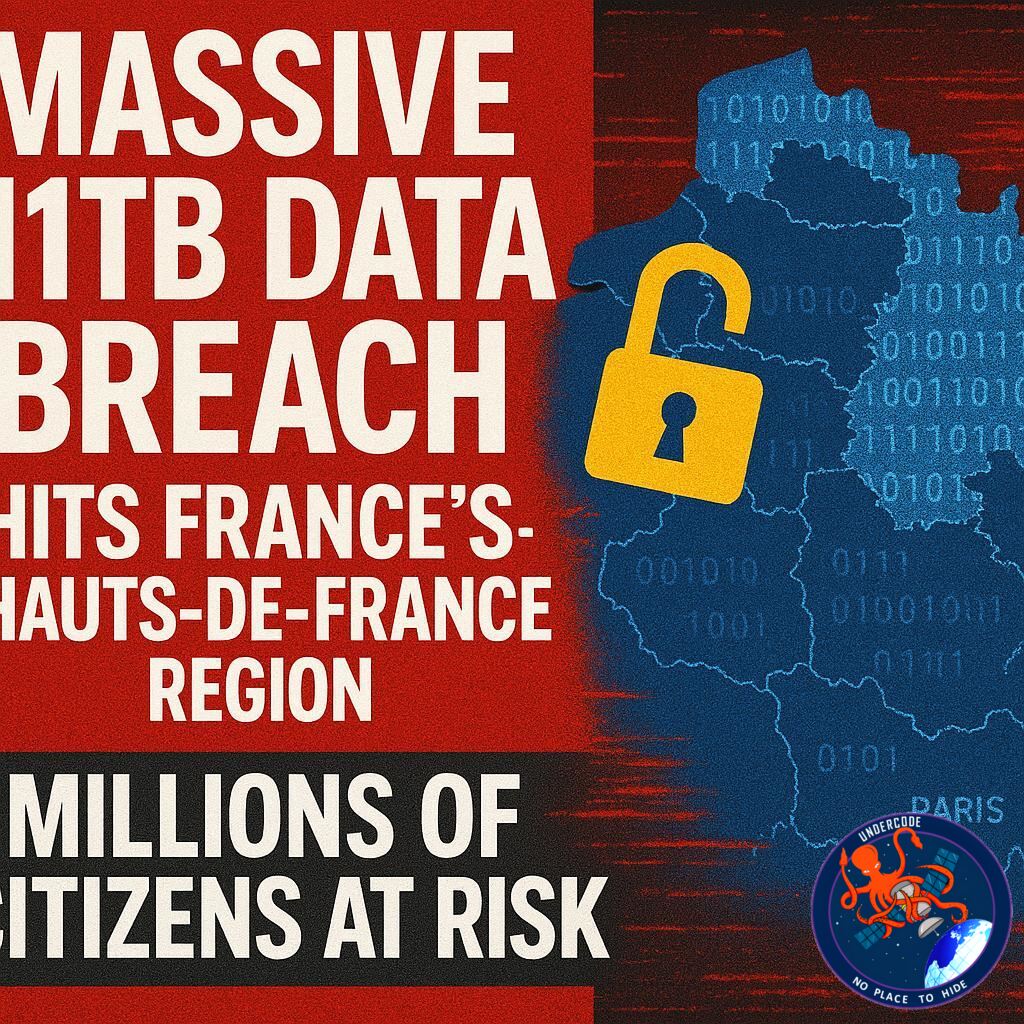
In the early hours of October 14, 2025, reports surfaced from the cyberintelligence network Daily Dark Web revealing a shocking breach of the official website for France’s Hauts-de-France region. The alleged intrusion has exposed a massive 1.1-terabyte trove of sensitive data, including personally identifiable information (PII) and government ID scans belonging to French citizens.
The dark web post advertising this dataset has already started circulating in underground markets, raising fears of identity theft, blackmail schemes, and large-scale fraud. While regional authorities have yet to confirm the full extent of the breach, cybersecurity experts warn that if the claims hold true, this could be one of the largest governmental data leaks in Europe’s history.
A Breach That Could Shake Digital Trust
The dataset—reportedly containing ID cards, personal addresses, and official documents—appears to be up for sale to the highest bidder. Such information is a goldmine for cybercriminals, who can exploit it for financial scams, identity fabrication, and targeted phishing campaigns.
Analysts estimate that the 1.1TB size of the dataset could represent information on hundreds of thousands, possibly millions of French citizens. What makes the situation more alarming is the apparent targeting of a governmental web system, suggesting potential weaknesses in public-sector cybersecurity measures that many assumed were fortified.
Cybersecurity forums have been buzzing since the news broke, with users dissecting samples allegedly shared by the attacker as “proof of breach.” These samples reportedly include high-resolution scans of ID cards, passports, and residency permits, alongside metadata and backend administrative credentials.
If verified, this leak could open a dangerous window into the private lives of citizens across the Hauts-de-France region—spanning Lille, Amiens, and other major cities. Beyond identity theft, such data can be leveraged for political manipulation, social engineering, or even espionage, depending on who eventually purchases the dataset.
Cyber Threat Actors and Their Motives
According to preliminary intelligence shared on cybercrime channels, the threat actor behind this breach remains unnamed but claims to have exploited an unpatched vulnerability in the regional government’s web application.
This method of infiltration aligns with a growing pattern of state and non-state hackers targeting underfunded municipal and regional IT infrastructures, often overlooked in national cybersecurity strategies.
While some speculate the hacker’s motive is purely financial—given the sale listing—others suspect it could be an act of cyber sabotage or geopolitical signaling, especially in light of rising tensions in Europe’s digital landscape.
A Wake-Up Call for Public Cybersecurity
France, like many European nations, has been actively tightening its cybersecurity frameworks following several major attacks on hospitals, universities, and administrative systems. Yet, this latest incident proves how regional-level digital systems remain a soft target.
The exposure of sensitive government data not only threatens individual citizens but also undermines public confidence in digital governance—a cornerstone of modern administration. Citizens expect their governments to safeguard personal data with the same seriousness as physical borders. When that trust collapses, it leaves an invisible but profound societal scar.
This breach also raises questions about data storage practices—was the information properly encrypted? Were access logs regularly audited? Were backup systems equally vulnerable? These are questions investigators and the French cybersecurity agency (ANSSI) will now have to answer under immense scrutiny.
What Undercode Say:
The alleged Hauts-de-France data breach is not just a cyber incident—it’s a symptom of a systemic weakness spreading across Europe’s regional digital infrastructures.
From an analytical standpoint, several factors amplify its seriousness:
Scale and Sensitivity: A 1.1TB dataset containing ID scans isn’t just large—it’s a jackpot for organized cybercrime. It indicates prolonged unauthorized access, suggesting months of undetected infiltration.
Institutional Blind Spots: Regional IT systems often operate with outdated frameworks, lacking the budget or expertise of national agencies. This makes them prime entry points for threat actors seeking soft targets.
Economic Ramifications: Beyond reputational damage, the economic fallout could be immense. Identity theft, financial fraud, and the administrative cost of reissuing compromised IDs could run into millions of euros.
Geopolitical Undercurrents: Europe’s cyber domain has become an extension of modern geopolitics. A breach of this scale could serve as a signal or pressure tactic from adversarial entities seeking leverage or chaos.
From a strategic viewpoint, this event should be seen as a critical juncture for European cybersecurity policy. It exposes how fragmented regional systems can undermine national resilience. France’s national cyber-defense agency, ANSSI, has long warned about the “digital fragmentation gap” — where smaller institutions lag behind in applying patches, encryption, and access control policies.
If this breach is confirmed, it may accelerate reforms pushing for centralized oversight of regional IT infrastructures, mandatory encryption standards, and cyber incident disclosure laws similar to those in the United States.
But more than policy, the real question is trust.
When citizens lose confidence in the government’s ability to protect their data, digital transformation stalls. Fear replaces progress. Citizens begin to question whether e-governance, e-health, or digital IDs are safe at all.
In an age when data is power, the Hauts-de-France breach reminds us that security is not a luxury—it’s sovereignty itself.
Fact Checker Results:
✅ The dataset was indeed advertised on a dark web marketplace, as reported by Daily Dark Web.
✅ The size (1.1TB) and nature (ID scans, citizen data) align with early threat intelligence patterns.
❌ Official confirmation from Hauts-de-France authorities is still pending at this time.
Prediction: 💡
If the breach is validated, France will likely initiate a nationwide cybersecurity audit across all regional and municipal systems within weeks. Expect new funding and emergency legislation aimed at tightening encryption and data management standards.
By early 2026, the Hauts-de-France case could become a blueprint for digital defense reforms across the European Union—turning one region’s tragedy into a continental wake-up call.
🕵️📝✔️Let’s dive deep and fact‑check.
References:
Reported By: x.com
Extra Source Hub (Possible Sources for article):
https://www.pinterest.com
Wikipedia
OpenAi & Undercode AI
Image Source:
Unsplash
Undercode AI DI v2
Bing
🔐JOIN OUR CYBER WORLD [ CVE News • HackMonitor • UndercodeNews ]
📢 Follow UndercodeNews & Stay Tuned:
𝕏 formerly Twitter 🐦 | @ Threads | 🔗 Linkedin | 🦋BlueSky | 🐘Mastodon


