
Listen to this Post
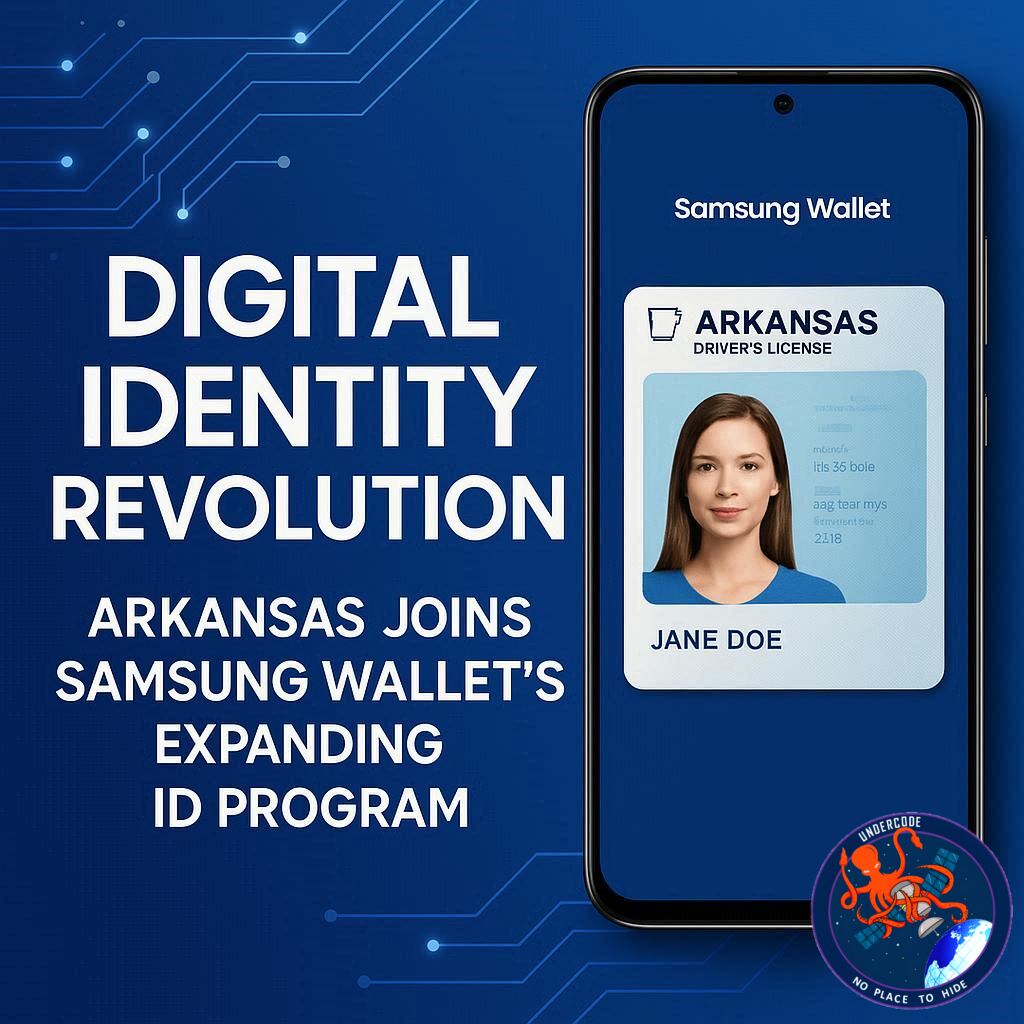
The digital wallet era is no longer a futuristic concept—it’s the new normal. As more states in the U.S. move toward mobile identification systems, Samsung is rapidly emerging as one of the leaders shaping how citizens carry and secure their personal data. With Arkansas officially joining the list of states supporting digital ID storage in Samsung Wallet, the future of identification is being redefined—one smartphone at a time.
A Growing Trend: From Plastic Cards to Digital Confidence
Samsung Wallet, once known simply as a payment app, has evolved into a full-fledged digital companion. Initially designed to store payment methods like credit, debit, and loyalty cards, the platform took a significant leap in 2023 by supporting digital IDs—a feature that lets users securely store and access their driver’s licenses or state IDs directly from their Galaxy devices.
The latest development sees Arkansas becoming the newest U.S. state to integrate with Samsung Wallet’s secure digital ID system. Residents of Arkansas can now store their driver’s license or state ID safely within the app. This means that everyday identification—from boarding flights to verifying age—can now happen without ever reaching for a physical card.
This milestone follows the footsteps of Arizona and Iowa, the early adopters that laid the groundwork for digital identification via Samsung Wallet. Since then, multiple states have joined the digital movement, transforming the way citizens interact with government and business infrastructures.
According to the Arkansas Department of Finance and Administration, the state’s Mobile ID is now fully compatible with Samsung Wallet. Users can present their virtual IDs at TSA checkpoints and participating businesses nationwide—offering both convenience and compliance with federal verification systems.
Since its March launch, over 40,000 Arkansans have already registered for digital IDs, marking a strong and rapid adoption rate. The service currently operates across Android devices that support Samsung Wallet or Google Wallet, while Apple Wallet compatibility is expected in 2026, potentially completing the ecosystem of cross-platform digital identification.
Supported devices include the Galaxy S20 series and newer, the Galaxy Z Flip and Z Fold models, and mid-range favorites like the Galaxy A53 and A54. For seamless operation, devices must be running Android 12 or higher, ensuring that the latest privacy and security frameworks are in place.
This development reinforces Samsung’s commitment to digital security and mobility, showing how its innovation extends beyond phones and wearables into the very infrastructure of digital citizenship.
What Undercode Say:
Samsung’s digital ID initiative is not just a technological update—it’s a societal transformation in motion. The adoption by Arkansas signifies how state governments are gradually aligning with the digital trust economy, where convenience, security, and verification coexist seamlessly.
Digital IDs have long been discussed as the next step in e-governance, but their implementation faced obstacles around privacy, data protection, and authentication reliability. Samsung’s success lies in its hybrid approach: balancing accessibility with the hardware-level security provided by its Knox platform. This ensures sensitive data like driver’s licenses are encrypted within the device itself, rather than stored on external servers vulnerable to attacks.
The psychological aspect is equally important. Citizens are increasingly comfortable with using smartphones for payments, healthcare apps, and digital signatures—so identification is the logical next step. What once required bulky wallets and constant paperwork now fits into a digital ecosystem that travels with you everywhere.
However, challenges remain. Interstate recognition, law enforcement verification, and privacy laws differ from state to state. A digital ID from Arkansas might not yet be valid in another state’s traffic system, creating a fragmented experience until a national standard emerges.
From a business and security perspective, Samsung stands to benefit massively. Its competitors—particularly Apple—are already testing similar integrations. Once Apple Wallet support launches next year, the competition will shift from being about who supports digital IDs first, to who handles them better in terms of security, trust, and usability.
There’s also a deeper cultural transition at play. Physical IDs symbolize authority and tangibility—something people can hold. The shift to digital may unsettle those who value privacy or fear overreach. But as adoption grows and convenience proves irresistible, digital identity could soon become as natural as digital banking.
The move also hints at how AI and biometric verification could merge with ID systems. Imagine a future where your Galaxy phone automatically confirms your identity at airport gates using facial recognition synced with your digital license. The foundations are being laid today, and Samsung’s early investment ensures it will remain central in this ecosystem.
In essence, Samsung Wallet’s role in Arkansas isn’t merely about adding another feature—it’s about redefining the citizen experience in the digital age. The brand’s focus on security, accessibility, and regulatory partnerships could make it a silent force behind the next generation of mobile governance tools.
Fact Checker Results
✅ Arkansas has officially enabled Samsung Wallet for digital IDs.
✅ More than 40,000 residents enrolled since March 2025.
✅ Apple Wallet support is projected to arrive in 2026.
Prediction 🔮
Within the next 24 months, over half of U.S. states will integrate their digital ID systems with Samsung Wallet or similar platforms. The convergence of security, government trust, and user convenience will push digital identification into mainstream adoption. What started as a smartphone perk will soon evolve into a national digital identity standard, and Samsung’s ecosystem will likely lead the charge.
🕵️📝✔️Let’s dive deep and fact‑check.
References:
Reported By: www.sammobile.com
Extra Source Hub (Possible Sources for article):
https://www.digitaltrends.com
Wikipedia
OpenAi & Undercode AI
Image Source:
Unsplash
Undercode AI DI v2
Bing
🔐JOIN OUR CYBER WORLD [ CVE News • HackMonitor • UndercodeNews ]
📢 Follow UndercodeNews & Stay Tuned:
𝕏 formerly Twitter 🐦 | @ Threads | 🔗 Linkedin | 🦋BlueSky | 🐘Mastodon


