
Listen to this Post
Introduction
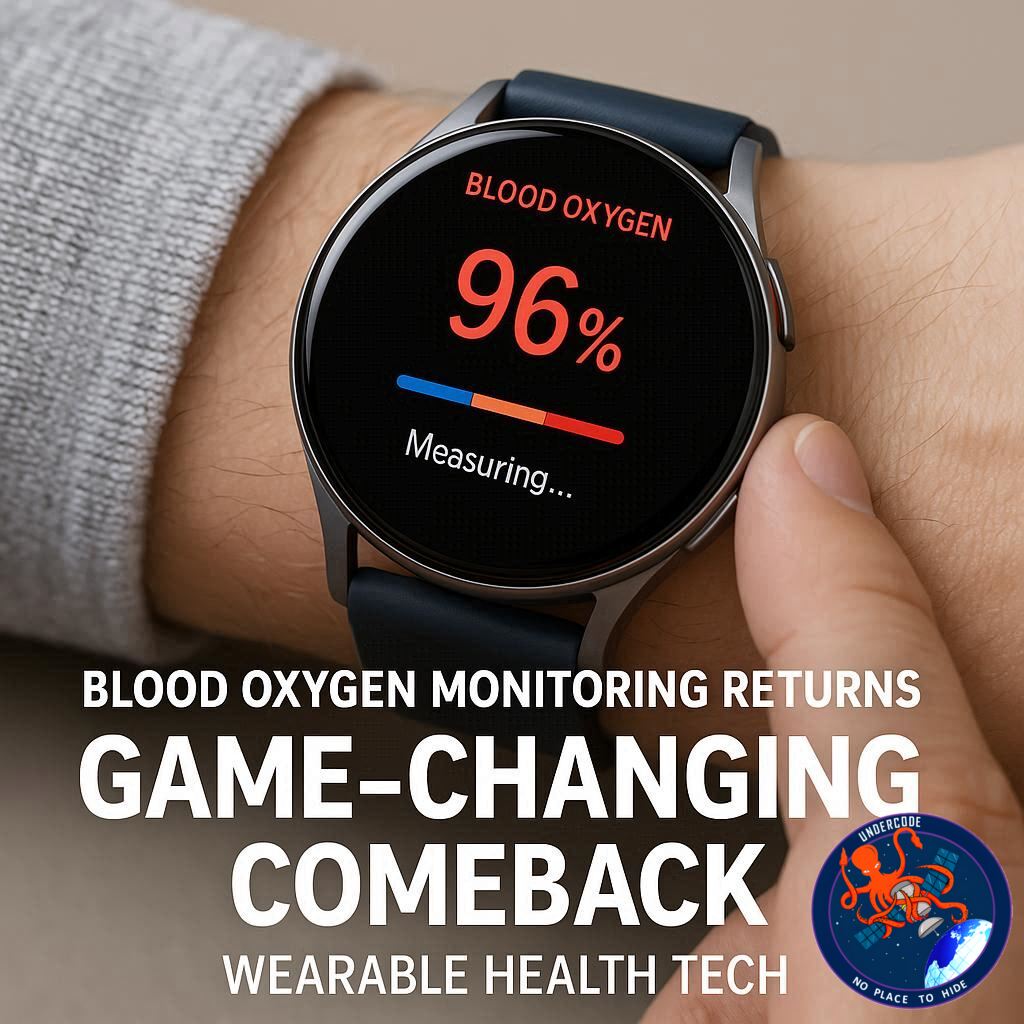
After nearly a year of absence in the U.S., Apple Watch users can finally celebrate the return of Blood Oxygen (SpO₂) monitoring, a feature that was temporarily disabled due to a patent battle with Masimo, a medical technology company. This long-awaited comeback not only restores a vital health metric but also reestablishes Apple’s dominance in the competitive wearable market, particularly against strong rivals like Whoop. With redesigned functionality and deeper integration into the iPhone’s Health app, Apple has turned a legal setback into a technical pivot that could redefine its health-tracking ecosystem.
Apple Watch Blood Oxygen Monitoring Restored
Apple Watch owners in the U.S. are now seeing their Blood Oxygen readings return after almost a year. The suspension of this feature had left many users frustrated, as it was one of the most valuable metrics for tracking health and wellness.
The fix was rolled out with the updates iOS 18.6.1, watchOS 11.6.1, and the iOS 26 beta 7 / watchOS 26 beta 7 builds. Unlike before, when data was processed directly on the watch, the redesigned method now collects data on the Apple Watch but processes it through the paired iPhone. Users can view their results in the iPhone’s Health app instead of directly on the watch face.
Interestingly, this redesign only applies to certain Apple Watch Series 9 models (depending on manufacturing dates) and universally to the Series 10 and Ultra 2 models. While it’s not as seamless as the original setup, it restores the feature that many considered non-negotiable for a modern health smartwatch.
Whoop vs Apple Watch: The Battle of Wearables
When Apple Watch lost the ability to monitor Blood Oxygen, many users turned to Whoop, a device known for deep insights into sleep, recovery, and training. Whoop thrives on background health monitoring, offering strong analytics without needing a screen.
But now, with Apple’s redesigned SpO₂ monitoring back in place, the balance is shifting again. Early testers noted that readings appeared automatically in the Health app even before manually initiating them, proving that Apple’s background tracking still works smoothly.
While Whoop remains a leader in sleep tracking and recovery insights, Apple Watch retains its broader utility — encompassing fitness tracking, notifications, payments, apps, and overall convenience. Unlike Whoop, Apple Watch doesn’t require a subscription, making it a stronger all-around choice for most users.
Sleep Tracking: Apple’s Next Big Move
One area where Apple lags behind Whoop is advanced sleep analytics. However, hidden assets discovered in recent watchOS builds suggest Apple is preparing enhanced sleep-tracking capabilities in upcoming updates. If Apple successfully expands in this area, it could close the last major gap with Whoop and reclaim dominance across nearly every wearable health category.
Apple Watch’s Stronger Position
The reintroduction of SpO₂ monitoring strengthens Apple Watch’s claim as the most complete wearable health device. Beyond health, it remains unmatched in offering a hybrid experience that balances wellness metrics, productivity features, and lifestyle tools.
For many users, this comeback could also be the nudge needed to upgrade to newer models, knowing that Apple’s hardware once again delivers the full package without compromise.
What Undercode Say:
The return of Blood Oxygen monitoring is more than just a feature revival — it is a strategic move that highlights Apple’s resilience. Here’s the analytical breakdown:
Patent Dispute Aftermath
Apple’s decision to re-engineer the SpO₂ feature instead of abandoning it shows how vital health monitoring is for its wearable strategy. Rather than surrendering to Masimo’s patent pressure, Apple cleverly shifted processing to the iPhone, keeping users satisfied while bypassing restrictions.
User Trust and Retention
Apple Watch is not just a gadget but a trusted health companion. The temporary removal of SpO₂ caused many users to explore alternatives like Whoop. Restoring it helps Apple rebuild loyalty, ensuring customers stay within the ecosystem.
Competitive Positioning
Whoop gained ground in Apple’s absence, especially among serious athletes. However, Apple Watch’s comeback repositions it as the more complete, mass-market device. The lack of subscription fees is a major selling point compared to Whoop’s paid model.
Technology Shift: Watch to iPhone
The new architecture of processing data on the iPhone raises important questions: Is this just a workaround for U.S. users, or could Apple be laying the foundation for more AI-driven health analysis centralized on iOS? This shift might allow Apple to integrate SpO₂ with other metrics like heart rate variability and sleep stages more intelligently.
Future of Sleep Tracking
Sleep analysis remains Whoop’s territory, but Apple has shown clear intent to catch up. Given Apple’s track record of leveraging software updates to enhance hardware, advanced sleep-tracking features are very likely on the horizon.
Consumer Impact
Users benefit the most here. With SpO₂ restored, they no longer face a compromise when buying a new Apple Watch. This could accelerate upgrades and boost Apple’s wearable sales throughout 2025.
Long-Term Implications
Apple’s determination to keep health features intact signals a broader ambition: becoming the gold standard of consumer health technology. From ECGs to blood oxygen and potentially sleep apnea detection, the Apple Watch is increasingly positioning itself as a preventive health tool, not just a fitness tracker.
Fact Checker Results ✅❌
✅ Blood Oxygen monitoring has indeed been restored for Apple Watch users in the U.S.
✅ The new system processes SpO₂ readings via iPhone instead of the watch itself.
❌ It is not universally available across all watch models — only certain Series 9 units, Series 10, and Ultra 2 are included.
Prediction 🔮
Apple will likely expand health capabilities further in 2025 and 2026, pushing into advanced sleep monitoring, AI-driven recovery analytics, and possibly early disease detection tools. With SpO₂ restored, the next wave of innovation could see Apple positioning its Watch as the ultimate personal health hub, leaving subscription-based rivals like Whoop struggling to keep up.
🕵️📝✔️Let’s dive deep and fact‑check.
References:
Reported By: 9to5mac.com
Extra Source Hub:
https://www.quora.com
Wikipedia
OpenAi & Undercode AI
Image Source:
Unsplash
Undercode AI DI v2
🔐JOIN OUR CYBER WORLD [ CVE News • HackMonitor • UndercodeNews ]
📢 Follow UndercodeNews & Stay Tuned:
𝕏 formerly Twitter 🐦 | @ Threads | 🔗 Linkedin | 🦋BlueSky | 🐘Mastodon


