
Listen to this Post
A New Phase in the Cybersecurity Arms Race
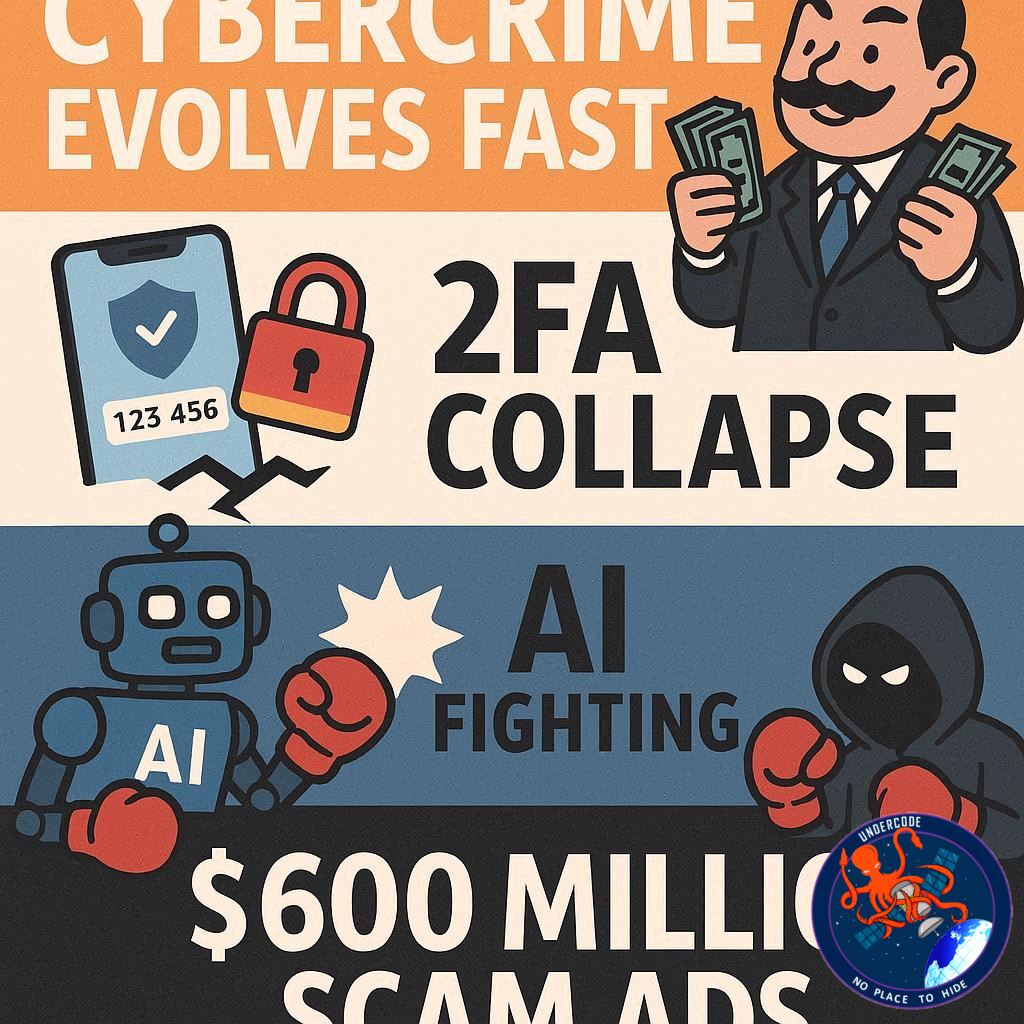
Cybercriminals are not slowing down. In fact, they are adapting faster than many defenses can keep up. A recent shift in phishing and fraud tactics shows how attackers are evolving after the disruption of Tycoon 2FA operations. At the same time, tech giants are scaling up defenses, with Google deploying AI systems to block hundreds of millions of malicious ads. This ongoing clash highlights a critical truth: cybersecurity is no longer static, it is a constantly shifting battlefield.
Attackers Forced to Pivot After Tycoon 2FA Crackdown
The crackdown on Tycoon 2FA marked a significant blow to cybercriminal infrastructure. This phishing-as-a-service platform had been widely used to bypass multi-factor authentication protections. Once disrupted, attackers did not disappear. Instead, they quickly migrated to alternative tools and services.
New platforms such as Mamba 2FA, EvilProxy, and Sneaky 2FA have gained traction among threat actors. These tools replicate or even enhance the capabilities that Tycoon once offered. They allow attackers to intercept authentication tokens, effectively bypassing traditional two-factor security measures without raising immediate suspicion.
Another method gaining popularity is device code phishing. This technique manipulates legitimate authentication workflows, tricking users into authorizing access themselves. Because it leverages trusted processes, it becomes harder for both users and security systems to detect.
The Rise of Sophisticated Phishing Ecosystems
The modern phishing landscape is no longer driven by isolated hackers. It has evolved into a full ecosystem of services. Criminals can now purchase ready-made phishing kits, infrastructure, and support, lowering the barrier to entry for cybercrime.
Platforms like EvilProxy demonstrate how advanced these services have become. They operate almost like legitimate SaaS businesses, complete with dashboards, customer support, and subscription models. This professionalization allows attackers to scale operations quickly and target a wider range of victims.
Meanwhile, Sneaky 2FA focuses on stealth, minimizing detection while maintaining high success rates. These platforms continue to refine their techniques, ensuring that even well-informed users can fall victim under the right circumstances.
Google’s Massive Crackdown on Malvertising
While attackers evolve, defenders are also stepping up. Google’s Gemini AI system has taken a central role in combating online scams. In 2025 alone, it successfully blocked an astonishing 602 million scam advertisements.
Malvertising has become one of the most effective ways to distribute scams. By embedding malicious content within legitimate-looking ads, attackers can reach millions of users across trusted platforms. These ads often mimic well-known brands, making them highly convincing.
Gemini uses advanced machine learning models to detect patterns, flag suspicious behavior, and remove harmful ads before they reach users. This proactive approach significantly reduces exposure, although it does not eliminate the threat entirely.
Ransomware Incident Adds to Growing Concerns
Adding to the tension, a ransomware attack recently targeted the ASTM Group in the United States. The attack has been linked to a threat actor known as coinbasecartel. The incident was disclosed on April 18, 2026, and confirms that traditional cyber threats like ransomware remain a major concern.
This event highlights how diverse the cyber threat landscape has become. Organizations must now defend against phishing, malvertising, ransomware, and more, all at once. Each attack vector requires different strategies, making comprehensive security increasingly complex.
The Expanding Role of Artificial Intelligence in Cyber Defense
Artificial intelligence is rapidly becoming a cornerstone of cybersecurity. Systems like Google Gemini demonstrate how AI can process vast amounts of data and identify threats at scale. Blocking hundreds of millions of scam ads would be nearly impossible with human moderation alone.
However, AI is also being used by attackers. Phishing emails are becoming more convincing, and automated systems can launch large-scale campaigns with minimal effort. This creates a feedback loop where both sides continuously upgrade their capabilities.
What Undercode Say:
The Illusion of Security in a 2FA World
Two-factor authentication has long been marketed as a near-bulletproof solution. The reality is far more complicated. Tools like Tycoon 2FA and its successors reveal that security measures are only as strong as their weakest link. When attackers can intercept session tokens or trick users into authenticating, the entire system becomes vulnerable.
Cybercrime as a Business Model
What stands out most is how organized cybercrime has become. These are no longer random attacks carried out by individuals. Instead, we are seeing structured operations with clear monetization strategies. Platforms like EvilProxy are essentially businesses, offering services, updates, and customer support.
This shift changes how we should think about cybersecurity. It is not just about blocking attacks, but about disrupting entire ecosystems. As long as these services remain profitable, they will continue to evolve.
The AI Paradox in Security
AI is both a solution and a problem. On one hand, tools like Gemini can detect threats at an unprecedented scale. On the other hand, attackers are leveraging AI to improve their tactics. This creates a technological arms race where innovation on one side quickly influences the other.
The key challenge is maintaining an advantage. Defensive AI must not only keep up but stay ahead, which requires continuous investment and innovation.
Human Behavior Remains the Weakest Link
Despite all technological advancements, human behavior continues to be the primary vulnerability. Device code phishing works because it exploits trust and confusion. Even the most advanced security systems can fail if users are tricked into granting access.
Education and awareness are critical, but they are not enough on their own. Security systems must be designed to minimize reliance on user decisions whenever possible.
The Fragmentation of Threat Vectors
Another important trend is the diversification of attack methods. When Tycoon 2FA was disrupted, attackers did not collapse. They adapted. This shows that focusing on a single threat is ineffective. Security strategies must be holistic, addressing multiple vectors simultaneously.
Organizations that fail to adapt will find themselves constantly reacting rather than proactively defending.
Fact Checker Results
✅ The shift from Tycoon 2FA to alternative phishing platforms is consistent with known cybercriminal behavior patterns.
✅ Google’s reported blocking of hundreds of millions of scam ads aligns with large-scale AI moderation capabilities.
❌ Complete prevention of phishing and malvertising remains unrealistic despite technological advancements.
Prediction
The next phase of cyber threats will likely involve deeper AI integration on both sides, making attacks more personalized and harder to detect. 🤖
Phishing platforms will continue to evolve into more professional and accessible services, further lowering entry barriers for cybercrime. ⚠️
Defensive systems will increasingly rely on behavioral analysis rather than static security measures to stay ahead. 🔐
🕵️📝✔️Let’s dive deep and fact‑check.
References:
Reported By: x.com
Extra Source Hub (Possible Sources for article):
https://www.linkedin.com
Wikipedia
OpenAi & Undercode AI
Image Source:
Unsplash
Undercode AI DI v2
Bing
🔐JOIN OUR CYBER WORLD [ CVE News • HackMonitor • UndercodeNews ]
📢 Follow UndercodeNews & Stay Tuned:
𝕏 formerly Twitter 🐦 | @ Threads | 🔗 Linkedin | 🦋BlueSky | 🐘Mastodon


