
Listen to this Post
 Introduction: A New Ransomware Entry Appears on the Dark Web Radar
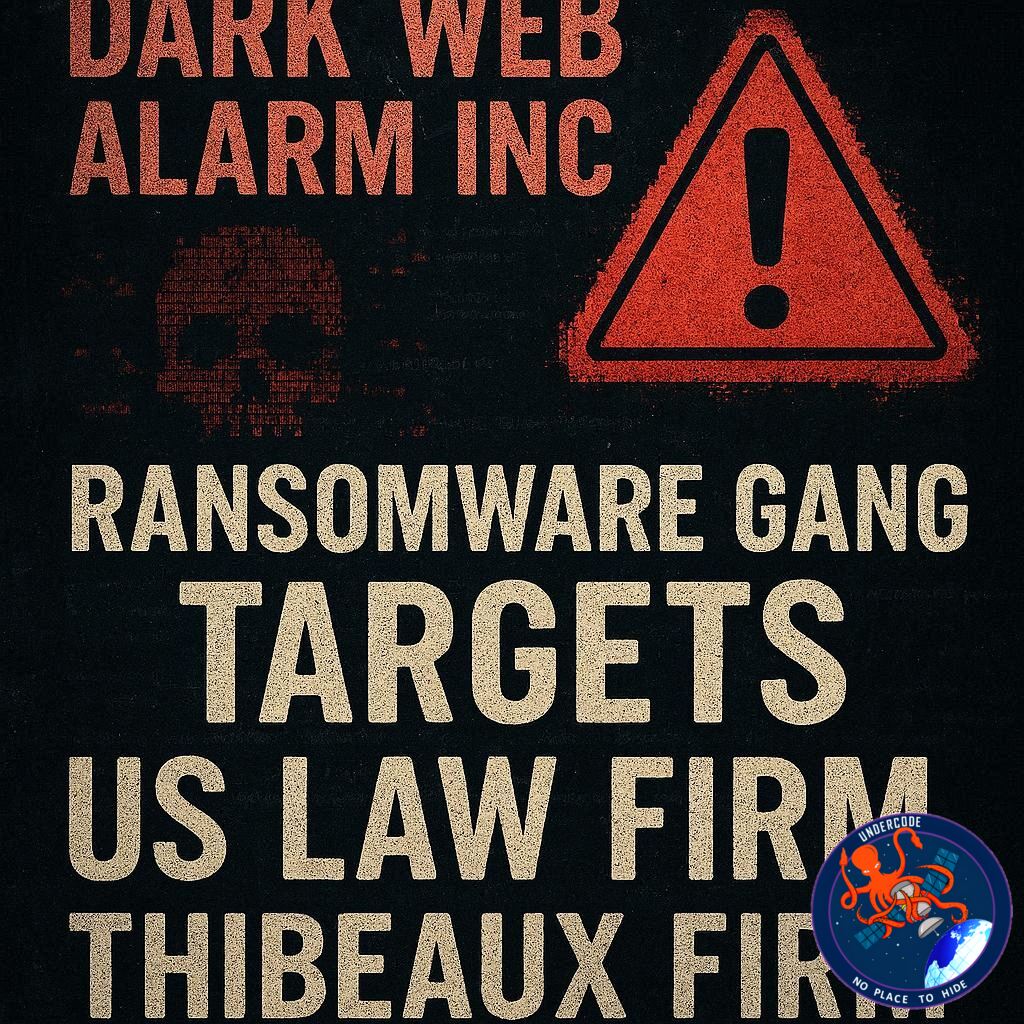
Cybersecurity monitors have flagged a new incident involving a prominent ransomware group operating in the shadows of the internet. The ransomware collective known as INC Ransom has reportedly added a U.S.-based legal organization, The Thibeaux Firm, to its growing list of alleged victims. The claim surfaced through threat intelligence monitoring platforms that track dark web leak sites and criminal ransomware activity.
While the announcement itself was brief, the implications are far more serious. When ransomware groups publicly name victims, it often signals the beginning of a pressure campaign—either the organization refuses to pay the ransom, negotiations have failed, or attackers are attempting to force compliance by threatening to release stolen data.
Threat intelligence researchers detected the claim through dark web surveillance tools designed to monitor ransomware operations and identify compromised organizations early. As ransomware attacks continue to target law firms, financial institutions, and healthcare providers, the listing of The Thibeaux Firm raises fresh concerns about data security, client confidentiality, and the growing aggressiveness of modern cybercrime groups.
the Dark Web Claim and Threat Monitoring Alert
The cybersecurity monitoring platform ThreatMon reported a new ransomware incident involving the group known as INC Ransom. According to the alert published on March 11, 2026, threat intelligence analysts observed that the ransomware group had added the website thethibeauxfirm.com to its list of victims on its dark web leak site. The detection was shared publicly through social monitoring channels used by cybersecurity professionals to track ransomware campaigns and emerging threats. The announcement did not include detailed information about the scope of the attack, the amount of data allegedly stolen, or whether negotiations between the attackers and the targeted organization are underway. However, in typical ransomware operations, groups list victims online as a form of psychological pressure intended to force companies into paying ransom demands. ThreatMon emphasized that the discovery came from ongoing dark web surveillance conducted by its threat intelligence team, which monitors indicators of compromise, command-and-control infrastructure, and ransomware leak pages. Such monitoring systems scan hidden services where cybercriminal groups publish victim lists, often alongside countdown timers threatening the release of confidential data. In this case, the only confirmed detail is that INC Ransom has publicly associated The Thibeaux Firm with its ransomware activity. The legal firm’s website remains publicly accessible, and no official statement has been released confirming or denying the breach at the time of reporting. As with many ransomware disclosures, early reports often contain limited information while investigators determine whether the attack involved data exfiltration, system encryption, or simply an extortion attempt. Cybersecurity experts note that dark web claims should always be verified because some ransomware groups exaggerate or fabricate victim listings to increase pressure. Nevertheless, such listings are treated seriously because they frequently precede the publication of stolen documents. The alert illustrates how threat intelligence platforms act as early warning systems for organizations, regulators, and cybersecurity teams monitoring potential breaches. By tracking ransomware leak sites in real time, analysts can quickly identify potential compromises before official disclosures emerge.
What Undercode Say:
The Increasing Targeting of Law Firms by Ransomware Groups
Law firms have quietly become one of the most attractive targets for ransomware groups. Unlike many other industries, legal firms store enormous volumes of sensitive data—client identities, litigation documents, financial records, contracts, and confidential communications. From a cybercriminal perspective, this information is a goldmine. If attackers obtain such data, they gain powerful leverage over victims because the potential reputational damage can be devastating.
The alleged targeting of The Thibeaux Firm follows a pattern that has been building for several years. Ransomware operators increasingly prefer victims who hold sensitive information rather than those who simply rely on operational uptime. In the past, manufacturing companies and infrastructure providers were common victims because downtime cost money. Today, attackers increasingly focus on data-rich targets, and legal institutions fit perfectly into that category.
The Psychological Warfare of Ransomware Leak Sites
Modern ransomware is no longer just about encrypting files. It has evolved into a complex form of psychological warfare. Leak sites—like those used by INC Ransom—are designed to intimidate organizations publicly. When a victim’s name appears on such a site, it sends a signal not only to the company but also to regulators, clients, journalists, and competitors.
This tactic is known as double extortion. Attackers steal data first, then threaten to publish it if the ransom is not paid. In some cases, they escalate to triple extortion, contacting clients, employees, or partners directly. Even without immediate proof of stolen files, simply being listed on a ransomware site can trigger reputational panic.
For a law firm, the stakes are particularly high. Client confidentiality is the cornerstone of legal practice. If attackers claim to possess sensitive legal documents, even the possibility of exposure can force difficult decisions for the targeted organization.
Dark Web Intelligence as an Early Warning System
The role of threat intelligence platforms like ThreatMon has become increasingly critical in the cybersecurity ecosystem. These systems constantly scan hidden forums, ransomware leak pages, and underground marketplaces where cybercriminals operate.
In many cases, dark web monitoring detects incidents before organizations publicly confirm them. This gives security teams valuable time to investigate, contain potential breaches, and notify affected parties if necessary.
However, early alerts also come with uncertainty. Not every claim posted on a ransomware leak site is immediately verifiable. Some groups exaggerate attacks or list organizations they merely attempted to breach. As a result, threat intelligence alerts should be interpreted as signals for investigation, not definitive confirmation of compromise.
The Rising Visibility of the INC Ransom Group
INC Ransom is part of a growing ecosystem of ransomware gangs that have emerged in the past few years. Unlike older ransomware operations that relied purely on automated attacks, newer groups operate more like structured criminal enterprises.
These groups typically include specialized teams responsible for intrusion, data theft, negotiation, and public relations through leak sites. Some even maintain customer-service-style communication channels for victims during ransom negotiations.
While detailed information about INC Ransom’s infrastructure and leadership remains limited, its continued appearance in threat intelligence reports suggests the group is actively expanding its victim list.
Why Cybercrime Is Becoming More Public
One of the most striking trends in modern cybercrime is how public it has become. Ransomware gangs now operate openly on dark web portals where they publish victim names, stolen documents, and countdown timers.
This visibility serves several purposes. It proves to potential victims that the group has real capabilities, it pressures organizations into paying quickly, and it helps recruit affiliates who want to participate in ransomware-as-a-service programs.
In effect, ransomware groups have transformed cybercrime into a public spectacle, where each new victim listing acts as both a threat and a marketing strategy.
🔍 Fact Checker Results
Verification of the Threat Intelligence Alert
✅ A threat intelligence alert reported that INC Ransom added thethibeauxfirm.com to its victim list.
Confirmation Status of the Breach
⚠️ No public confirmation from The Thibeaux Firm currently verifies the ransomware claim.
Reliability of Dark Web Listings
❗ Ransomware leak sites sometimes exaggerate claims, meaning the listing should be treated as an early warning rather than definitive proof.
📊 Prediction
Escalation of Ransomware Pressure Campaigns
Ransomware groups are increasingly using public victim listings as negotiation leverage. If the claim involving The Thibeaux Firm is accurate, the next stage may involve attackers releasing samples of stolen data to prove the breach and pressure the organization into paying a ransom.
Growing Legal Sector Vulnerability
The legal industry is likely to face more ransomware attacks in the coming years. Firms hold highly confidential client information yet often lack the large cybersecurity budgets seen in financial or technology sectors. This imbalance makes them appealing targets for cybercriminal groups.
Expansion of Dark Web Intelligence Monitoring
As ransomware attacks become more public and organized, organizations will rely increasingly on threat intelligence platforms to detect incidents early. Monitoring the dark web for mentions of corporate domains may soon become a standard component of enterprise cybersecurity defense strategies.
🕵️📝✔️Let’s dive deep and fact‑check.
References:
Reported By: x.com
Extra Source Hub (Possible Sources for article):
https://stackoverflow.com
Wikipedia
OpenAi & Undercode AI
Image Source:
Unsplash
Undercode AI DI v2
Bing
🔐JOIN OUR CYBER WORLD [ CVE News • HackMonitor • UndercodeNews ]
📢 Follow UndercodeNews & Stay Tuned:
𝕏 formerly Twitter 🐦 | @ Threads | 🔗 Linkedin | 🦋BlueSky | 🐘Mastodon


