
Listen to this Post
Introduction
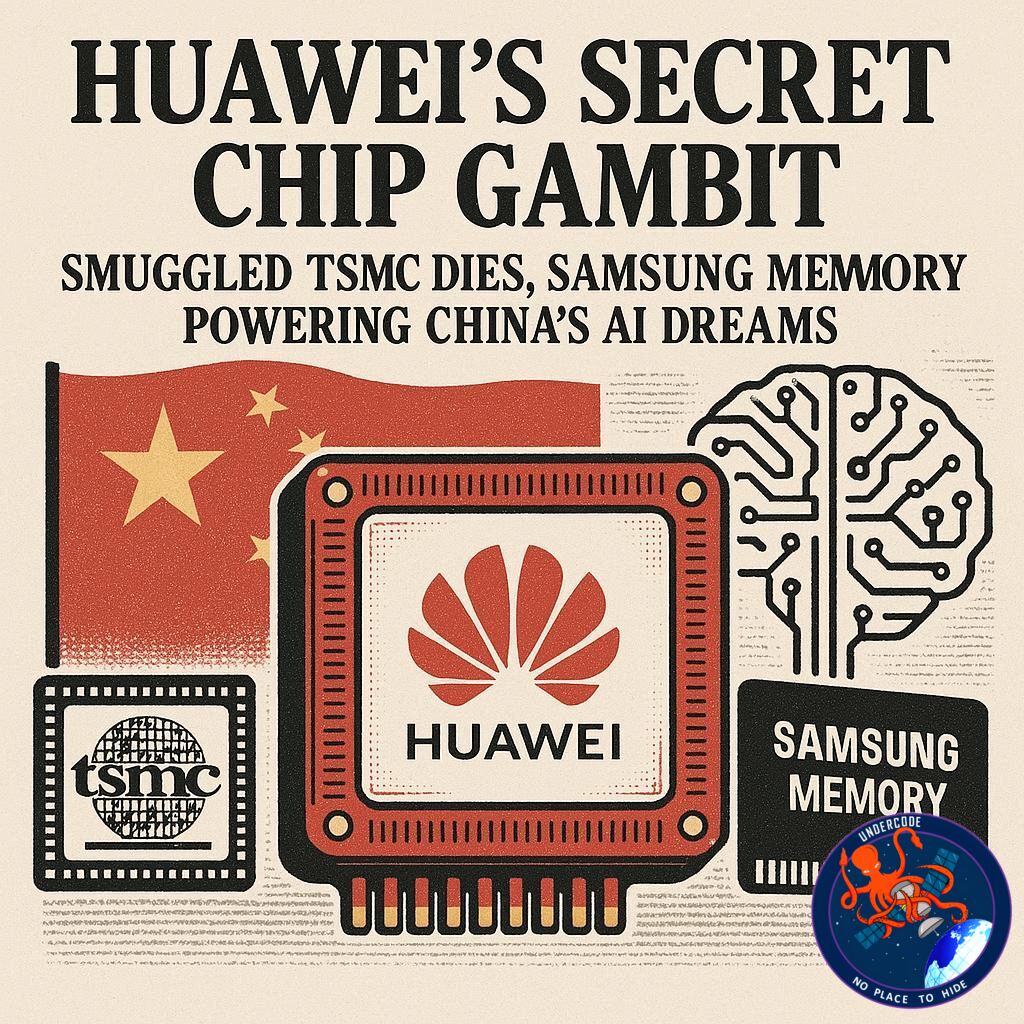
The global chip war is intensifying, and Huawei has found itself right in the middle of it. With strict U.S. export controls blocking access to cutting-edge semiconductors, China’s ability to develop advanced AI hardware has been crippled. Yet, Huawei reportedly discovered a controversial workaround—smuggling TSMC dies and pairing them with Samsung and SK Hynix memory. This revelation, reported by Bloomberg, highlights the lengths Chinese firms are going to in order to compete with Western giants like NVIDIA. But is this enough to sustain their AI ambitions, or just a temporary patch in a rapidly tightening chokehold?
Huawei’s Alleged Secret Strategy
Huawei, long known for defying sanctions, has reportedly been working discreetly on its Ascend 910C AI chip. This processor is designed to challenge NVIDIA’s AI accelerators, which currently dominate the global AI market.
Smuggled TSMC Dies: A Billion-Dollar Blow
According to Bloomberg, Huawei allegedly obtained TSMC dies through a shell company, enabling production of nearly three million Ascend AI chips. The move came at a steep price—TSMC was fined $1 billion after these dies were traced back to China, showing just how high the stakes are in this clandestine operation.
Samsung and SK Hynix Memory in the Mix
The chips reportedly integrate high-bandwidth memory (HBM) sourced from Samsung and SK Hynix. However, these are not the latest-generation memory chips, but rather older stockpiled versions that Chinese firms rushed to buy before U.S. export restrictions expanded to memory.
Stockpiling and Desperate Measures
As their stockpiles dwindle, Chinese manufacturers are resorting to extreme tactics such as de-soldering HBM chips from loosely packaged products made specifically to evade sanctions. This highlights the growing desperation as memory supply runs thin.
The Production Challenge
Even with these workarounds, experts estimate Huawei may only be able to manufacture one million AI chips in 2026—far short of domestic demand. This shortage underlines the near-impossible task of keeping pace with global AI growth while under heavy trade restrictions.
Huawei’s Big Gamble
While the smuggling and stockpiling strategy has bought Huawei some time, it is not sustainable. Without access to cutting-edge lithography tools and next-gen memory, China’s AI ambitions risk being stifled despite bold attempts to resist sanctions.
What Undercode Say:
The revelations around Huawei’s alleged tactics shine a spotlight on the fragile balance of global semiconductor supply chains. Let’s break down the implications:
Global Power Struggle: The chip war is no longer about commerce—it’s geopolitical warfare. U.S. restrictions are designed to slow China’s rise in AI dominance, but China’s countermeasures show resilience.
The Cost of Workarounds: Smuggling and shell-company tactics may help in the short term, but they bring heavy risks, including billion-dollar penalties, diplomatic fallout, and unreliable supply chains.
TSMC’s Dilemma: For TSMC, the world’s most advanced chipmaker, leaks like this expose them to fines and reputational damage, even if they are not directly complicit. It proves how difficult it is to police every transaction in a complex global supply network.
Samsung and SK Hynix in the Crossfire: Their older HBM stocks are now powering Chinese AI, but once these run out, China faces a serious bottleneck. Memory technology is advancing quickly, and falling behind even one generation can be catastrophic in AI computing.
China’s AI Aspirations: Producing one million AI chips a year sounds impressive, but compared to NVIDIA’s tens of millions of cutting-edge units, it highlights how far China still lags.
Sanction Evasion Economics: De-soldering chips is not just costly—it’s inefficient and unsustainable. This “recycling” shows how cornered companies have become.
Future Scenarios: If restrictions tighten further, Huawei may look to localize semiconductor tooling, but catching up to ASML or TSMC’s level could take decades.
AI Nationalism: The chip battle is driving countries to prioritize tech sovereignty. The U.S. wants to ensure dominance, while China is racing to catch up. The outcome will define the balance of technological power for decades.
Risk of Escalation: Covert smuggling raises the stakes of U.S.–China tensions. If proven, such acts could lead to harsher sanctions, corporate blacklisting, and even diplomatic retaliation.
Investor Angle: For global investors, this highlights semiconductor stocks as a high-risk, high-reward sector. Companies caught in the crossfire face volatility, but those controlling next-gen chip IP will dominate.
✅ Fact Checker Results
Huawei’s AI chip development has been widely reported and confirmed.
Bloomberg’s report supports claims of smuggling and shell companies.
Official numbers on chip volumes remain speculative but align with analyst estimates.
🔮 Prediction
Looking ahead, Huawei will likely struggle to sustain large-scale AI chip production without fresh access to advanced dies and memory. China may invest billions into building a domestic lithography ecosystem, but progress will be slow. Meanwhile, global chip leaders like NVIDIA, TSMC, and Samsung will continue strengthening their grip on the AI hardware market—making it increasingly difficult for Huawei to close the gap.
🕵️📝✔️Let’s dive deep and fact‑check.
References:
Reported By: www.sammobile.com
Extra Source Hub:
https://www.reddit.com
Wikipedia
OpenAi & Undercode AI
Image Source:
Unsplash
Undercode AI DI v2
🔐JOIN OUR CYBER WORLD [ CVE News • HackMonitor • UndercodeNews ]
📢 Follow UndercodeNews & Stay Tuned:
𝕏 formerly Twitter 🐦 | @ Threads | 🔗 Linkedin | 🦋BlueSky | 🐘Mastodon


