
Listen to this Post
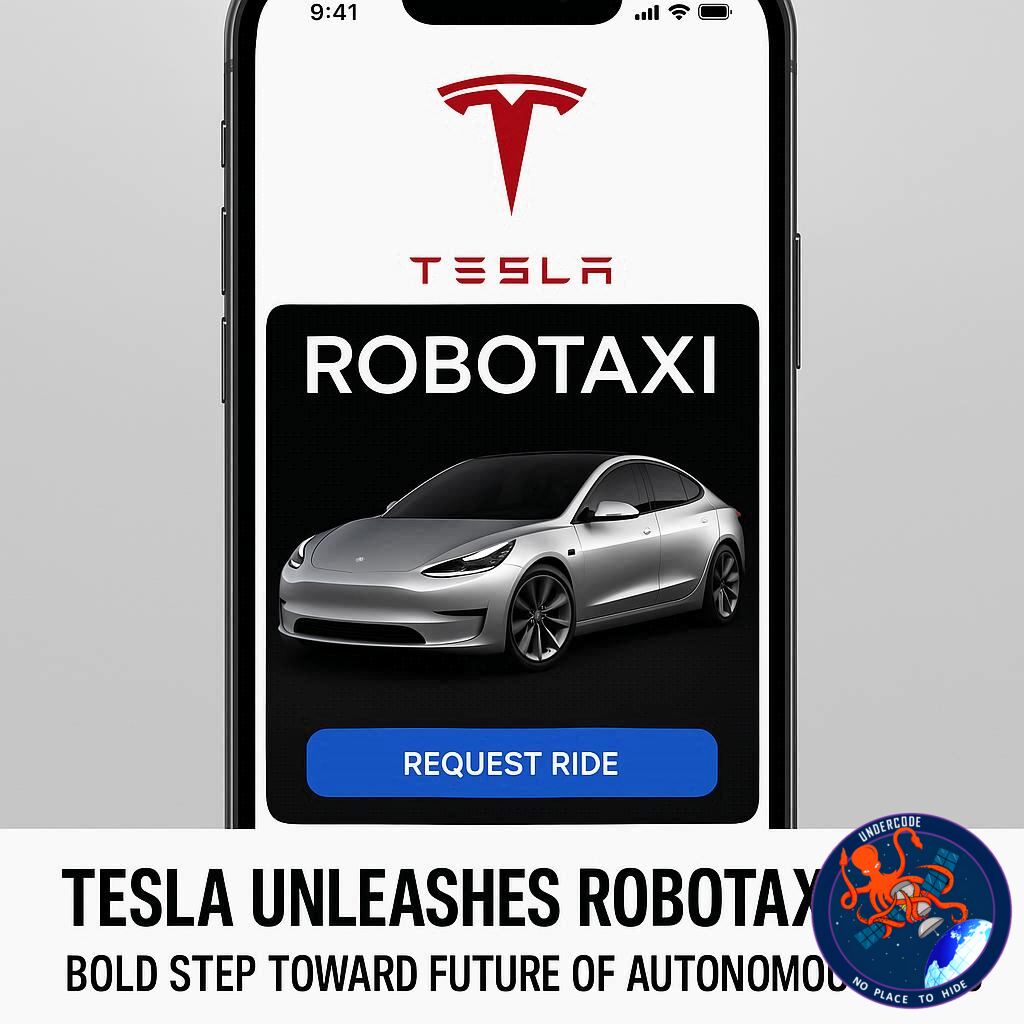
Tesla’s Big Move Into Everyday Mobility
Tesla has officially launched its much-anticipated Robotaxi app on Apple’s App Store, making it available to iPhone users worldwide. This launch signals a new era in the company’s autonomous driving ambitions, allowing users to join the waitlist for Tesla’s groundbreaking robotaxi service. Elon Musk, Tesla’s visionary CEO, has been teasing this move since 2024, and now the rollout is becoming tangible.
While the iOS version is live, Tesla confirmed that an Android release is coming soon, expanding accessibility across all major mobile platforms. The app’s release is part of a phased rollout that began in Austin in June and expanded to San Francisco in July. Musk has set ambitious targets—he envisions unsupervised, fully self-driving Tesla vehicles operating in most countries by the end of next year. However, he also acknowledged that regulatory challenges could slow adoption in certain regions.
A Closer Look at How the Tesla Robotaxi App Works
Tesla revealed details about the app on X (formerly Twitter), posting:
“Robotaxi app now available to all. Download to join waitlist – expanding access soon. Android is coming in the future.”
The app link directs iPhone users to the App Store, where they can download and explore its features. Upon launching, users are greeted with terms of service outlining how rides will work:
If no safety driver is present, the ride is fully autonomous.
If a safety driver is in the vehicle, the ride is conducted with Tesla’s FSD (Supervised) system.
Business Insider tested the app and reported that it took about three hours for their reporter to move off the waitlist and gain access. Once inside, users are presented with a clean, functional interface that includes:
Two maps displaying ride availability in Austin and San Francisco.
A carousel showcasing the robotaxi’s features.
A “Latest News” button linking directly to Tesla Robotaxi’s official X account.
The app’s review terms emphasize legal and operational details, confirming Tesla’s compliance with the California Public Utilities Commission for supervised rides.
With this app, Tesla is not only offering a ride-hailing service but also signaling the company’s intent to reshape urban mobility and challenge existing players like Uber and Lyft.
What Undercode Say:
Tesla’s robotaxi app isn’t just a piece of software—it’s a statement of intent. This move pushes the company further into the ride-hailing market, where the stakes are enormous and the competition fierce.
The most striking aspect is Tesla’s confidence in its technology. While most companies cautiously test autonomous vehicles in limited zones, Tesla is putting its app into the hands of the public. By creating a waitlist system, the company cleverly builds anticipation while controlling the flow of early users. This is classic Tesla marketing: scarcity breeds hype.
The app’s dual approach—offering both supervised and unsupervised rides—reflects Tesla’s awareness of regulatory realities. In states like California, where autonomous testing and rides are tightly regulated, the presence of safety drivers ensures compliance. But Tesla’s ultimate ambition is clear: vehicles driving themselves with no human fallback.
From a business perspective, Tesla’s entry into the robotaxi market could disrupt not only Uber and Lyft but also the broader automotive industry. Imagine a world where owning a car becomes optional because an autonomous Tesla can pick you up at any moment. That vision aligns perfectly with Musk’s dream of turning Teslas into revenue-generating assets for their owners, where each vehicle doubles as a personal ride-hailing business when not in use.
However, challenges remain. Regulatory approval in many countries is slow and politically charged. Safety concerns, insurance liability, and public trust are hurdles Tesla must overcome. One accident involving a fully autonomous robotaxi could trigger intense backlash.
But the potential rewards are staggering. If Tesla succeeds, it won’t just be another ride-hailing service; it will redefine urban transportation. The economics are game-changing: no driver salaries, lower operational costs, and potentially higher profit margins. For consumers, rides could become cheaper, safer, and more accessible than ever before.
This launch also ties into Tesla’s broader AI strategy. Every mile driven by a robotaxi—supervised or unsupervised—feeds data back into Tesla’s AI, making the system smarter. It’s a self-reinforcing loop: more rides mean better AI, which means safer rides, which in turn justifies wider adoption.
In short, Tesla isn’t just releasing an app. It’s laying down the foundation of a transportation revolution. Whether this revolution succeeds will depend on how fast Tesla can scale, how governments react, and how much the public trusts a driverless future.
🔍 Fact Checker Results
✅ Tesla’s robotaxi app is live on the iOS App Store.
✅ The Android version is confirmed to be “coming soon.”
✅ Early access testing in Austin and San Francisco has been verified by multiple sources.
📊 Prediction
If Tesla manages to navigate regulatory hurdles, 2026 could mark the first year when autonomous robotaxi fleets operate at scale in the U.S. Expect gradual expansion across urban centers first, with Tesla targeting countries with more lenient regulations next. By 2030, robotaxis could become a mainstream transportation option, fundamentally altering how cities plan mobility and how individuals think about car ownership.
🕵️📝✔️Let’s dive deep and fact‑check.
References:
Reported By: timesofindia.indiatimes.com
Extra Source Hub:
https://www.reddit.com/r/AskReddit
Wikipedia
OpenAi & Undercode AI
Image Source:
Unsplash
Undercode AI DI v2
🔐JOIN OUR CYBER WORLD [ CVE News • HackMonitor • UndercodeNews ]
📢 Follow UndercodeNews & Stay Tuned:
𝕏 formerly Twitter 🐦 | @ Threads | 🔗 Linkedin | 🦋BlueSky | 🐘Mastodon


