
Listen to this Post
A Growing Cybersecurity Disaster Hidden in Plain Sight
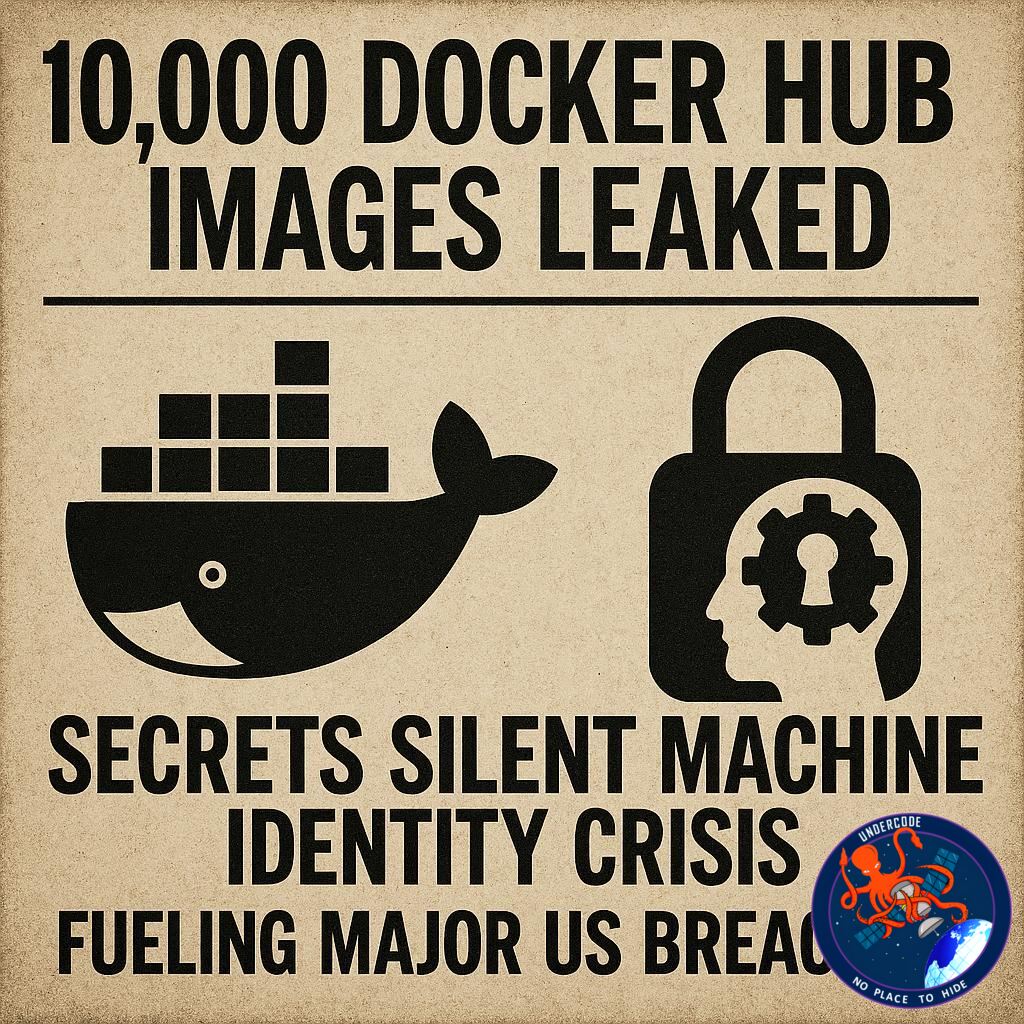
A quiet but devastating cybersecurity failure has been unfolding across Docker Hub, where more than 10,000 container images were found exposing live production secrets. These include API keys, cloud access tokens, and even credentials granting access to AI models. While the issue lacks the drama of a ransomware splash screen, its consequences are far more dangerous, enabling long-term, stealthy access to corporate systems across the United States and beyond.
Why This Exposure Matters More Than Typical Leaks
Unlike stolen passwords tied to individual users, these leaked credentials belong to machines. Machine identities do not rotate naturally, are rarely monitored with the same rigor as human accounts, and often have broad permissions. Once exposed, they can remain valid for months or even years, silently granting attackers persistent access without triggering alarms.
How Docker Hub Became a Goldmine for Attackers
Docker Hub is a foundational platform for modern software development. Developers frequently push container images publicly, sometimes forgetting that configuration files inside those images still contain sensitive secrets. Attackers no longer need sophisticated intrusion techniques; they simply scan public images, extract credentials, and walk through the front door of cloud environments.
the Original Reported Findings
The original report highlights how over 10,000 publicly available Docker Hub images contained exposed secrets tied directly to production systems. These secrets included cloud provider tokens, private API keys, database credentials, and AI model access tokens. Security researchers linked these leaks to real-world incidents, including activity associated with the threat cluster UNC5537 and a prolonged access token exposure at Home Depot.
The findings underscore a systemic failure in how organizations manage non-human identities. Developers often embed secrets during testing and forget to remove them before publishing images. Once indexed, these images become searchable targets for automated scraping tools used by attackers.
The article emphasizes that many of these credentials were still valid at the time of discovery, meaning attackers could immediately exploit them without additional effort. In several cases, exposed tokens allowed full administrative access to cloud environments, enabling data exfiltration, lateral movement, and supply-chain compromise.
Researchers warn that traditional security controls—such as MFA and password rotation—offer no protection when secrets are hard-coded into containers. The report calls attention to the lack of visibility organizations have into machine identities, which often outnumber human accounts by a significant margin.
Ultimately, the article frames this issue not as a Docker-specific failure, but as a broader industry problem rooted in insecure DevOps practices, speed-driven development cycles, and the absence of automated secret-scanning and rotation mechanisms.
The Overlooked Role of Machine Identities
Machine identities now outnumber human identities in most enterprises by at least 10 to 1. Every container, microservice, CI/CD pipeline, and AI workload requires authentication. Yet security teams still design identity governance around people, leaving machines effectively unmanaged, unmonitored, and unaccountable.
UNC5537 and the Pattern of Silent Exploitation
The mention of UNC5537 is particularly alarming. This activity cluster demonstrates how exposed tokens are not merely theoretical risks. Attackers actively harvest leaked credentials and reuse them across environments, often blending into legitimate traffic. Because no exploit is required, these intrusions are extremely difficult to detect and attribute.
Why AI Tokens Raise the Stakes Even Higher
The exposure of AI model access tokens introduces a new layer of risk. These tokens can allow attackers to abuse paid AI services, poison training data, extract proprietary models, or use compromised accounts to generate malicious content at scale. As AI becomes embedded in critical business workflows, leaked AI credentials represent both financial and strategic threats.
The Home Depot Token Leak as a Warning Sign
The reference to Home Depot’s long-lived token leak illustrates how even large, well-resourced organizations struggle with secret lifecycle management. A single leaked token, if not rotated or revoked, can provide attackers with continuous access long after the initial exposure, effectively turning a minor mistake into a prolonged breach.
What Undercode Say:
This incident exposes a fundamental mismatch between modern infrastructure and outdated security thinking. The industry still treats secrets as static configuration details rather than high-risk assets requiring continuous oversight. As DevOps velocity increases, security discipline has not kept pace, creating an environment where convenience routinely overrides caution.
What makes this situation particularly dangerous is its scalability. Attackers do not need to target a specific company. They can harvest thousands of credentials in bulk, test them automatically, and monetize access through ransomware, data theft, or resale on underground markets. This is breach automation at industrial scale.
Another critical issue is accountability. When a human account is compromised, incident response is clear. When a machine identity is abused, ownership is often unclear. Is it a developer problem, a cloud security problem, or an infrastructure problem? This ambiguity delays response and increases damage.
The Docker Hub exposure also highlights a cultural problem in software development. Secrets are still being embedded in images because it “works” and saves time. Security tools exist to prevent this, but they are often optional, poorly integrated, or ignored due to delivery pressure.
From a strategic perspective, machine identity security will become a defining battleground in cybersecurity over the next two years. Organizations that fail to inventory, rotate, and monitor non-human credentials will experience breaches that never trigger traditional alerts. The absence of noise will be mistaken for safety.
This is not a tooling problem alone. It is a governance failure. Without clear policies, enforced automation, and executive ownership of machine identity risk, exposures like this will continue to surface—and attackers will continue to capitalize on them silently.
🔍 Fact Checker Results
✅ Public Docker images have repeatedly been found containing hard-coded secrets in past security research.
✅ Machine identities are widely acknowledged to outnumber human identities in cloud environments.
❌ No evidence suggests Docker Hub itself was breached; the issue stems from user-published images.
📊 Prediction
Machine-identity compromises will overtake phishing as a primary initial access vector in major U.S. breaches within the next 12 months. Organizations that fail to implement automated secret scanning, short-lived tokens, and continuous credential rotation will face prolonged, low-visibility intrusions that remain undetected until significant damage is done.
🕵️📝✔️Let’s dive deep and fact‑check.
References:
Reported By: x.com
Extra Source Hub (Possible Sources for article):
https://www.reddit.com/r/AskReddit
Wikipedia
OpenAi & Undercode AI
Image Source:
Unsplash
Undercode AI DI v2
Bing
🔐JOIN OUR CYBER WORLD [ CVE News • HackMonitor • UndercodeNews ]
📢 Follow UndercodeNews & Stay Tuned:
𝕏 formerly Twitter 🐦 | @ Threads | 🔗 Linkedin | 🦋BlueSky | 🐘Mastodon


