
Listen to this Post
Introduction
Across the United States, entire towns are being reshaped by the quiet rise of next-generation data centers. These massive hubs of computation do more than power digital life, they fuel local opportunity. Meta’s 2026 Data Center Community Action Grants arrive at a moment when communities are asking for structural support, future-ready education, and long-term investment. What follows is a detailed, human-centered look at how these grants operate, why they matter, and how they are transforming the landscape of STEAM education and community empowerment.
the Original
Meta’s Long-Term Community Investment
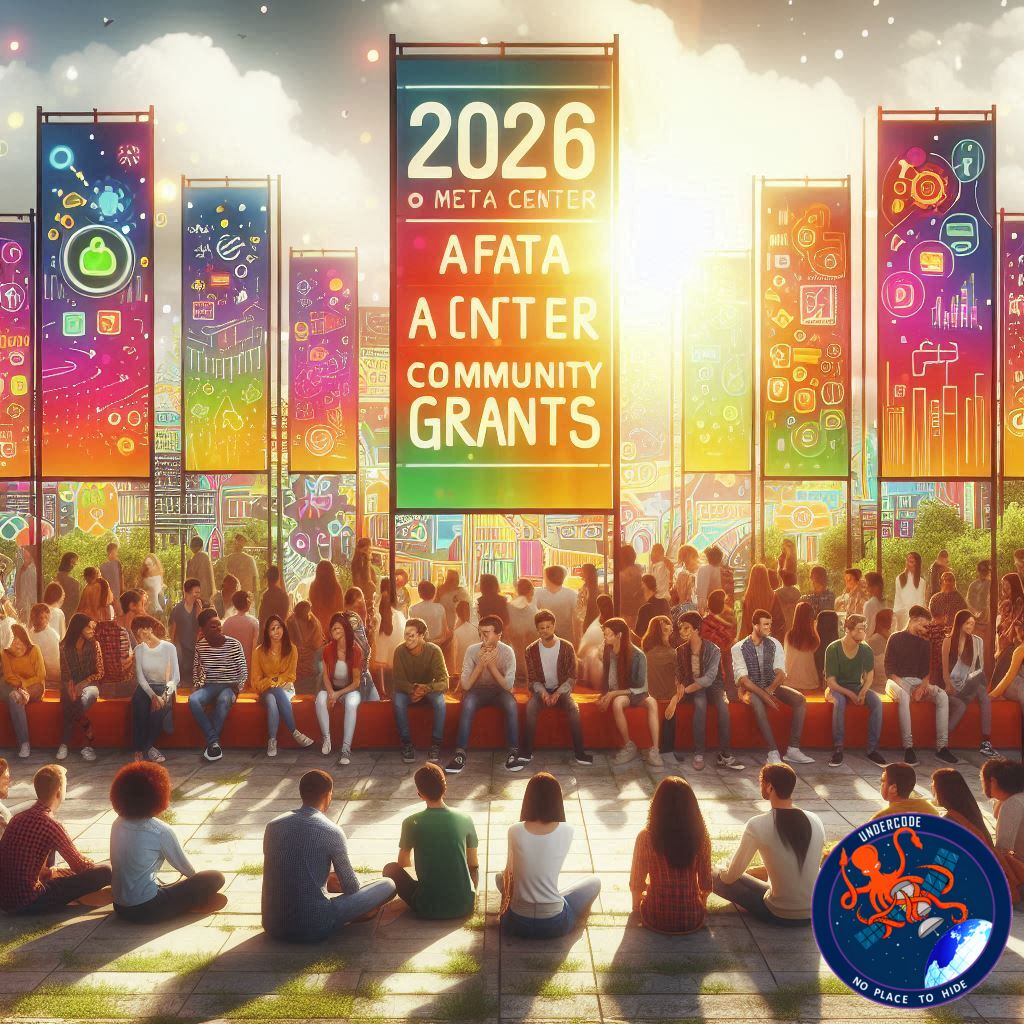
Meta has opened applications for the 2026 Data Center Community Action Grants, a program designed to provide funding for schools, nonprofits, and local organizations working to improve the communities surrounding Meta’s data centers. This initiative, active since 2011, supports both local development and the White House AI Youth Education Pledge.
Expansion to Seven New Communities
For 2026, the program broadens its reach to seven new data center regions: Aiken in South Carolina, Bowling Green in Ohio, Cheusdne in Wyoming, Jeffersonville in Indiana, Montgomery in Alabama, Richland Parish in Louisiana, and Rosemount in Minnesota. Applications remain open until November 21, 2025, giving organizations a wide window to prepare strong proposals.
A Global Footprint of Over $74 Million
Meta has distributed more than $74 million across its data center communities worldwide, with $24 million allocated through the Community Action Grants program specifically. These grants typically support long-term initiatives that apply technology to local challenges, strengthen civic infrastructure, and expand STEAM education.
Supporting Local STEAM Development
In DeKalb, Illinois, where Meta began building a data center in 2020, more than 65 local projects have already received grant support. Notably, the Northern Illinois University Foundation used its 2025 grant, its third from Meta, to expand summer STEM camps. Programs like Huskie Engineering have trained middle and high school students in sensors, data science, and AI. Grant funding also launched the STEAM Studio, providing afterschool learning and workforce development pathways.
Advancing Middle School STEM Innovation in New Mexico
In Los Lunas, New Mexico, Meta has invested over $2.5 billion in infrastructure and supported more than 210 community projects since 2019. Belen Consolidated Schools used their sixth consecutive grant to fund a new STEM Center at Belen Middle School. Students gain hands-on access to drones, electronics, coding kits, tablets, and 3-D printing technology, building early expertise in high-tech fields.
Empowering At-Risk Youth Through Digital Media
Texas hosts three Meta data centers, including the Fort Worth facility launched in 2015. With $4.9 million distributed across more than 175 grants, the region has seen strong community engagement. The Maroon 9 Community Enrichment Organization, a three-time grant recipient, used its 2024 funding to run a STEM digital media camp aimed at at-risk youth. Students learned digital art, animation, and media production as tools for empowerment, demonstrating how innovation can steer youth away from violence.
What Undercode Say:
Structural Commitment to Local Technology Futures
Meta’s grant program is more than philanthropy, it is a blueprint for how major tech companies integrate into local ecosystems. By focusing on education, workforce development, and community infrastructure, the program creates long-term pipelines that connect local talent with emerging technological fields. This approach distributes opportunity geographically, not just economically.
The Economics of Data Center Communities
Data centers generate jobs, but more importantly, they generate momentum. Large infrastructure investments often transform local economies by attracting small businesses, strengthening public services, and expanding educational opportunities. Meta’s multi-million-dollar funding flows reinforce that effect and give smaller communities access to resources typically found in major tech hubs.
Democratizing STEAM Access
One of the strongest themes across these grants is accessibility. Middle schoolers experimenting with drones, at-risk youth learning animation for social impact, and rural districts building robotics programs are all examples of democratized innovation. These are interventions that shift trajectories for young people who might otherwise be excluded from the modern digital economy.
Repeated Grants Show Sustained Impact
The fact that many organizations are multi-year recipients signals an important design philosophy: long-term investment outperforms one-time funding. Recurring grants help communities refine programs, scale outcomes, and expand their vision without rebuilding from scratch each year.
The Role of Universities and Local Schools
Partnership with academic institutions, such as Northern Illinois University, magnifies the impact. Universities operate as regional anchors, and META’s support lets these institutions bridge the gap between early education, career exploration, and professional readiness. The creation of the STEAM Studio is a direct example of how strategic funding can build replicable program models.
Community Building Through Technology
These projects underscore the idea that technology is not only a tool for economic advancement but also a mechanism for civic strengthening. Programs that teach animation, coding, or engineering often evolve into creative hubs, mentorship networks, and safe youth spaces. They create empowerment through skill building and self-expression.
A National Patchwork of Innovation
What emerges is a map of American towns experimenting with AI literacy, STEM labs, 3-D printing studios, and youth digital media programs. Each community tailors the grants to local needs, producing unique outcomes while contributing to a shared national vision of technological readiness.
A Balancing Act of Public and Private Responsibility
Critically, this initiative demonstrates how private-sector programs can complement public-sector gaps. Many school districts cannot afford high-end tech equipment or specialized programming. Meta’s grant model fills those gaps while enabling schools to reimagine educational possibilities.
Future-Proofing the Workforce
As AI and automation evolve, technical fluency becomes essential. By preparing students early, these grants help future-proof local economies. The youth learning sensors, robotics, and digital media today may build the companies or civic solutions of tomorrow.
A Look Ahead at Community Expectations
As these programs expand, communities may begin expecting continuous support from tech companies operating in their regions. Meta’s expansion into seven new communities will be watched closely as a test of how well large-scale tech infrastructure can integrate with rural and suburban areas.
Fact Checker Results
✅ Meta launched the 2026 grant cycle and expanded eligibility to seven new communities.
✅ Total global data center community funding exceeds $74 million, with $24 million from this specific program.
❌ No evidence of grants funding projects outside data center communities, as the program is limited to those regions.
Prediction
Meta will likely continue expanding its community grant footprint as data center construction accelerates. 🌐
STEAM programs funded today will evolve into local innovation ecosystems, creating new pipelines into tech careers. 📈
Communities receiving recurring grants may become national models for tech-driven educational transformation. 🚀
🕵️📝✔️Let’s dive deep and fact‑check.
References:
Reported By: about.fb.com
Extra Source Hub (Possible Sources for article):
https://www.reddit.com/r/AskReddit
Wikipedia
OpenAi & Undercode AI
Image Source:
Unsplash
Undercode AI DI v2
Bing
🔐JOIN OUR CYBER WORLD [ CVE News • HackMonitor • UndercodeNews ]
📢 Follow UndercodeNews & Stay Tuned:
𝕏 formerly Twitter 🐦 | @ Threads | 🔗 Linkedin | 🦋BlueSky | 🐘Mastodon


