
Listen to this Post
A Celebration Born From Resistance
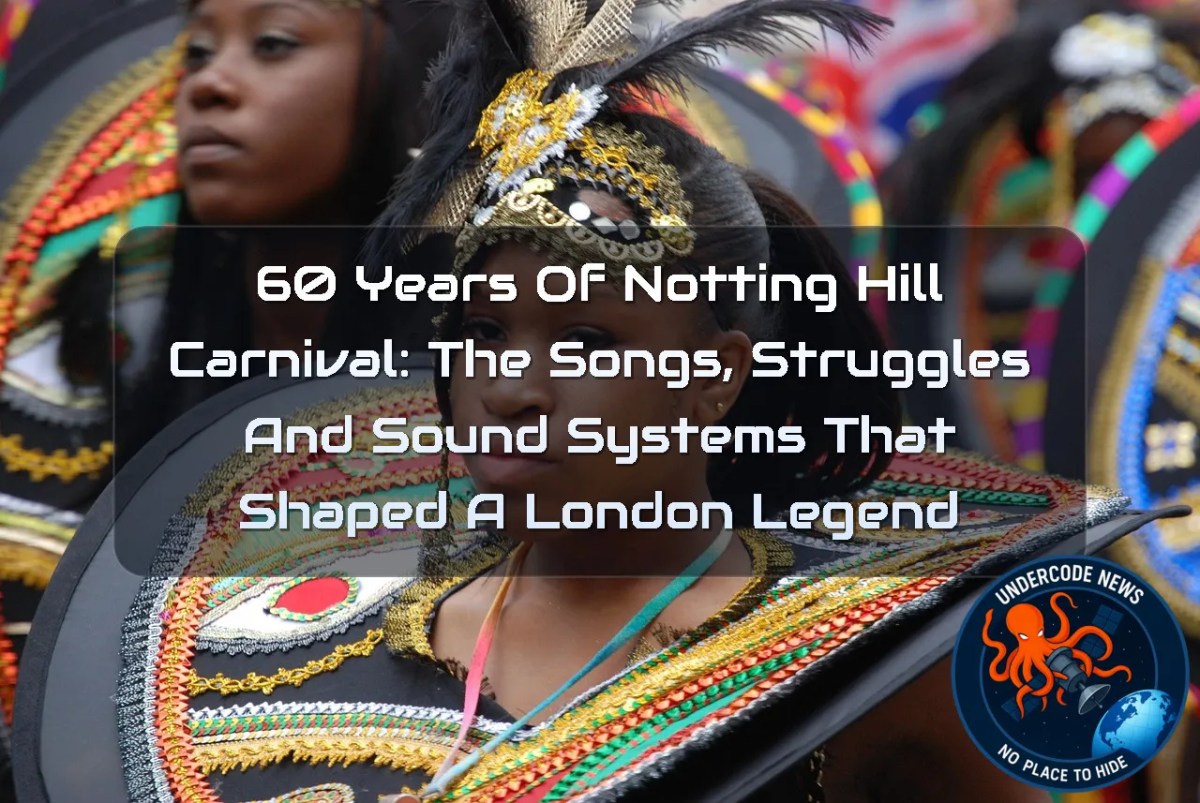
For six decades, Notting Hill Carnival has been more than a party. It has been a living expression of Caribbean heritage, Black British identity, creativity, resistance and community — carried through generations by music, costume, dance and sound-system culture.
As the world-famous festival celebrates its 60th anniversary in 2026, its streets are once again preparing to fill with steelpan rhythms, reggae basslines, soca, dancehall, jungle, grime, hip-hop, UK garage and countless other sounds. But behind the spectacular costumes and enormous crowds is a much deeper story: one about people who transformed difficult circumstances into one of London’s most powerful cultural traditions.
To mark the anniversary, Euronews Culture asked ten Carnival veterans, DJs, photographers, musicians and creatives to choose the song that best represents what Notting Hill Carnival means to them. Their selections span generations and genres, revealing just how broad the festival’s musical identity has become.
From Black Uhuru and Junior Murvin to Beenie Man, Kes and contemporary Carnival voices, these songs form something resembling an unofficial soundtrack to six decades of history.
From Tension to Transformation
The story of Notting Hill Carnival cannot be separated from the social tensions that existed in west London during the late 1950s and 1960s.
The arrival of the Windrush generation had transformed Britain’s cultural landscape, but Caribbean communities faced racism, discrimination and hostility. The 1958 Notting Hill race riots became one of the darkest symbols of those tensions.
The following year, the murder of Antiguan carpenter Kelso Cochrane further shocked the local community. Against that painful background, the idea of bringing people together through culture became increasingly important.
The First Steps Toward Carnival
In 1966, social worker Rhaune Laslett organised a children’s street party in an attempt to bring the divided Notting Hill community together.
When Trinidadian steelpan musician Russell Henderson and his band performed along Portobello Road, something important happened. Music began transforming public space into a place of celebration rather than conflict.
That moment helped establish the foundations of what would eventually become Notting Hill Carnival.
When Sound Systems Became the Voice of a Generation
During the 1970s, sound systems became increasingly important to Carnival.
Organiser Leslie Palmer helped expand the
The philosophy was simple but profound: if mainstream institutions did not always provide young Black Londoners with a voice, the sound system could.
Over time, massive speakers, selectors, MCs and DJs became as important to Carnival as the costumes themselves.
Six Decades of Musical Evolution
The music of Notting Hill Carnival has never remained frozen in one era.
Calypso and steelpan were followed and complemented by reggae, dub and roots music. Dancehall and soca expanded the sound. Later came jungle, drum & bass, hip-hop, UK garage and grime.
That constant evolution is one of
A teenager attending today can experience music created decades before their birth alongside sounds produced by artists from their own generation.
The result is not simply nostalgia. It is a conversation between generations.
Mikey Dread — Black Uhuru, “Guess
Channel One Sound System legend Mikey Dread has been part of Notting Hill Carnival’s sound-system culture since 1983.
His choice, Black Uhuru’s “Guess Who’s Coming to Dinner”, connects Carnival with the deep roots of Jamaican reggae.
The track carries the spirit of confidence, identity and cultural pride that has always been central to sound-system culture.
For listeners who understand Carnival as more than entertainment, the selection makes perfect sense: the music announces itself with presence.
Wayne Crichlow — Aswad, “Warrior Charge”
Documentary photographer Wayne Crichlow has spent more than 15 years photographing and documenting Notting Hill Carnival.
His selection is “Warrior Charge” by Aswad, released in 1980.
The choice is particularly fitting because Crichlow’s work focuses not merely on the spectacle but also on Carnival’s deeper themes of community and resistance.
His photography captures an event that can look completely different depending on where you stand — colourful celebration from one perspective, cultural history from another.
Linett Kamala — “Rum & RedBull”
DJ and Carnival board director Linett Kamala chose “Rum & RedBull” by Beenie Man, Future Fambo and Seanizzle.
Her story represents another crucial part of Carnival history: the changing role of women within sound-system culture.
Breaking into
Her career demonstrates that
Oxman — Junior Murvin, “Police and Thieves”
Greensleeves Hi-Fi selector Oxman selected Junior
Few songs better capture the political and social atmosphere surrounding reggae during the era when Carnival’s sound-system culture was becoming increasingly powerful.
The track became internationally recognised, but its connection to London’s Caribbean communities gives it an additional resonance.
It represents music that could simultaneously move a crowd and reflect the realities surrounding that crowd.
Lady Banton — Bob Marley, “Three Little Birds”
For Lady Banton, founder of Seduction City Sound, the choice is Bob Marley & The Wailers’ timeless “Three Little Birds.”
The song’s message of reassurance has made it one of Marley’s most enduring recordings.
Lady
Her continued presence behind the decks demonstrates that Carnival’s history is still being written.
Ras Sherby — “Live In Love”
Channel One MC Ras Sherby selected his own 2024 track, “Live In Love.”
At first glance, choosing
But that is precisely the point.
Carnival cannot survive by looking backward forever. Every generation needs to contribute something new.
Ras
YNG CPTN — Gappy Ranks, “Soul Rebel”
London DJ YNG CPTN chose “Soul Rebel” by Gappy Ranks featuring Nereus Joseph.
His broader musical approach reflects the modern Carnival experience, where reggae can sit comfortably alongside dancehall, Afrobeats, jungle, UK garage and house.
That genre-blending is particularly important for younger audiences.
Today’s Carnival is not a museum dedicated to Caribbean music. It is a constantly evolving musical ecosystem.
Helen Davenport — Kes, “Savannah Grass”
Costumier Helen Davenport, who has spent 27 years helping create Carnival costumes, selected Kes’ “Savannah Grass.”
Her choice highlights something sometimes overlooked in discussions about Carnival: music and costume are inseparable.
The costumes transform dancers into moving works of art, while the music provides the emotional and physical energy that brings them through the streets.
Davenport also teaches costume-making workshops, helping ensure that the craftsmanship behind Carnival is passed to future generations.
Jamie Rodigan — Dennis Brown, “Promised Land”
West London-born DJ Jamie Rodigan, son of legendary reggae broadcaster Sir David “Ram Jam” Rodigan, selected Dennis Brown’s “Promised Land.”
The selection reflects the powerful relationship between family, place and music.
Growing up around reggae broadcasting and sound-system culture gave Rodigan a connection to a musical tradition that stretches across generations.
His sets now combine reggae and dancehall with jungle, garage and house, demonstrating how inherited musical traditions can evolve without losing their roots.
Roachee — Beenie Man, “Who Am I”
East London MC Roachee, formerly of pioneering grime crew Roll Deep, chose Beenie Man’s “Who Am I.”
His selection brings another chapter into the Carnival story: the relationship between Jamaican dancehall and British urban music.
Grime emerged from the same wider London environment of pirate radio, youth clubs, sound systems and DIY music culture that had already shaped generations of Black British artists.
The musical connection between Caribbean sound-system culture and grime is therefore more than stylistic. It is historical.
Why These Ten Songs Matter
Taken individually, these songs represent different eras, moods and musical traditions.
Taken together, however, they tell a much bigger story.
They demonstrate that Notting Hill Carnival is not defined by a single sound.
It is defined by movement.
The movement of people.
The movement of music.
The movement of ideas between Jamaica, Trinidad, Barbados, other parts of the Caribbean, Africa, Britain and the wider world.
And the movement of one
Carnival as a Living Archive
Every Carnival leaves behind an enormous cultural archive.
There are photographs of dancers and costumes, recordings of legendary sound systems, stories from longtime residents, memories of particular performances and songs that instantly transport people back to a specific year.
That archive is particularly valuable because much of Carnival’s history was built outside traditional cultural institutions.
It happened on streets.
It happened through pirate radio.
It happened at sound-system sessions.
It happened in youth clubs and community spaces.
And it happened through people who simply kept showing up.
The Power of the Sound System
The sound system remains one of
Long before streaming platforms could recommend millions of songs, selectors physically built musical communities around their collections.
A sound system was not simply a speaker stack.
It was an identity.
It had a selector, an MC, a sound, a reputation and a following.
At Carnival, the sound system turns a street corner into a temporary cultural institution.
People gather around it, dance around it and judge it by the atmosphere it creates.
Music as Cultural Memory
Certain songs become attached to particular periods of people’s lives.
A Carnival veteran might hear a particular reggae tune and immediately remember being young, standing among friends and watching a particular sound system dominate the street.
For another person, the same song may represent family.
For someone else, it may represent migration.
For a younger attendee, it might simply be the song that made them fall in love with Carnival.
That is why creating a definitive Carnival playlist is almost impossible.
The meaning of a song depends on who is listening.
The Generational Conversation
One of the most remarkable things about the ten selections is the mixture of old and new.
Black Uhuru, Junior Murvin, Bob Marley, Aswad and Dennis Brown represent the foundational reggae era.
Meanwhile, Beenie Man, Gappy Ranks, Kes and Ras Sherby’s contemporary selection demonstrate that Carnival’s musical story continues to expand.
This mixture is important.
Tradition survives not by refusing change, but by giving new generations enough space to reinterpret it.
Beyond the Party
It can be tempting to reduce Notting Hill Carnival to colourful costumes, dancing, enormous crowds and loud music.
That would miss much of its significance.
Carnival emerged from a community dealing with racism, social division and painful memories.
Its survival represents something much bigger than an annual entertainment event.
It is evidence that cultural expression can turn difficult history into collective strength.
The Importance of Women at Carnival
The story of women such as Linett Kamala and Lady Banton also demonstrates how Carnival’s history has evolved.
Women’s participation is not merely an addition to an already established tradition.
Women have built sound systems, performed, organised, designed costumes, documented the event and created spaces for future generations.
The emergence of all-female-led sound systems was therefore culturally significant.
It challenged assumptions about who could control the decks and who could shape the sound of Carnival.
Costume Is Another Language
The music may be the heartbeat of Carnival, but costume is its visual language.
Elaborate feathers, colours, sequins, jewels and sculptural designs transform the streets into a moving spectacle.
Yet behind the visual excitement is an enormous amount of craftsmanship.
Costume designers and makers spend countless hours creating pieces that may be worn for only a short period.
Their work is another form of cultural preservation.
The Photography of Resistance
Photographers such as Wayne Crichlow play another crucial role.
Carnival exists physically for only a few days each year, but photography allows its moments to survive.
A single photograph can preserve a costume, a dance, a sound-system crowd or a facial expression long after the street has returned to normal.
Documentary photography therefore becomes a form of cultural memory.
From Caribbean Roots to British Culture
Perhaps the most important story behind 60 years of Notting Hill Carnival is how Caribbean culture became an inseparable part of British cultural identity.
What began within a community shaped by migration eventually influenced fashion, language, music, nightlife and popular culture across the country.
Reggae influenced punk.
Jamaican sound-system techniques influenced British electronic music.
Dancehall influenced grime.
Caribbean carnival traditions became part of
The boundaries between Caribbean and British culture became increasingly difficult to separate.
The Modern Carnival
The 2026 Carnival takes place in a dramatically different London from the city of the 1960s.
Music consumption has moved from vinyl and physical sound-system collections to streaming platforms and digital production.
Social media can turn a Carnival moment into an international phenomenon within minutes.
Yet the basic experience remains remarkably physical.
People still gather together.
People still dance in the streets.
Sound systems still compete for attention.
Costumes still transform the city.
And music still brings strangers together.
A Festival That Refuses to Stand Still
The ten songs chosen for the 60th anniversary make one fact particularly clear: Notting Hill Carnival has never belonged to just one generation.
Its oldest traditions continue to influence its newest sounds.
Its classic reggae remains relevant.
Its contemporary artists introduce new energy.
Its sound systems preserve history while simultaneously creating something new.
That contradiction is not a weakness.
It is the reason Carnival has survived.
Notting Hill Carnival 2026
The 60th anniversary of Notting Hill Carnival takes place over the August bank holiday weekend, with the main parades and sound systems scheduled for Sunday, August 30, and Monday, August 31, 2026.
For many attendees, the weekend will simply be an opportunity to dance, eat, meet friends and enjoy London’s extraordinary cultural diversity.
For others, it will be a chance to remember how far the community has come.
And for the younger generation, it may become the beginning of their own Carnival memories.
The Ten-Track Anniversary Soundtrack
The selections create a fascinating musical timeline:
Black Uhuru — “Guess
Mikey
Aswad — “Warrior Charge”
Wayne
Beenie Man, Future Fambo & Seanizzle — “Rum & RedBull”
Linett Kamala brings dancehall energy into the anniversary soundtrack.
Junior Murvin — “Police and Thieves”
Oxman’s selection captures reggae’s powerful relationship with social commentary.
Bob Marley & The Wailers — “Three Little Birds”
Lady Banton chooses a song built around reassurance, optimism and resilience.
Ras Sherby — “Live In Love”
A contemporary selection showing that
Gappy Ranks ft. Nereus Joseph — “Soul Rebel”
YNG CPTN highlights the continuing evolution of reggae within modern London nightlife.
Kes — “Savannah Grass”
Helen
Dennis Brown — “Promised Land”
Jamie Rodigan turns toward one of
Beenie Man — “Who Am I”
Roachee’s selection highlights the bridge between Jamaican dancehall and British grime culture.
What Undercode Says:
Carnival Is More Than Music
Notting Hill Carnival should be understood as a cultural system rather than simply a music festival. The songs are important because they carry stories about migration, identity, resistance, celebration and belonging.
A History Written in Bass
The basslines of reggae and dub became a kind of cultural language for Caribbean communities in Britain. Sound systems created spaces where people could hear familiar sounds while also developing something uniquely British.
The Windrush
The Windrush generation changed Britain in ways that extended far beyond the workforce. Food, fashion, language, religion, music and social traditions became part of everyday British life.
Resistance Is Embedded in Carnival
The history of racial discrimination surrounding early Notting Hill makes Carnival’s existence particularly meaningful. Celebration itself became an act of resilience.
The 1958 Riots Cannot Be Forgotten
Understanding the origins of Carnival requires remembering the hostility that Caribbean communities experienced. Without that context, the festival’s later success can appear disconnected from the circumstances that helped create it.
Kelso
The murder of Kelso Cochrane became another painful milestone for the local Caribbean community. The history of Carnival therefore carries both celebration and remembrance.
Rhaune
Laslett’s 1966 children’s street party illustrates how community-building can begin with something deceptively simple: bringing people together.
Steelpan Changed the Streets
Russell
Sound Systems Changed Everything
Once sound systems became central, Carnival gained a much more powerful connection to Jamaican musical culture.
Young People Found a Voice
Leslie
Music Never Stopped Evolving
Carnival’s survival has depended partly on its willingness to absorb new musical movements.
Reggae Built the Foundation
Roots reggae and dub remain essential to understanding the sonic identity of Notting Hill Carnival.
Dancehall Added Another Generation
Jamaican dancehall brought new rhythms, language and performance styles into the Carnival environment.
Jungle Created New Possibilities
British jungle and drum & bass demonstrated that Caribbean-influenced music could mutate into something distinctly British.
Grime Continued the Tradition
Grime’s relationship with pirate radio, MC culture and urban London demonstrates how earlier sound-system traditions continued into the digital age.
UK Garage Expanded the Audience
Garage introduced another layer of rhythm and club culture, showing that Carnival’s sound was never restricted to one genre.
Afrobeats Adds Another Dimension
The growing presence of African musical influences reflects London’s increasingly interconnected Black cultural landscape.
Women Are Central to the Story
Figures such as Linett Kamala and Lady Banton challenge the outdated image of Carnival as a predominantly male sound-system environment.
Lady Banton Represents Institutional Change
The creation of an all-female-led sound system was more than a milestone. It demonstrated that women could occupy positions of cultural authority.
Costume Makers Preserve Tradition
The work of costume designers ensures that
Documentation Matters
Without photographers and filmmakers, much of
Carnival Is an Open Archive
Every year adds another layer to that archive. New songs, costumes, faces and performances become part of the festival’s evolving history.
The Ten Songs Reveal the Bigger Picture
The anniversary selections are valuable because they demonstrate that there is no single definition of Carnival music.
Nostalgia Alone Is Not Enough
A festival celebrating 60 years cannot survive solely by replaying the past. It needs contemporary artists and audiences.
Tradition Needs Reinvention
The inclusion of modern selections alongside classic reggae proves that preservation and innovation can coexist.
Generations Meet Through Music
A grandfather may know Dennis Brown while his grandchild knows a contemporary dancehall or Afrobeats artist. Carnival gives them a place to experience both.
London Became Part Caribbean
The festival helped demonstrate that Caribbean culture was not something temporary brought into Britain by migrants. It became part of London’s permanent identity.
Caribbean Culture Influenced British Music
The connections between reggae, punk, jungle, garage, grime and modern electronic music reveal a long cultural chain.
The Street Remains Important
In an era dominated by streaming and social media, the physical street remains one of Carnival’s most powerful features.
Digital Culture Cannot Replace Physical Community
People can listen to Carnival music online all year, but being physically surrounded by thousands of people responding to the same rhythm creates an entirely different experience.
The Crowd Is Part of the Performance
At Carnival, the audience is not merely watching the event. Their dancing, singing and movement become part of it.
The Sound System Is a Community Hub
A sound system creates a temporary meeting point where music becomes social interaction.
Carnival Is International Yet Local
Millions may know the name Notting Hill Carnival, but its deepest meaning remains connected to the communities that built it.
Sixty Years Is a Major Cultural Achievement
Many festivals disappear, shrink or lose their identity. Carnival’s continued relevance after six decades demonstrates remarkable cultural durability.
The Next 60 Years Will Look Different
Future Carnival generations will inevitably bring new genres, technologies and cultural influences.
Artificial Intelligence May Eventually Become Part of Carnival
AI-generated music, digital production and immersive technology could eventually influence the festival’s soundscape, although the physical experience will remain difficult to replace.
Social Media Has Changed
A performance that once existed only for people standing on a London street can now reach audiences around the world almost instantly.
Global Visibility Creates New Pressures
Greater international attention can bring opportunities, but it can also raise questions about commercialization and cultural ownership.
Authenticity Will Remain Important
The challenge for future organisers will be maintaining Carnival’s community identity while allowing it to evolve.
The Future Depends on Young People
The most important question is not which classic song should be played forever. It is what today’s young attendees will create for the next generation.
Carnival’s Greatest Achievement
Perhaps
Six Decades, One Continuing Rhythm
The ten songs chosen for the 60th anniversary ultimately tell one story: Notting Hill Carnival survives because it remembers where it came from while refusing to stop moving forward.
✅ The 60th anniversary timing is consistent with the event’s 1966 origins, with the 2026 celebration marking six decades since the first Notting Hill Carnival.
✅ The article correctly identifies the August 2026 Carnival dates as Sunday, August 30, and Monday, August 31, corresponding to the UK August bank holiday weekend.
✅ The musical history described is broadly consistent with Carnival’s evolution, particularly the importance of Caribbean traditions, reggae and sound-system culture alongside later British genres.
❌ The anniversary should not be interpreted as meaning that every aspect of today’s Carnival dates directly back to 1966. The event changed considerably through the 1970s and subsequent decades as new organisers, sound systems, musical genres and communities became involved.
Prediction
(+1) Notting Hill Carnival’s musical identity will continue expanding rather than becoming locked into its classic reggae roots. Dancehall, Afrobeats, grime, jungle, garage and emerging electronic sounds are likely to continue sharing space with traditional Caribbean music.
(+1) The role of women in Carnival’s leadership and sound-system culture is likely to become increasingly visible. The contributions of figures such as Linett Kamala and Lady Banton demonstrate a broader shift toward more diverse cultural leadership.
(+1) The 60th anniversary will strengthen interest in Carnival’s historical documentation. Photography, documentaries, archives and oral histories are likely to become increasingly important as organisers and communities seek to preserve memories from the festival’s earliest generations.
(+1) Younger Londoners will continue redefining what Caribbean-influenced British music sounds like. Just as reggae influenced jungle and grime, future genres will likely absorb elements of today’s Carnival sound.
(+1) Notting Hill Carnival is likely to remain one of London’s most important cultural celebrations for decades to come, provided its organisers can balance global visibility, commercial pressures, public safety and the community traditions that gave the festival its meaning.
▶️ Related Video (74% Match):
🕵️📝Let’s dive deep and fact‑check.
🎓 Live Courses & Certifications:
Join Undercode Academy for Verified Certifications
🚀 Request a Custom Project:
Secure, high-velocity infrastructure and disruptive technological engineering. Contact our engineering team for high-tier development and proprietary systems:
[email protected]
💎 Smart Architecture | 🛡️ Secure by Design | ⭐ Trusted by Thousands
References:
Reported By: www.euronews.com
Extra Source Hub (Possible Sources for article):
https://www.pinterest.com
Wikipedia
OpenAi & Undercode AI
Image Source:
Unsplash
Undercode AI DI v2
🔐JOIN OUR CYBER WORLD [ CVE News • HackMonitor • UndercodeNews ]
📢 Follow UndercodeNews & Stay Tuned:
𝕏 formerly Twitter 🐦 | @ Threads | 🔗 Linkedin | 🦋BlueSky | 🐘Mastodon | 📺Youtube


