
Listen to this Post
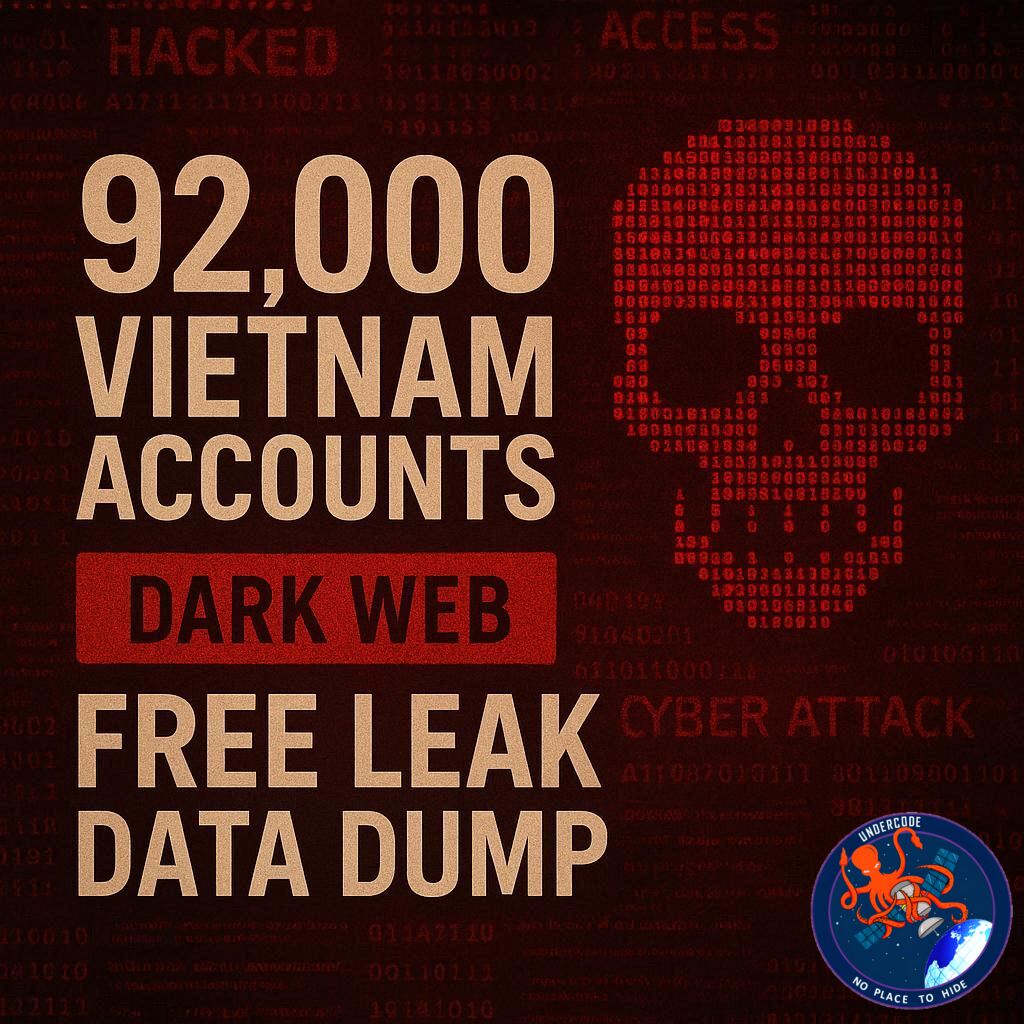 Introduction: A New Wave of “Free” Data on the Dark Web Raises Serious Questions
A newly surfaced dark web post claims to be distributing a dataset labeled “92K Vietnam,” allegedly containing around 92,000 user records. The dataset is being promoted through public file hosting platforms like MediaFire and amplified via Telegram channels. While it is framed as a “free accounts leak,” cybersecurity analysts suggest it may not be a genuine high-value breach but rather a recycled compilation of previously exposed data.
This incident reflects a recurring pattern in underground cybercrime ecosystems where large datasets are shared not necessarily for direct profit, but to generate traffic, build reputation within hacker communities, or funnel users into private channels for future monetization. Despite the questionable authenticity of the data, the potential risks for credential reuse, phishing, and malware distribution remain significant.
the Dark Web Report (92K Vietnam Dataset Circulating)
Dataset Label and Scale
The dataset is labeled “92K Vietnam” and allegedly contains approximately 92,000 records.
Distribution Channels
It is being distributed through MediaFire download links and promoted via Telegram groups.
Free Leak Framing
The data is advertised as a “free accounts leak,” a common tactic to attract attention and engagement.
Threat Intelligence Interpretation
Experts suggest the dataset follows a known pattern of low-tier dumps used for visibility rather than high-value sale.
Likely Composition of Data
The records may include credential pairs such as email and password combinations, reused breach data, or stealer logs.
Aggregation Hypothesis
The dataset is likely compiled from multiple previously leaked sources rather than a single breach.
Telegram Ecosystem Role
Telegram channels are used to amplify distribution and build audience engagement.
Public Hosting Strategy
MediaFire and similar platforms are commonly used for easy mass distribution of large files.
Lack of Verification
No technical proof, schema, or origin verification is provided with the dataset.
Low Sophistication Indicator
The structure and presentation suggest minimal effort in validation or data integrity.
Recycling Behavior
Cybercriminal actors often repackage old leaks to appear as new datasets.
Engagement Farming Strategy
Users are encouraged to download, react, or share content to boost visibility metrics.
Monetization Funnel
Free datasets often lead users into private Telegram groups for paid content later.
Credential Stuffing Risk
If real credentials are included, they could be used in automated login attacks.
Account Takeover Potential
Users reusing passwords across platforms remain highly vulnerable.
Phishing Campaign Risk
Stolen emails may be used in targeted scam campaigns.
Malware Exposure Risk
Download links may contain or redirect to malicious payloads.
Target Demographic
The dataset specifically references Vietnam, suggesting regional targeting or labeling.
Data Authenticity Doubts
Experts classify the dataset as low credibility due to lack of structure.
Absence of Context
No breach source, timestamp, or affected platforms are identified.
Dark Web Trend Pattern
This aligns with frequent “combo list” circulation behavior.
Visibility Strategy
Posting large numbers like “92K” increases perceived legitimacy.
Psychological Manipulation
Free access creates urgency and lowers user skepticism.
Cybercrime Economy Role
Such leaks often serve ecosystem growth rather than immediate financial gain.
Telegram Dependency
Telegram remains a central hub for distributing and promoting leaked data.
File Hosting Abuse
Public platforms are exploited to avoid detection and takedowns.
Repackaging Culture
Old stealer logs are often cleaned and rebranded as new leaks.
Risk Misjudgment
Users often underestimate danger because the data is labeled “free.”
Security Awareness Gap
Many victims do not realize reused credentials can still be exploited.
Threat Intelligence Conclusion
The dataset is likely a recycled, low-novelty credential collection.
What Undercode Say:
Pattern Recognition in Cybercrime Ecosystems
The appearance of the “92K Vietnam” dataset is not an isolated event but part of a repetitive ecosystem behavior where old breaches are continuously reshaped into new narratives. This recycling process is one of the most persistent trends in underground markets.
The Illusion of Fresh Data
Cybercriminals understand that the perception of “freshness” is often more valuable than actual novelty. By labeling datasets with large numbers and regional identifiers, they create the illusion of exclusivity even when the data is outdated.
The Role of Telegram in Modern Data Leaks
Telegram has become a central infrastructure layer for cybercrime distribution. It provides anonymity, scalability, and community-building tools that allow actors to rapidly spread datasets and build reputation systems based on engagement.
Why “Free” Is Never Truly Free
Free datasets are rarely distributed without intent. The underlying goal is usually to drive traffic, increase channel subscriptions, or establish trust for future monetization schemes. The real product is user attention and participation.
Low-Sophistication Does Not Mean Low Risk
Even if the dataset is considered low credibility, the associated risks remain real. Credential stuffing attacks do not require high-quality data, only partially valid combinations that users may have reused elsewhere.
Aggregation as a Common Technique
Many such datasets are not breaches but aggregations. Actors scrape multiple leaks, combine them, and redistribute them as a single “new” package to maximize perceived value.
The Economics of Visibility in Dark Web Forums
Engagement metrics such as downloads, shares, and comments act as currency in underground communities. Posting large datasets increases reputation scores even if the data is irrelevant or recycled.
Psychological Engineering in Leak Distribution
The framing of “free accounts” exploits curiosity and urgency. Users are more likely to download files when they believe they are gaining access to something exclusive or rare.
Infrastructure Abuse Patterns
Public file hosting services and encrypted messaging platforms are consistently abused because they reduce operational friction and allow rapid rehosting after takedowns.
Regional Labeling Strategy
Attaching country-specific tags like “Vietnam” helps categorize datasets and target specific user groups, even when the actual data origin is unrelated or mixed.
Lack of Verification as a Red Flag
Legitimate breaches typically include metadata, timestamps, or source references. The absence of such elements strongly indicates recycled or fabricated content.
Evolution of Combo Lists
Combo lists have evolved from simple credential dumps into complex marketing tools used to drive traffic into broader cybercrime ecosystems.
The Hidden Funnel Strategy
Once users engage with “free” leaks, they are often funneled into private groups where paid leaks, malware tools, or phishing kits are offered.
User Risk Amplification Through Reuse
The biggest danger is not the dataset itself but user behavior. Password reuse across platforms turns even outdated leaks into active security threats.
Long-Term Cybersecurity Implication
The normalization of recycled leaks contributes to a persistent background threat where old data continuously re-enters active attack cycles.
Fact Checker Results
✔ The dataset size and distribution method align with common dark web “combo list” patterns
✔ No verified breach source or technical evidence supports claims of a new compromise
❌ Labeling suggests likely recycling of previously leaked or aggregated data rather than a fresh breach
Prediction
The “92K Vietnam” dataset will likely resurface under different names in future forums as part of ongoing repackaging cycles 🔁
Telegram channels promoting it may expand their audience before shifting toward monetized private leak groups 💬
Credential stuffing attempts using parts of this dataset may appear in low-level automated attack campaigns targeting reused passwords 🔐
🕵️📝✔️Let’s dive deep and fact‑check.
References:
Reported By: x.com
Extra Source Hub (Possible Sources for article):
https://www.medium.com
Wikipedia
OpenAi & Undercode AI
Image Source:
Unsplash
Undercode AI DI v2
Bing
🔐JOIN OUR CYBER WORLD [ CVE News • HackMonitor • UndercodeNews ]
📢 Follow UndercodeNews & Stay Tuned:
𝕏 formerly Twitter 🐦 | @ Threads | 🔗 Linkedin | 🦋BlueSky | 🐘Mastodon


