
Listen to this Post
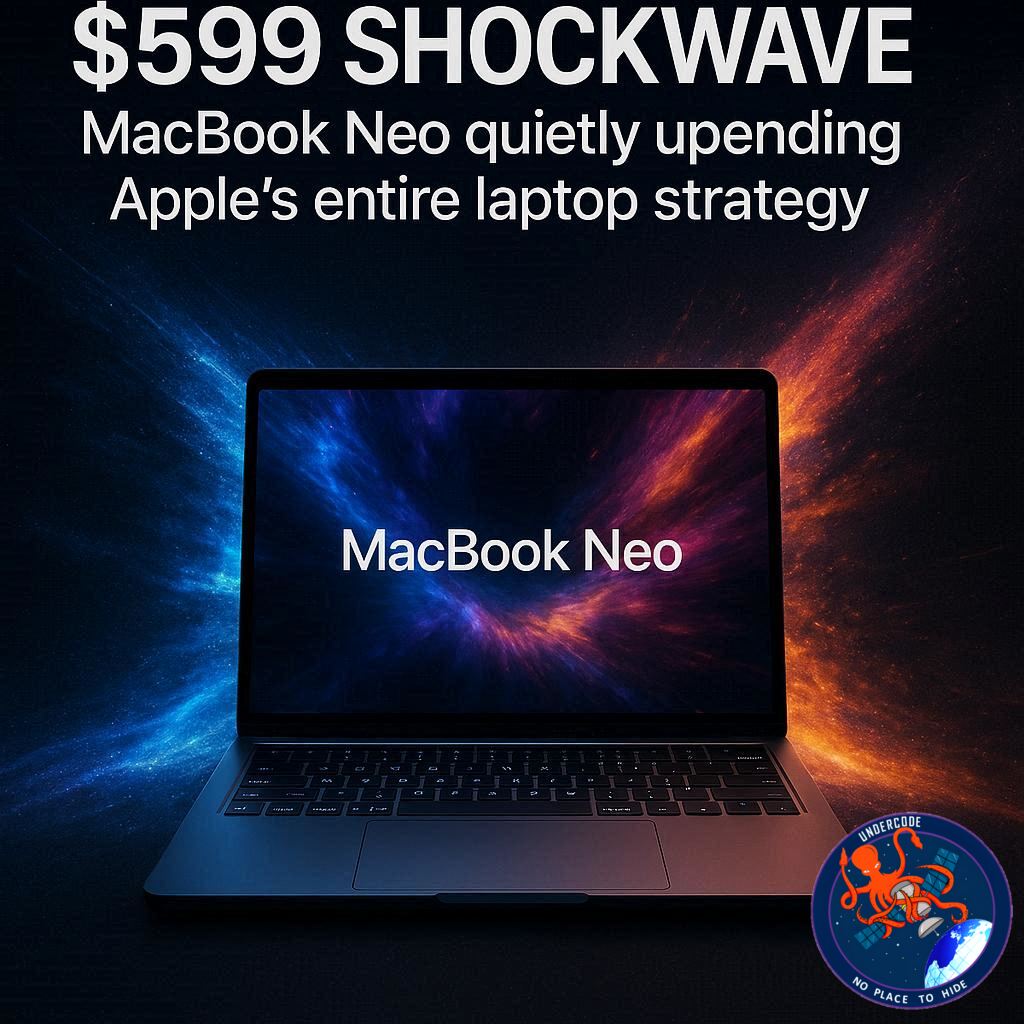
A New Budget Mac That Feels Anything but Cheap
When Apple unveiled the $599 MacBook Neo, the announcement immediately sparked debate across the tech world. A laptop from Apple priced at just $599 USD—and $499 USD for students—seemed almost too good to be true. For years, Apple’s reputation has been built on premium hardware with premium price tags. Yet here was a MacBook that appeared to deliver much of the traditional Apple experience at a dramatically lower cost.
The big question quickly emerged: does this new device disrupt the value of Apple’s other non-Pro laptops? If the entry-level Mac suddenly becomes this capable and affordable, it could fundamentally reshape how people choose between Apple devices.
Premium Design Despite the Budget Price
From a design standpoint, the MacBook Neo hardly looks like a “budget” device. It carries the same aluminum unibody construction that has long defined Apple laptops. The chassis feels sturdy and refined, giving the impression of a product far more expensive than its $599 USD price tag.
The laptop features a glass display and a bright panel capable of reaching 500 nits of brightness, something that even older premium Macs lacked. The keyboard maintains Apple’s familiar tactile feel, providing a comfortable typing experience suitable for both students and professionals.
For a laptop positioned as Apple’s most affordable option, the Neo surprisingly avoids the cheap materials or build compromises commonly found in budget computers.
A Few Compromises—but Not Many
Despite the impressive build quality, the MacBook Neo does make a handful of small sacrifices.
One noticeable difference is the absence of Apple’s Force Touch trackpad. Instead, the Neo uses a traditional mechanical click system. While it still clicks evenly across the surface—unlike the old “diving board” trackpads from pre-2015 MacBooks—it lacks the advanced pressure-sensitive feedback found in higher-end models.
Another limitation appears in the base configuration. The standard model includes 256GB of storage and does not come with Touch ID. However, for an additional $100 USD, buyers can upgrade to 512GB of storage and unlock Touch ID functionality, making the laptop feel closer to its pricier siblings.
These compromises are relatively minor when compared to the overall package.
The Unexpected Performance Surprise
One of the biggest surprises with the MacBook Neo is how capable it feels during everyday use. Powered by Apple’s A18 Pro chip, the laptop performs far better than many expected from a budget Mac.
Even under heavier workloads such as photo editing or multitasking, the device remains impressively cool. Unlike some earlier thin MacBooks that could become warm during sustained workloads, the Neo manages thermal performance extremely well.
This efficiency highlights the power advantages of Apple’s custom silicon architecture.
Comparing the Neo to the MacBook Air
The most obvious comparison lies with the long-standing entry point to Apple’s laptop lineup: the MacBook Air.
After its refresh with the M5 chip, the MacBook Air now starts at $1,099 USD. That puts it roughly $400 USD higher than a well-equipped MacBook Neo with upgraded storage and Touch ID.
The Air still retains several advantages. It includes 16GB of RAM, which makes it more suitable for demanding multitasking. Its display supports P3 wide color, an important feature for professionals working in photography, design, or video editing.
Additionally, the MacBook Air includes Center Stage, Apple’s smart camera technology that keeps users centered during video calls.
These features ensure the Air still has a clear place in the lineup—but the price difference suddenly feels much harder to justify for casual users.
The Hidden Threat to Apple’s Own Lineup
For many years, the MacBook Air served as the “default Mac.” Consumers who wanted a laptop from Apple but didn’t need professional features would almost automatically choose it.
Now the MacBook Neo occupies that position.
Both laptops weigh roughly 2.7 pounds and share similar dimensions. For everyday users—students, writers, or casual creators—the difference in features may not feel significant enough to warrant spending an additional $400 USD.
This creates a potential shift in consumer behavior: buyers who once defaulted to the MacBook Air may now gravitate toward the Neo instead.
The Even Bigger Problem: iPad as a Laptop Replacement
The MacBook Neo doesn’t just compete with other Macs—it also challenges the entire idea of using an iPad as a laptop replacement.
Consider the iPad Air paired with the Magic Keyboard.
The iPad Air starts at $599 USD, and the Magic Keyboard typically costs around $269 USD. Even accounting for occasional discounts, the combined setup averages roughly $800 USD.
That means an iPad laptop-style configuration often costs more than the MacBook Neo.
Storage and Software Differences
Beyond pricing, the value gap becomes even clearer when examining specifications.
An iPad Air with a keyboard setup starts with 128GB of storage, which is half of the MacBook Neo’s base configuration. It also offers a smaller 11-inch display, compared with the larger screen on the Neo.
More importantly, the iPad runs iPadOS, while the MacBook Neo runs macOS, the full desktop operating system.
While the iPad is powerful—often powered by chips like the Apple M4—that performance is arguably unnecessary for the tasks most people perform on a tablet.
The Death of the “Budget Laptop iPad” Narrative
For years, Apple and many tech commentators positioned the iPad plus keyboard as a cheaper alternative to buying a MacBook.
The MacBook Neo effectively destroys that argument.
Even the lower-cost iPad combined with the Magic Keyboard Folio comes close to the Neo’s price, often totaling $598 USD.
When a full macOS laptop costs nearly the same—or even less—the logic of choosing a tablet for laptop-style work becomes far less convincing.
Apple May Need to Rethink Its Pricing Strategy
The arrival of the MacBook Neo exposes an interesting tension inside Apple’s product lineup.
Some accessories suddenly feel overpriced in comparison. The Magic Keyboard for iPad, priced around $249 USD, costs nearly as much as an entire entry-level iPad itself.
Similarly, the iPad Air may need either a price reduction or significant feature upgrades to justify its position.
Features such as 120Hz ProMotion displays or Face ID could help differentiate the tablet lineup more clearly.
What Undercode Says:
Apple’s Budget Strategy Is More Calculated Than It Appears
The MacBook Neo may look like a generous price drop from Apple, but it is more likely a strategic repositioning. Apple understands that global laptop demand has shifted dramatically toward lower price tiers. By introducing a Mac at $599 USD, Apple ensures it remains competitive against Windows ultrabooks that dominate the student and education markets.
The Neo Could Become Apple’s New Gateway Device
Historically, the MacBook Air served as Apple’s “gateway product.” It introduced users to macOS and eventually led them deeper into the Apple ecosystem. The Neo appears designed to take over that role. Its price makes it accessible to first-time buyers while still offering enough premium feel to maintain Apple’s brand identity.
Apple Silicon Is the Real Enabler
Without Apple’s custom chips, a laptop like the MacBook Neo would likely be impossible. The efficiency of processors like the A18 Pro allows Apple to deliver strong performance while maintaining excellent battery life and minimal heat output. Traditional laptop manufacturers relying on third-party processors often struggle to match this efficiency at similar price levels.
The MacBook Air Faces an Identity Crisis
The biggest casualty of the Neo might actually be the MacBook Air. Positioned between the budget Neo and the premium MacBook Pro, the Air risks becoming a middle product without a clear identity. Apple may eventually need to push the Air further upmarket—perhaps with OLED displays or other premium technologies.
The iPad’s Laptop Ambitions Are in Danger
For years, Apple marketed the iPad as a potential laptop replacement. However, the MacBook Neo undercuts that narrative by offering a full macOS machine at nearly the same price as many tablet configurations. Unless iPadOS evolves significantly, consumers may increasingly view the iPad as a complementary device rather than a primary productivity tool.
Consumers May Finally See Macs as Affordable
One of the most interesting consequences of the MacBook Neo could be psychological. Macs have long been perceived as expensive luxury products. A capable laptop priced at $599 USD could fundamentally change that perception, attracting a much wider audience.
Apple’s Ecosystem Advantage Will Amplify Neo Sales
Once users buy a MacBook Neo, they are more likely to purchase other Apple products—AirPods, iPhones, Apple Watches, and services like iCloud or Apple Music. In that sense, the Neo may function as a strategic entry point designed to expand Apple’s long-term ecosystem revenue.
🔍 Fact Checker Results
🔍 Price Accuracy
✅ The MacBook Neo is reported to start at $599 USD, with a $499 USD student price.
🔍 Product Comparison Claims
✅ The MacBook Air currently starts around $1,099 USD, creating a roughly $400 USD gap.
🔍 iPad Setup Costs
❌ While many iPad keyboard setups approach $800 USD, discounts and alternative keyboards can lower the total cost.
📊 Prediction
📊 The MacBook Neo Could Become Apple’s Best-Selling Laptop
If early impressions hold true, the MacBook Neo may soon become Apple’s most popular laptop worldwide. Its aggressive price, premium design, and strong performance place it in a unique position that competitors may struggle to match.
📊 Apple May Reshape the Entire Mac Lineup
The Neo’s success could force Apple to redesign its Mac strategy entirely—possibly pushing the MacBook Air toward premium features like OLED displays while positioning the Neo as the permanent entry-level model.
📊 The iPad’s Role May Shift Permanently
Rather than replacing laptops, the iPad may evolve into a specialized creative device focused on drawing, note-taking, and portable media consumption, leaving traditional computing tasks firmly in the hands of MacBooks.
🕵️📝✔️Let’s dive deep and fact‑check.
References:
Reported By: 9to5mac.com
Extra Source Hub (Possible Sources for article):
https://www.stackexchange.com
Wikipedia
OpenAi & Undercode AI
Image Source:
Unsplash
Undercode AI DI v2
Bing
🔐JOIN OUR CYBER WORLD [ CVE News • HackMonitor • UndercodeNews ]
📢 Follow UndercodeNews & Stay Tuned:
𝕏 formerly Twitter 🐦 | @ Threads | 🔗 Linkedin | 🦋BlueSky | 🐘Mastodon


