
Listen to this Post
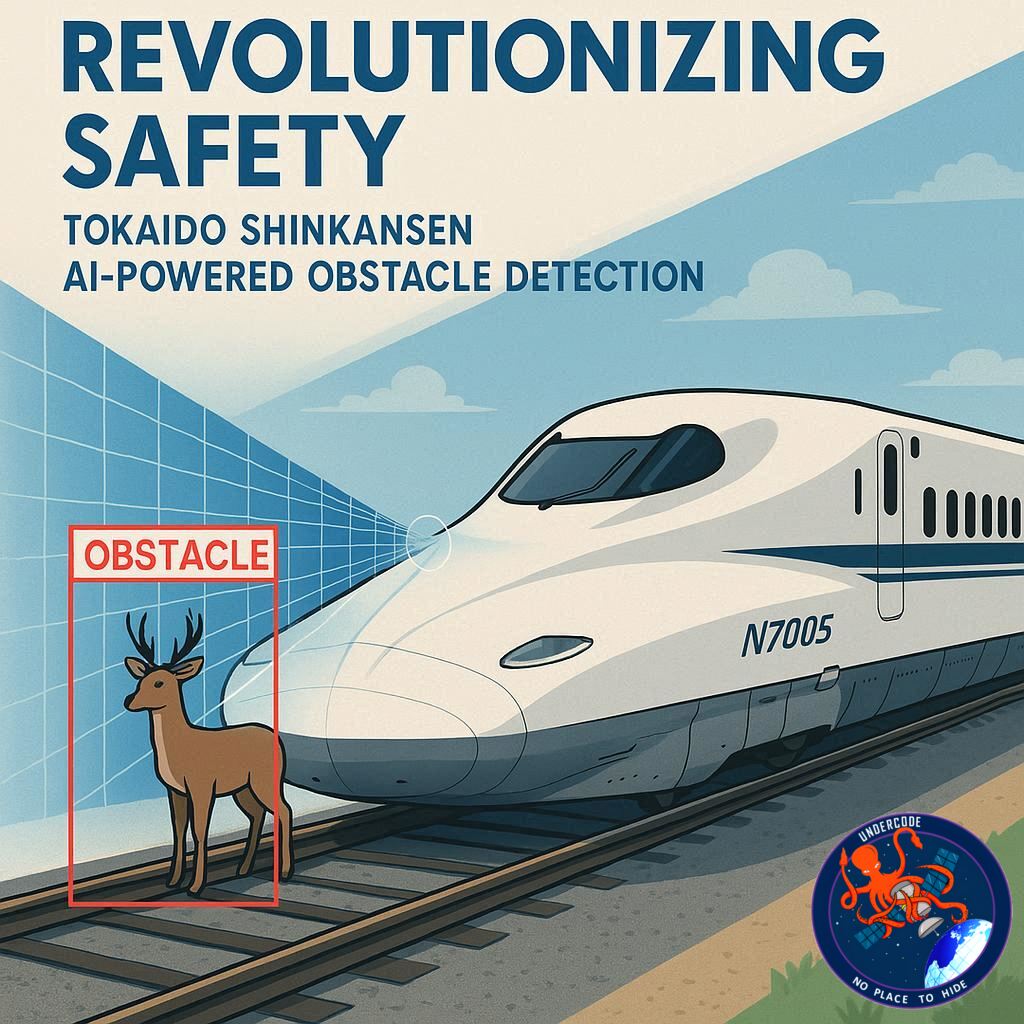
The Tokaido Shinkansen, Japan’s high-speed rail artery, is taking a major leap forward in operational safety and efficiency. JR Central has announced the development of a groundbreaking system that equips the N700S train’s cockpit with cameras capable of detecting obstacles along the tracks. Using advanced image processing and artificial intelligence (AI), this innovation can automatically identify potential hazards—such as overhanging trees or bird nests—while the train is traveling at high speeds. Traditionally, such inspections relied on personnel patrolling the tracks and performing visual checks, a labor-intensive and time-consuming process. Starting January 2027, this technology will be operational on two trainsets, significantly reducing human workload and enhancing safety.
Advanced Monitoring to Replace Manual Inspection
JR Central has long relied on specialized inspection trains, notably the retired “Doctor Yellow,” to monitor rail conditions. With the new system, much of this monitoring will be integrated directly into operational N700S trains. Cameras mounted in the driver’s cabin will continuously scan the surrounding infrastructure, including overhead wires and poles, providing real-time detection of obstacles. This reduces the need for separate inspection runs, allowing for more efficient use of resources while maintaining high safety standards.
Integration of New Rail Condition Assessment Functions
In addition to obstacle detection, the N700S trains will soon be outfitted with technology to monitor rail tracks and overhead lines. By January 2027, this dual-function capability will allow the regular service trains to fully replace the inspection functions previously performed exclusively by Doctor Yellow. This represents a strategic shift in railway maintenance, combining AI, real-time monitoring, and operational efficiency.
Streamlining Safety with AI
The system leverages AI to interpret complex visual data at high speeds, ensuring that minor obstacles are detected before they pose a risk. The integration of AI reduces human error and allows maintenance teams to prioritize interventions where they are most needed. Beyond immediate safety improvements, the system also provides valuable data for predictive maintenance, identifying trends in infrastructure wear or environmental hazards over time.
What Undercode Say:
The introduction of AI-driven obstacle detection on the N700S signals a paradigm shift in high-speed rail maintenance. By replacing manual visual inspections with automated monitoring, JR Central is not just improving efficiency—it’s redefining safety protocols. The adoption of cockpit-mounted cameras reflects a larger trend in transportation, where AI augments human capability rather than replacing it entirely.
From an operational standpoint, this technology allows trains to serve dual roles: transporting passengers while continuously inspecting infrastructure. This dual-use strategy could significantly reduce operational costs, especially as dedicated inspection trains like Doctor Yellow are phased out. The data collected will create a richer, more granular understanding of track conditions, allowing for targeted interventions that minimize downtime and enhance safety.
Moreover, the real-time analysis of obstacles—ranging from environmental hazards to structural anomalies—could inspire similar implementations in other high-speed networks globally. It demonstrates how AI can handle dynamic, unpredictable scenarios where human observation alone may fall short. JR Central’s approach is forward-thinking, integrating preventive measures directly into the operational flow rather than treating inspections as separate, reactive tasks.
The system’s predictive potential is particularly noteworthy. By continuously monitoring conditions along the tracks, AI algorithms can forecast maintenance needs and potential disruptions, enabling proactive responses rather than reactive fixes. This marks a shift from a maintenance culture rooted in periodic inspection to one driven by continuous data analysis.
Additionally, the technology enhances worker safety by minimizing exposure to potentially hazardous inspection environments. Personnel no longer need to physically patrol high-speed rail tracks, which historically carried risk. The automation also allows for faster identification of urgent issues, from fallen branches to structural weaknesses, ensuring that maintenance teams can respond immediately.
From a technological standpoint, integrating AI with image processing in a high-speed environment presents challenges, including motion blur, variable lighting, and weather interference. Overcoming these hurdles shows JR Central’s commitment to rigorous development and testing standards. Success here could serve as a model for international rail systems seeking similar efficiency and safety gains.
Strategically, this advancement strengthens Japan’s reputation as a global leader in rail innovation. By embedding inspection technology into standard service trains, JR Central is pioneering a model that balances operational efficiency, cost management, and passenger safety. It also positions the N700S as a platform for continuous technological upgrades, future-proofing the fleet against emerging challenges in rail infrastructure management.
Fact Checker Results:
✅ JR Central has announced AI-powered cameras for N700S trains.
✅ The system will start operation in January 2027 on two trainsets.
❌ It does not fully eliminate human oversight, but reduces workload and risk exposure.
Prediction:
📊 By 2030, AI-driven monitoring could become standard across Japan’s high-speed rail network, reducing maintenance costs by up to 30% while improving safety metrics.
📊 Similar technology may expand to freight and regional rail lines, creating a fully integrated predictive maintenance ecosystem.
📊 The data-driven approach will likely influence global rail standards, encouraging AI adoption for real-time infrastructure monitoring.
🕵️📝✔️Let’s dive deep and fact‑check.
References:
Reported By: xtechnikkeicom_ecafed1a06aa651118c6caf1
Extra Source Hub (Possible Sources for article):
https://www.twitter.com
Wikipedia
OpenAi & Undercode AI
Image Source:
Unsplash
Undercode AI DI v2
Bing
🔐JOIN OUR CYBER WORLD [ CVE News • HackMonitor • UndercodeNews ]
📢 Follow UndercodeNews & Stay Tuned:
𝕏 formerly Twitter 🐦 | @ Threads | 🔗 Linkedin | 🦋BlueSky | 🐘Mastodon


