
Listen to this Post
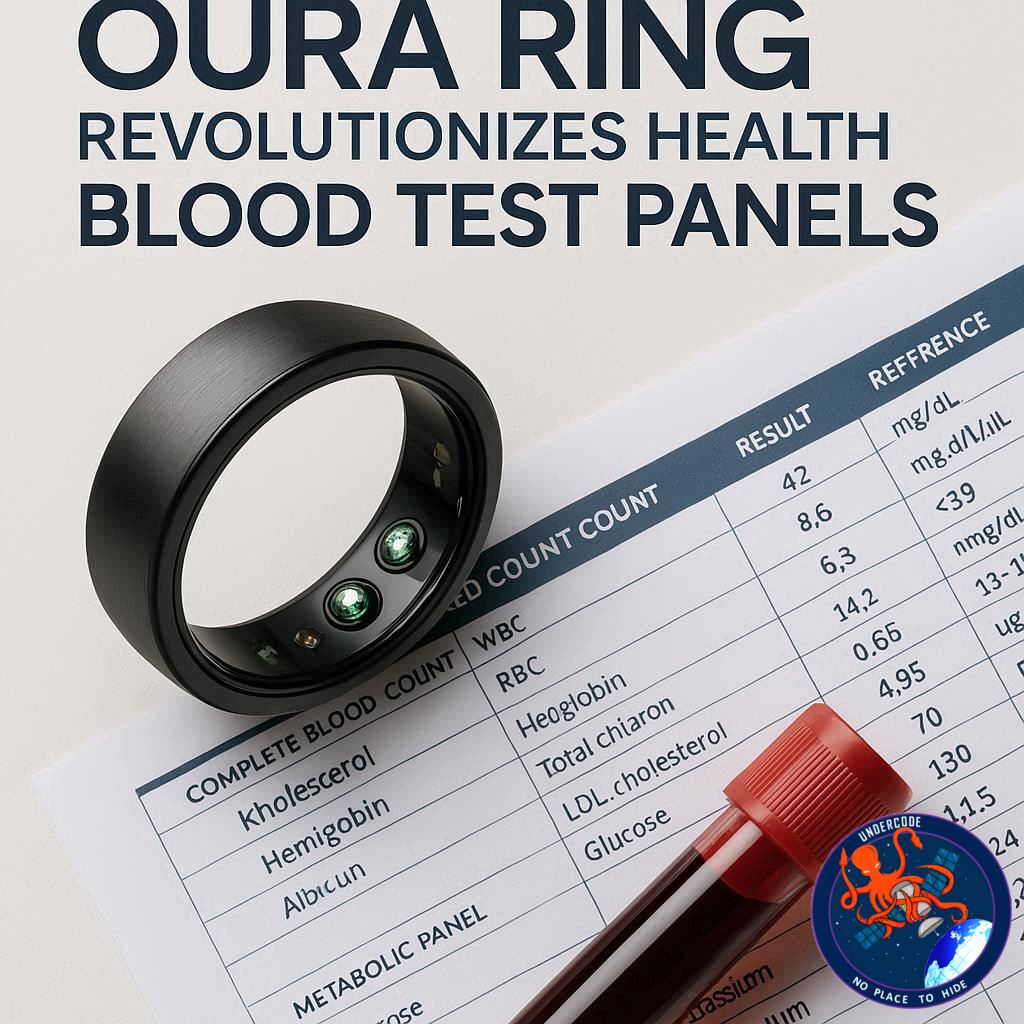
In a bold leap for wearable technology, Oura Ring is redefining how we monitor our health. Beyond tracking sleep, activity, and heart rate, the smart ring now incorporates a medical-grade approach: blood testing. With its newly launched Health Panels feature, Oura empowers users to access critical insights about their internal health, combining traditional laboratory science with modern AI-driven guidance. This development marks a shift in the wearable tech landscape, where blood data is becoming as essential as steps and calories in understanding overall wellness.
Oura’s Blood Testing: How It Works
Oura’s Health Panels test for 50 biomarkers spanning heart, blood sugar, kidney, and liver health. Users schedule blood tests at Quest Diagnostics labs, and results are delivered directly in the Oura app. These results are then analyzed by the AI-enabled Oura Advisor, which translates complex metrics into actionable advice. For instance, if LDL cholesterol or HBA1C levels are flagged, the Advisor might suggest dietary adjustments like increasing leafy greens. Users can also ask the Advisor for deeper explanations of unfamiliar biomarkers, bridging the gap between medical data and personal understanding.
The integration of blood panels with wearable tracking signals a shift from purely observational health metrics—like sleep scores and step counts—to concrete, clinically significant measurements. By linking lab results with continuous insights from the ring, Oura aims to enable proactive health management, offering users tangible ways to track, understand, and improve their wellbeing over time.
This approach aligns with a broader trend in the industry. Competitors like Whoop and Ultrahuman are already offering subscription plans for regular blood testing, tracking metabolic and cardiometabolic biomarkers to optimize daily routines. Oura further complements its offering through partnerships with devices like Dexcom’s continuous glucose monitors, allowing users to track blood sugar responses to meals, exercise, and stress.
Currently, the Oura Health Panels are available for users aged 18 to 65, with some state restrictions, including Arizona, Hawaii, New Jersey, New York, and Rhode Island. The launch coincides with the release of the Oura Ring 4 Ceramic, a stylish, colorful iteration of the smart ring, emphasizing that health tech can merge functionality with personal style.
What Undercode Say:
Oura’s Health Panels represent a paradigm shift in the wearable market. The device’s ability to integrate clinical blood testing into an everyday wearable signals the convergence of consumer technology and preventive healthcare. Unlike traditional lab visits, this approach makes health monitoring seamless, personalized, and consistent, offering insights that are actionable rather than purely observational.
By providing data in real time through the Oura app, the ring transforms static lab results into dynamic feedback. Users can see trends, monitor changes, and test the impact of lifestyle adjustments over weeks and months. This positions Oura as not just a tracker but a digital health coach, combining AI, biometric data, and human behavior insights to create measurable outcomes.
The partnership with Quest Diagnostics is critical. It legitimizes the data by anchoring it in certified lab results, which counters skepticism often associated with purely wearable-based measurements. Moreover, the integration with continuous glucose monitors enhances the platform’s depth, offering actionable insights into metabolic health that go beyond general wellness.
However, challenges remain. Access is geographically limited, and the subscription model may create cost barriers. Additionally, while AI guidance is informative, it should not replace professional medical advice, highlighting the importance of user education. The system’s reliance on periodic blood draws also underscores that wearables alone cannot fully capture internal health without complementary clinical data.
Yet the strategy is compelling. Oura is capitalizing on a growing consumer desire for precision health—tracking metrics that have clear implications for long-term wellness. By connecting lifestyle adjustments directly to lab-verified biometrics, users gain a sense of control over health outcomes previously accessible only through clinical environments. This approach could redefine expectations for all wearable devices, nudging the industry toward a future where real-time health optimization is standard, not optional.
From a broader perspective, Oura’s move reflects a cultural shift. Consumers are no longer content with generalized wellness metrics; they want data-backed insights that can guide decisions about diet, exercise, and sleep. Wearables are evolving from passive trackers to active health partners, bridging the gap between daily routines and clinical science.
The Oura Ring also highlights the gamification of health data, where tracking measurable internal metrics fosters engagement, motivation, and long-term adherence to healthy habits. In combining stylish design, AI-driven recommendations, and lab-validated results, Oura is positioning its device as both a status symbol and a serious health tool—a rare balance in the consumer tech space.
Ultimately, Oura’s Health Panels offer a glimpse into the future of integrated digital health ecosystems. We are moving toward an era where wearable devices, continuous monitoring, and AI-driven guidance converge to make preventive healthcare proactive, personalized, and empowering for every user.
Fact Checker Results:
✅ Oura Health Panels test 50 biomarkers.
✅ Blood tests are conducted at Quest Diagnostics labs.
❌ Currently unavailable to users in AZ, HI, NJ, NY, and RI.
Prediction:
📊 Wearable devices with integrated clinical testing will become a mainstream expectation by 2027. Users will increasingly prioritize devices offering actionable health insights, combining AI guidance with verified biometrics. Companies like Oura may expand to include more biomarkers, continuous monitoring, and personalized predictive health interventions. The line between consumer tech and preventive healthcare will continue to blur, making proactive health management part of daily life.
🕵️📝✔️Let’s dive deep and fact‑check.
References:
Reported By: www.zdnet.com
Extra Source Hub (Possible Sources for article):
https://www.medium.com
Wikipedia
OpenAi & Undercode AI
Image Source:
Unsplash
Undercode AI DI v2
Bing
🔐JOIN OUR CYBER WORLD [ CVE News • HackMonitor • UndercodeNews ]
📢 Follow UndercodeNews & Stay Tuned:
𝕏 formerly Twitter 🐦 | @ Threads | 🔗 Linkedin | 🦋BlueSky | 🐘Mastodon


