
Listen to this Post
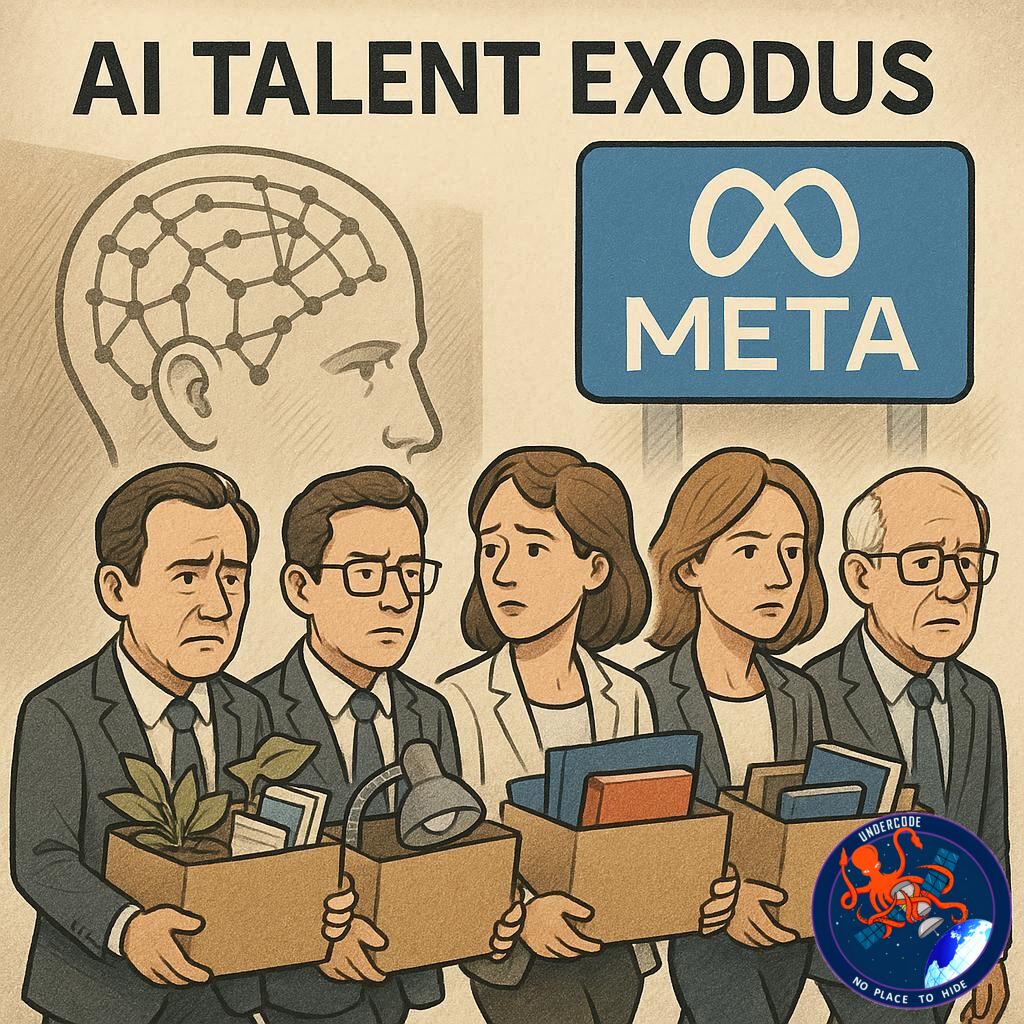
Apple’s ambitious artificial intelligence plans are facing a turbulent challenge as the tech giant grapples with a wave of departures among its top AI talent. The latest high-profile exit comes from Ke Yang, recently promoted to lead Apple’s AI-driven web search initiative, who has now joined Meta’s expanding AI team. This move underscores growing competition in the AI sector and raises questions about Apple’s ability to maintain its edge in the rapidly evolving field of generative AI.
A Significant Leadership Loss
Ke Yang’s departure is particularly striking given his recent appointment as head of Apple’s Answers, Knowledge, and Information (AKI) team—a critical group tasked with revamping the Siri voice assistant. Yang had been with Apple since 2019, playing a central role in advancing Siri’s capabilities to compete with AI-powered platforms like ChatGPT. His leadership was expected to steer Apple’s AI initiatives into integrating generative AI features capable of handling complex, personalized queries. The exit of such a pivotal figure highlights the increasing pressure on Apple to retain top-tier AI talent as competitors intensify their recruitment efforts.
Meta’s Strategic AI Recruitment
Meta, under CEO Mark Zuckerberg, has been aggressively expanding its AI workforce, positioning itself as a major player in the race toward advanced artificial intelligence and generative AI platforms. Yang’s move to Meta follows a series of strategic hires that reinforce the company’s commitment to foundational AI models and generative tools. This influx of talent not only strengthens Meta’s AI capabilities but also signals the company’s ambition to dominate in the field of superintelligent systems.
Implications for Siri and Apple’s AI Roadmap
Yang’s exit could delay Apple’s planned overhaul of Siri, originally scheduled for release in March next year. The AKI team, responsible for implementing advanced search features and delivering personalized responses, faces the challenge of compensating for the loss of a key leader during a critical phase of development. This setback may impact Apple’s ability to compete effectively with AI assistants from competitors who have already integrated sophisticated generative AI functionalities.
A Broader AI Talent Drain
Yang is not the only notable departure from Apple. Zian Jhang, the company’s lead AI robotics researcher, recently joined Meta’s Robotics Studio after a decade at Apple. Additionally, three other AI researchers—John Peebles, Nan Du, and Zhao Meng—left Apple’s Foundation Models team, with Peebles and Du moving to OpenAI and Meng joining Anthropic. Collectively, Apple has lost around ten AI experts, including leaders in its Foundation Models and Apple Intelligence teams, raising internal discussions about whether to rely more heavily on external technologies rather than solely on in-house development.
What Undercode Say:
Apple’s current AI talent drain reveals structural and strategic vulnerabilities in its approach to innovation. The departure of key figures like Ke Yang and Zian Jhang suggests a gap between the company’s ambitious AI goals and its internal culture of retention and incentives. While Apple has historically excelled at hardware and integrated software ecosystems, its AI strategy may lack the agility required to compete with hyper-aggressive firms such as Meta and OpenAI.
Meta’s rapid recruitment strategy underscores a broader shift in AI development: speed, scale, and access to top talent have become as critical as proprietary technology. By securing industry-leading minds, Meta not only accelerates its generative AI roadmap but also weakens competitors by draining their knowledge capital. Apple’s reliance on internal development, while historically a strength, now appears as a bottleneck in adapting to fast-paced innovation cycles where time-to-market and human capital are decisive.
The talent exodus also raises questions about Apple’s corporate culture and incentives. High-caliber AI researchers are drawn to environments that offer creative freedom, cutting-edge tools, and clear career pathways in a space where technological breakthroughs define value. Apple, renowned for its secrecy and hierarchical structure, may struggle to provide the flexible, collaborative atmosphere that today’s AI experts prioritize.
Strategically, Apple’s contemplation of increased reliance on external AI models indicates a pragmatic pivot. Collaborating with external LLM providers could accelerate Siri’s competitiveness, but it risks compromising Apple’s historic edge in ecosystem integration and privacy-focused innovation. The company faces a delicate balance: maintain proprietary control over AI capabilities or embrace external partnerships for rapid development.
In the near term, Apple must address not only talent retention but also operational continuity. With the AKI team and Foundation Models group experiencing multiple departures, knowledge transfer, project management, and roadmap stability are under threat. Competitors, particularly Meta and OpenAI, now have a stronger foothold in shaping the AI landscape, potentially leaving Apple playing catch-up in a critical area of future technology.
Ultimately, the AI sector is becoming a zero-sum game in talent acquisition. Every high-profile hire by Meta or OpenAI directly diminishes Apple’s ability to innovate internally. To remain competitive, Apple may need to rethink compensation, culture, and strategic partnerships, blending its traditional strengths with the fast-moving dynamics of generative AI research.
Fact Checker Results:
✅ Ke Yang has left Apple to join Meta.
✅ Zian Jhang and three other AI researchers departed Apple recently.
❌ Apple’s revamped Siri has not yet launched; the March timeline may be impacted.
Prediction:
📊 Apple is likely to accelerate partnerships with external AI providers to compensate for internal talent losses.
📊 Meta’s aggressive hiring will strengthen its generative AI ecosystem, potentially outpacing Apple in consumer-facing AI applications.
📊 Siri’s AI overhaul may experience delays, giving competitors a temporary edge in advanced voice assistant capabilities.
🕵️📝✔️Let’s dive deep and fact‑check.
References:
Reported By: timesofindia.indiatimes.com
Extra Source Hub (Possible Sources for article):
https://www.quora.com/topic/Technology
Wikipedia
OpenAi & Undercode AI
Image Source:
Unsplash
Undercode AI DI v2
Bing
🔐JOIN OUR CYBER WORLD [ CVE News • HackMonitor • UndercodeNews ]
📢 Follow UndercodeNews & Stay Tuned:
𝕏 formerly Twitter 🐦 | @ Threads | 🔗 Linkedin | 🦋BlueSky | 🐘Mastodon


