
Listen to this Post
🎯 Introduction
When Whole Foods Market, the beloved organic grocery pioneer, was sold to Amazon in 2017, many saw it as a natural merger of innovation and convenience. But behind the polished headlines and corporate smiles was a story of pressure, power, and reluctant surrender. John Mackey, the outspoken cofounder and former CEO of Whole Foods, has now revealed that the sale wasn’t a visionary partnership—it was a strategic rescue mission forced by Wall Street’s heavy hand. His candid confession reshapes how we understand one of the most significant retail acquisitions of the decade.
The Forced Hand Behind a Billion-Dollar Decision
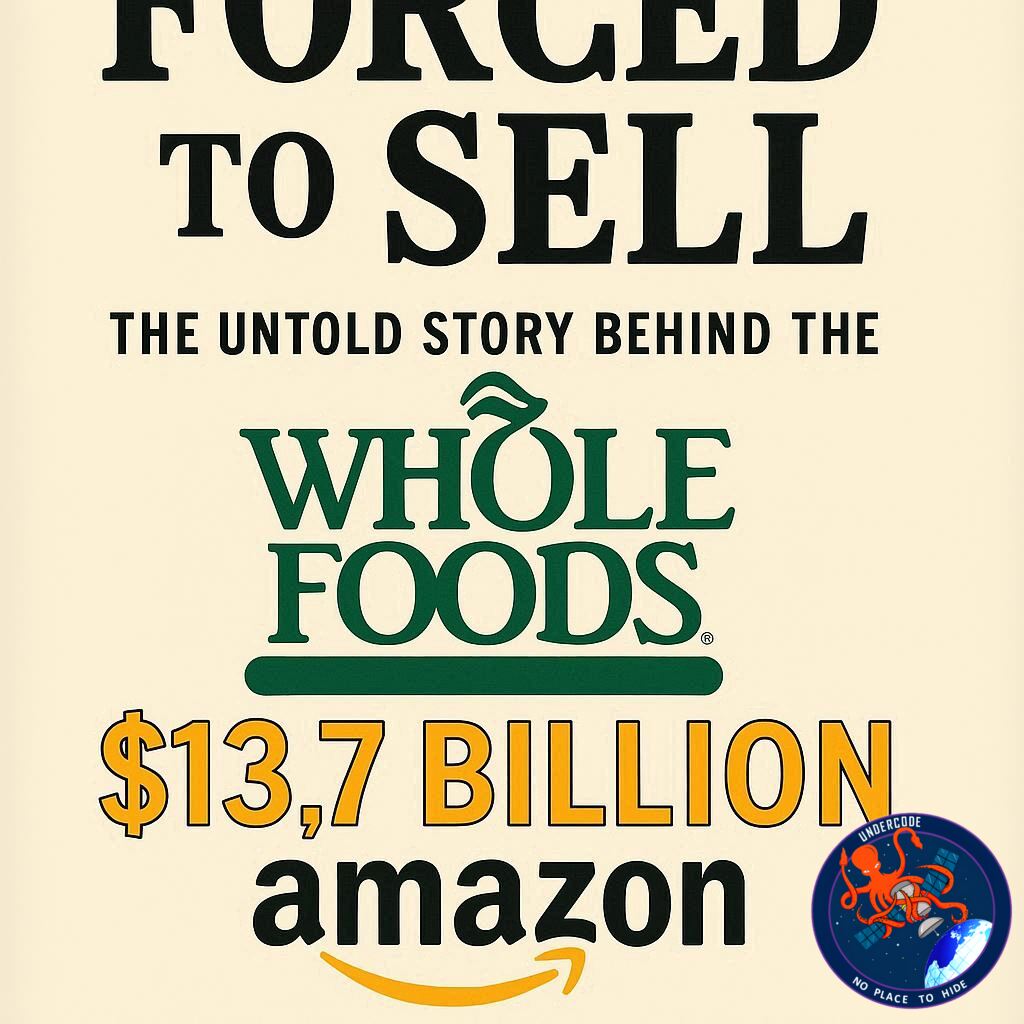
John Mackey never intended to sell Whole Foods to Amazon. In a recent episode of the Habits & Hustle podcast, he disclosed that the 2017 deal, worth $13.7 billion, was driven not by ambition but by necessity. Activist hedge fund Jana Partners had taken an 8.8% stake in Whole Foods, becoming its second-largest shareholder. Their message to Mackey was as blunt as it was ruthless: surrender control or be ousted.
Mackey recounted the chilling ultimatum. Jana Partners told him directly, “We’re going to take over your board. We’re going to fire you and anyone who doesn’t follow our orders. Then we’ll sell Whole Foods to the highest bidder—and there’s nothing you can do about it.” Within weeks, the boardroom drama escalated. Under immense pressure and with no safe path forward, Mackey began searching for a buyer who could preserve the company’s culture, mission, and employees.
Amazon, led by Jeff Bezos, entered the picture almost incidentally. Mackey had met Bezos a year earlier at a conference and admired Amazon’s long-term vision. Though reluctant to sell, Mackey saw Amazon as the least damaging option—a “win-win-win” compromise that could satisfy shareholders, protect jobs, and secure the company’s survival.
The Road to Amazon’s Acquisition
At the time of the acquisition, Whole Foods was struggling. The once trailblazing brand faced six straight quarters of declining same-store sales. Competitors like Kroger and Walmart had begun selling organic and natural products at lower prices, eroding Whole Foods’ reputation as a high-quality, premium retailer. Customers mocked the store with the nickname “Whole Paycheck,” a label that symbolized both its popularity and its problem.
Behind the scenes, Mackey knew the company needed a strategic turnaround. He wanted to cut prices, streamline operations, and modernize the supply chain. But those goals required patience—and Wall Street had none to give. Jana Partners wanted quick returns and immediate restructuring, not slow cultural evolution.
Mackey explored alternatives. He approached Warren Buffett, who declined. Albertsons expressed interest, but Mackey dismissed the chain as a poor cultural fit, fearing it would dismantle Whole Foods’ identity. That left Amazon—the only suitor with the scale, technology, and willingness to let Whole Foods operate semi-independently.
Six weeks after their first formal meeting, Amazon and Whole Foods announced their deal. It was fast, controversial, and irreversible.
The “Win-Win-Win” Aftermath
In retrospect, Mackey called the deal a “win-win-win” solution. Amazon’s deep pockets and technology transformed Whole Foods’ future. The acquisition led to four rounds of price cuts, a $15 minimum wage for employees, and expanded access for small suppliers through Amazon’s vast logistics network. Shareholders received nearly 40% higher returns following the deal, validating the financial logic of the acquisition—even if the emotional cost was steep.
Yet for Mackey, the transaction was bittersweet. Whole Foods had always stood for conscious capitalism, sustainability, and independence. The sale marked an end of an era—a moment when the organic food rebel bowed to the algorithmic empire.
What Undercode Say:
The Whole Foods–Amazon story is not just a business transaction. It’s a study in power, capitalism, and compromise. Mackey’s revelation exposes a truth often hidden behind glossy press releases: in the modern corporate world, idealism has a short shelf life.
Activist investors like Jana Partners embody a brutal logic of shareholder capitalism—profits over purpose. They often argue that companies exist to maximize short-term value. But in doing so, they frequently destroy the very culture that made those companies valuable in the first place. Whole Foods was never merely a grocery store; it was a philosophy built on trust, quality, and ethical consumerism. Jana’s intervention turned that philosophy into a bargaining chip.
What’s fascinating is how Mackey’s choice of Amazon wasn’t driven by greed but survival instinct. He knew that if Whole Foods fell into the wrong hands, its unique mission would be dismantled overnight. Amazon, despite its corporate might, offered continuity—at least in form, if not in spirit. Bezos’s empire understood scalability, efficiency, and data. Whole Foods understood authenticity and human touch. The merger was a paradox of the digital age: the marriage of cold algorithms and organic values.
From a strategic perspective, the deal worked. Whole Foods remains relevant, Amazon expanded its footprint into physical retail, and the grocery industry was forever changed. But morally, the story leaves an aftertaste. Mackey’s “win-win-win” framing hides the deeper loss—the surrender of autonomy to shareholder pressure and corporate inevitability.
There’s also a subtle irony: Mackey, a long-time advocate of “conscious capitalism,” became a casualty of the same capitalist system he tried to reform. His story mirrors a broader dilemma many visionary founders face—when idealism collides with Wall Street’s quarterly expectations, ideals rarely win.
In the years since, Whole Foods has both thrived and transformed. Prices dropped, accessibility grew, but the brand’s aura of independence faded. It now operates as part of a data-driven ecosystem that analyzes consumer habits and optimizes for efficiency. To Amazon, groceries are just another vertical. To Mackey, they were a calling.
The sale of Whole Foods should be remembered not as a triumph but as a cautionary tale. It reminds us that even visionary companies can be cornered when investors weaponize ownership. The deal was indeed “the best solution to a bad problem,” but it was also proof that capitalism, unchecked, can devour even its most conscious participants.
🔍 Fact Checker Results
✅ Whole Foods was sold to Amazon for $13.7 billion in 2017.
✅ Jana Partners held an 8.8% stake and pressured for a sale.
✅ John Mackey confirmed he felt “forced” into the deal on the Habits & Hustle podcast.
📊 Prediction
🛒 The Amazon–Whole Foods model will continue to evolve toward frictionless grocery automation. 🤖 Expect data analytics, AI-driven pricing, and delivery optimization to redefine what “organic shopping” means. 🌱 The heart of Whole Foods may change, but its legacy of conscious consumerism will continue—digitized, algorithmic, yet still echoing Mackey’s original dream.
🕵️📝✔️Let’s dive deep and fact‑check.
References:
Reported By: timesofindia.indiatimes.com
Extra Source Hub (Possible Sources for article):
https://www.reddit.com/r/AskReddit
Wikipedia
OpenAi & Undercode AI
Image Source:
Unsplash
Undercode AI DI v2
Bing
🔐JOIN OUR CYBER WORLD [ CVE News • HackMonitor • UndercodeNews ]
📢 Follow UndercodeNews & Stay Tuned:
𝕏 formerly Twitter 🐦 | @ Threads | 🔗 Linkedin | 🦋BlueSky | 🐘Mastodon


