
Listen to this Post
The Rise of a Publisher with Principles
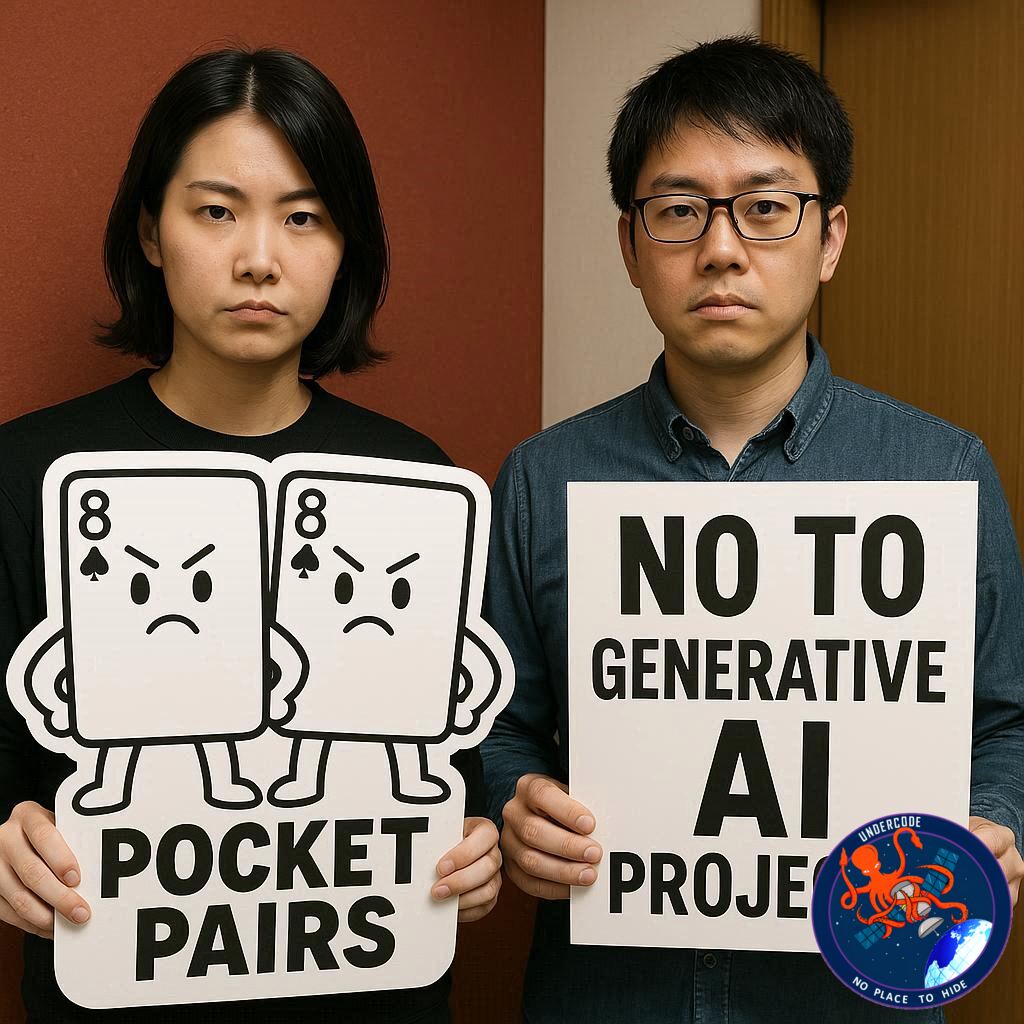
In a gaming world increasingly dominated by automation and AI-driven creativity, Japanese developer Pocketpair has taken a rare and defiant stance. The studio, best known for its breakout hit Palworld, has confirmed it will not fund or support any game projects that use generative AI. This decision comes as a surprise in an era where many publishers are rushing to integrate artificial intelligence into their development pipelines.
Pocketpair’s communications director and publishing manager, John Buckley, revealed in an interview with Game Developer at Gamescom Asia that the company’s new publishing division—launched in January—was built to help studios bring their games to market without depending on AI tools. He was unapologetically clear:
“People are going to say I’m lying, but these are just the hard facts. We don’t believe in it. We’re very upfront about it. If you’re big on AI stuff or your game is Web3 or uses NFTs, there are lots of publishers out there who’ll talk to you—but we’re not the right partner for that.”
The Ethics Behind the Decision
This statement didn’t come from a place of technological ignorance, but rather from a deep ethical conviction. Buckley emphasized that Pocketpair has drawn a firm moral and creative boundary around generative AI, rejecting its use in both development and publishing.
The company has been frequently accused by critics of using AI-generated content in Palworld, a title often described as “Pokémon with guns.” Yet Buckley insists these accusations are baseless, reiterating that Pocketpair’s developers believe in authentic, human-made creativity. “We just don’t believe in generative AI,” he said simply.
The Incoming Wave of AI Games
While Pocketpair’s moral clarity is admirable, Buckley isn’t naive. He admits that the AI revolution in gaming is inevitable, predicting that over the next few years, Steam and other platforms will be flooded with low-quality, AI-generated games.
“I think over the next two or three years, we’re going to get into this weird era—and you can see it slowly happening now on Steam—of really low-quality, AI-made games,” he explained.
Buckley warns that this will mark the beginning of what he calls an ‘authenticity market’, where players will start valuing genuine craftsmanship again. In his words, “People are going to slowly say, ‘No, these guys are really trying to make something special,’ to fight back.”
A Stand Against Creative Automation
Pocketpair’s refusal to engage with generative AI isn’t just a business decision—it’s a cultural statement. In a time when creative industries are wrestling with questions about authorship, artistic integrity, and the soul of creation, the company is asserting that games made by human minds and hands still matter.
They’re betting on emotion, passion, and imperfection—the qualities that make games feel alive. In doing so, Pocketpair isn’t just distancing itself from AI trends; it’s protecting the identity of human-made art in a rapidly changing industry.
🧩 What Undercode Say:
Pocketpair’s stance is more than an anti-AI protest—it’s a strategic positioning in a fractured gaming ecosystem. By rejecting AI, the company is defining its brand ethos around authenticity, community trust, and creative purity. In marketing terms, this is a masterstroke.
Let’s unpack the logic behind it.
First, the AI backlash is real. Many players already distrust AI-driven content, fearing it will lead to derivative storytelling, generic design, and the erosion of developer jobs. By saying “no” to AI, Pocketpair taps directly into this sentiment, appealing to gamers who crave personality over production speed.
Second, the company’s new publishing division is not just about funding indie titles; it’s about curating a creative identity. By filtering out AI and Web3-based projects, Pocketpair builds a recognizable moral brand—one that promises “handmade fun.” This could attract developers who want to stand apart from the algorithmic flood soon to hit digital storefronts.
Third, Buckley’s remarks about the coming “authenticity market” are not speculation—they’re observation. The trend is visible already. Steam and itch.io have seen an uptick in AI-made asset-flip games. These projects often lack soul, coherence, or originality, but they’re cheap and fast. Pocketpair’s prediction that audiences will soon revolt against this low-effort flood aligns with broader consumer behavior across creative industries, from music to film.
The stance also highlights a deeper philosophical tension in game development: is creativity a process or a product? AI can replicate patterns, but it cannot feel the rhythm of player emotion. Pocketpair’s refusal is, in essence, a defense of emotional intelligence in art.
From a business perspective, their approach could even be financially smart. While others race to automate, Pocketpair can market itself as a “last bastion of handmade gaming.” That narrative alone holds immense commercial power, especially in Japan’s gaming culture, which deeply values craftsmanship and artistic pride.
But there’s risk too. As AI tools evolve, developers who use them responsibly might create amazing experiences at a fraction of the cost. If that happens, Pocketpair could find itself swimming against an unstoppable current. The future may belong not to those who reject AI, but to those who balance innovation with integrity.
Still, in this moment, Pocketpair’s declaration is a brave line in the sand. It challenges the industry to rethink what “creativity” really means in an era where machines can draw, write, and compose. Their stance might just ignite a renaissance of human-first game development, reminding the world that art isn’t about efficiency—it’s about emotion.
🔍 Fact Checker Results
✅ Pocketpair officially confirmed at Gamescom Asia that it will not fund AI-based projects.
✅ John Buckley’s quotes were verified by Game Developer magazine.
❌ No credible evidence supports the claim that Palworld used generative AI in its development.
📊 Prediction
🎮 Expect a growing authenticity trend in indie and mid-tier games over the next three years.
🤖 AI-made titles will flood digital storefronts, but audiences will increasingly crave human emotion and originality.
🔥 Pocketpair’s anti-AI identity could make it one of the most respected studios in Japan’s creative renaissance.
Something went wrong while generating the response. If this issue persists please contact us through our help center at help.openai.com.
Retry
🕵️📝✔️Let’s dive deep and fact‑check.
References:
Reported By: timesofindia.indiatimes.com
Extra Source Hub (Possible Sources for article):
https://www.reddit.com/r/AskReddit
Wikipedia
OpenAi & Undercode AI
Image Source:
Unsplash
Undercode AI DI v2
Bing
🔐JOIN OUR CYBER WORLD [ CVE News • HackMonitor • UndercodeNews ]
📢 Follow UndercodeNews & Stay Tuned:
𝕏 formerly Twitter 🐦 | @ Threads | 🔗 Linkedin | 🦋BlueSky | 🐘Mastodon


