
Listen to this Post
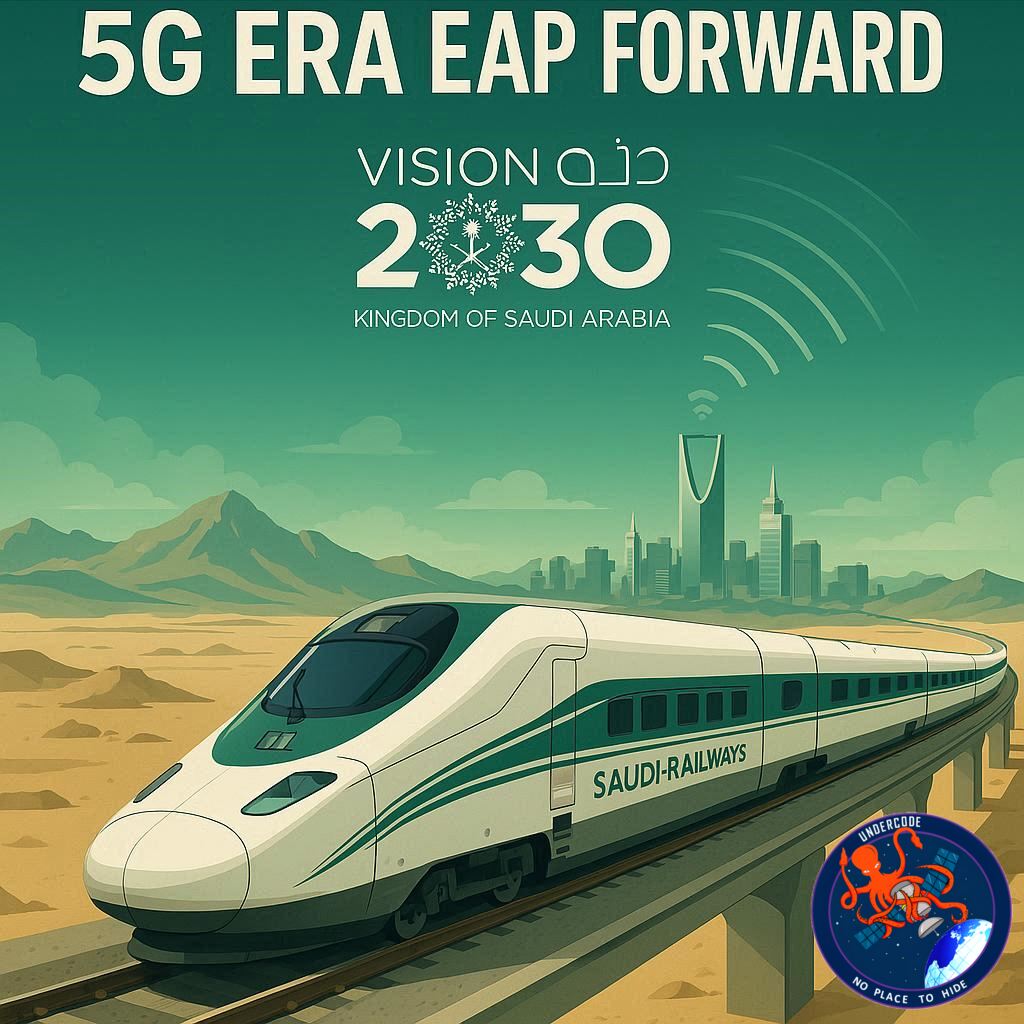
The Future of Rail Connectivity Begins in the Desert
Saudi Arabia is accelerating into the digital age, with a groundbreaking partnership between the Saudi Railway Company (SAR) and global telecommunications leader Ericsson. The two giants have signed a Memorandum of Understanding (MoU) to revolutionize rail operations through 5G technology, transforming the nation’s transportation network into one of the smartest in the world. This move aligns perfectly with Saudi Vision 2030, a plan to diversify the Kingdom’s economy and build world-class infrastructure that supports innovation, sustainability, and connectivity.
5G: The New Engine of Railway Innovation
The MoU sets the foundation for a transformative technological leap, where railways will no longer be defined by steel and stations alone but by data, speed, and intelligence. Ericsson, leveraging its expertise in 5G and Future Railway Mobile Communication Systems (FRMCS), will provide the digital backbone for this modernization. The collaboration focuses on redefining how Saudi Arabia’s railways communicate, operate, and serve passengers in an era where connectivity drives progress.
At the heart of this transformation lies mission-critical communication—a system designed to make train control and staff coordination faster, safer, and more reliable. This means that every signal, every message, and every command will flow through a secure 5G network built to handle real-time operations with zero tolerance for error.
Passengers, too, stand to gain. The project envisions a “Gigabit train experience”, where travelers can enjoy seamless high-speed internet, stream video, and stay connected throughout their journey—an experience that mirrors life in a smart city on rails.
Operational efficiency will take center stage, with the introduction of real-time video streaming, Internet of Things (IoT) integration, and advanced train control systems. Sensors embedded throughout the trains will provide continuous data about performance, safety, and maintenance needs. This data-driven ecosystem will empower SAR to predict and prevent issues before they happen, reducing downtime and optimizing energy consumption.
To bring theory into practice, SAR and Ericsson plan to establish a dedicated test lab or innovation center, focusing solely on 5G applications in the railway sector. The center will serve as a hub for experimentation, training, and the development of tailor-made solutions for Saudi Arabia’s unique transport landscape.
The collaboration doesn’t stop there. A trial deployment of Ericsson’s 5G solutions will be conducted on one of SAR’s active rail lines. This pilot project will evaluate the real-world integration of the new system, ensuring performance, reliability, and safety before a full rollout across the national network.
Recognizing the importance of human capital in technological transformation, the MoU also includes training programs to upskill SAR’s teams in FRMCS and 5G-enabled rail technologies. This ensures the Kingdom’s workforce is ready to operate, maintain, and innovate within the new ecosystem—paving the way for a sustainable, locally driven digital rail industry.
What Undercode Say:
This partnership between SAR and Ericsson isn’t merely a technical upgrade—it’s a strategic pivot that reflects Saudi Arabia’s determination to lead the global race toward smart mobility. In essence, it positions the Kingdom as a regional pioneer in intelligent transportation infrastructure.
The introduction of 5G and FRMCS is more than a connectivity boost. It represents a new industrial paradigm where rail systems evolve into living, learning networks powered by data analytics, automation, and machine learning. For a nation investing billions into mega projects like NEOM, The Line, and futuristic smart cities, such digital railways will form the connective tissue linking people, commerce, and innovation hubs across the desert.
From an economic standpoint, the implications are significant. Reliable 5G-enabled transport systems will reduce logistics costs, improve punctuality, and support freight digitalization—all vital for achieving Vision 2030’s goal of making Saudi Arabia a global logistics hub. This partnership could also set a regional standard, encouraging neighboring countries to adopt similar frameworks for smart rail development.
There’s also a cybersecurity angle to consider. As rail networks become more interconnected, the potential attack surface grows. Ericsson’s experience in building secure mission-critical communications will be vital in protecting sensitive operational data and ensuring that safety systems remain uncompromised.
Moreover, the initiative highlights the fusion of telecom and transportation industries, a trend reshaping how nations approach infrastructure. By aligning 5G deployment with national transport policy, Saudi Arabia demonstrates how technology can serve as a unifying catalyst across sectors—bridging innovation with real-world utility.
Looking deeper, this collaboration serves a symbolic purpose too: it signals a shift from dependency on imported systems to co-created innovation. With training programs embedded into the MoU, SAR’s engineers will evolve from operators to digital architects, capable of advancing local solutions for global challenges.
If implemented successfully, this 5G-powered rail network could redefine the passenger experience, making travel faster, smarter, and more sustainable. Imagine boarding a train where maintenance issues are predicted before departure, where every kilometer is optimized by AI, and where connectivity never drops—a network as intelligent as it is efficient.
In essence, the SAR–Ericsson alliance is not just about upgrading trains; it’s about reimagining mobility in a nation determined to build the future rather than wait for it.
🔍 Fact Checker Results
✅ The MoU between SAR and Ericsson is officially confirmed by both companies.
✅ The project aligns directly with Saudi Vision 2030 and the National Transport and Logistics Strategy.
✅ Ericsson’s FRMCS and 5G deployment will undergo real-world trials on SAR’s existing rail lines.
📊 Prediction
🚄 Within the next five years, Saudi Arabia is likely to become the Middle East’s leading hub for smart rail innovation, integrating 5G, AI, and IoT into its national transport grid.
📶 Expect new 5G innovation labs and training centers to emerge, fostering local expertise in rail communication technologies.
🌍 The SAR–Ericsson model could inspire regional collaborations that redefine connectivity across GCC nations, setting a new benchmark for digital infrastructure.
🕵️📝✔️Let’s dive deep and fact‑check.
References:
Reported By: timesofindia.indiatimes.com
Extra Source Hub (Possible Sources for article):
https://www.quora.com
Wikipedia
OpenAi & Undercode AI
Image Source:
Unsplash
Undercode AI DI v2
Bing
🔐JOIN OUR CYBER WORLD [ CVE News • HackMonitor • UndercodeNews ]
📢 Follow UndercodeNews & Stay Tuned:
𝕏 formerly Twitter 🐦 | @ Threads | 🔗 Linkedin | 🦋BlueSky | 🐘Mastodon


