
Listen to this Post
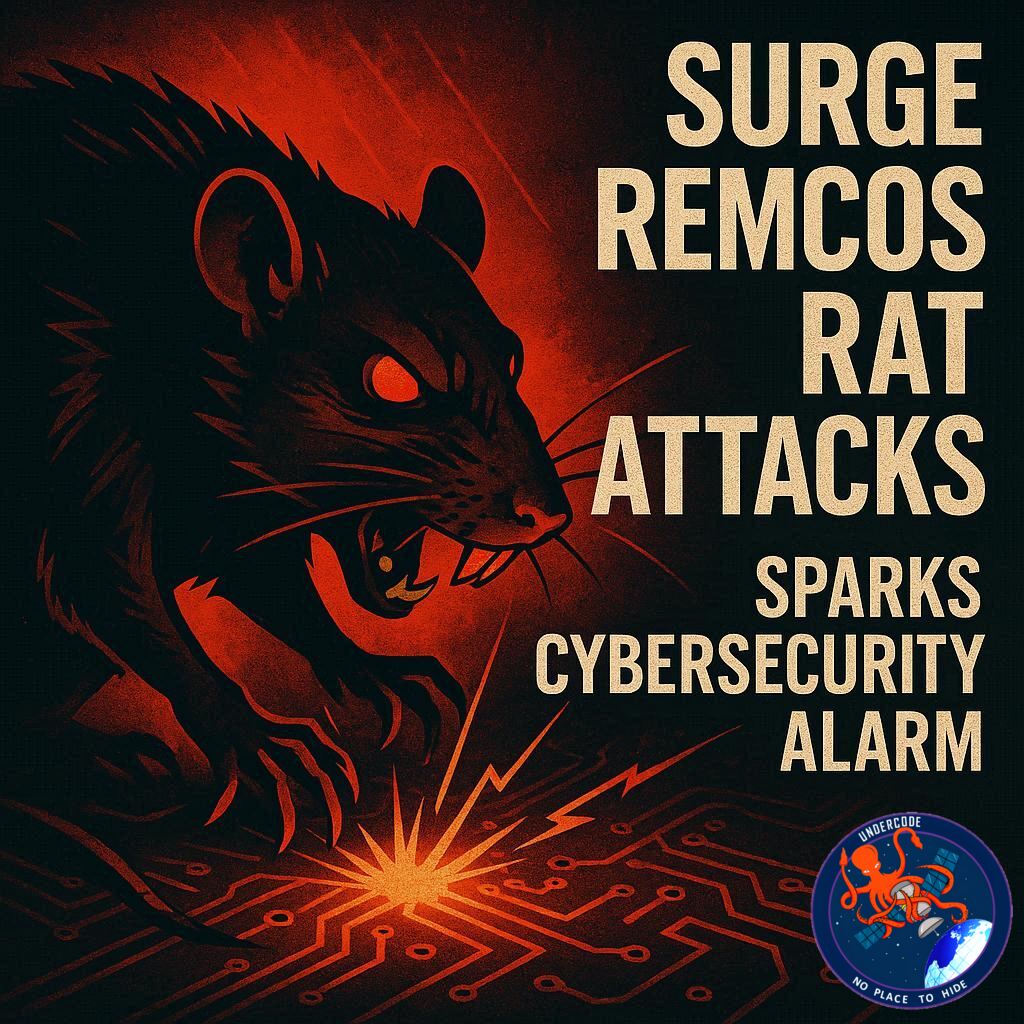
Cybersecurity experts are raising red flags as Remcos RAT, a notorious remote access trojan, has seen a sharp surge in attacks between September and October 2025. This malware, known for stealing sensitive information, has become the leading infostealer globally, accounting for an 11% market share of recent cyberattacks. Its growing prevalence highlights the evolving threat landscape and underscores the urgent need for robust digital defenses.
The recent wave of attacks primarily relied on phishing campaigns, where unsuspecting users received emails containing archive attachments. Once opened, these attachments executed obfuscated PowerShell scripts designed to evade detection. Additionally, attackers exploited process hollowing techniques using msiexec to inject malicious code into legitimate system processes, further masking their operations and complicating detection efforts. These sophisticated tactics allowed the Remcos RAT to quietly infiltrate networks, harvest credentials, and exfiltrate sensitive data without raising immediate suspicion.
Security researchers have noted that Turkey was a significant target during this period, although the malware has a global footprint and could potentially affect organizations anywhere. The combination of phishing, obfuscation, and process hollowing represents a multi-layered attack strategy, emphasizing how threat actors continue to refine their tools to bypass traditional security measures. Analysts warn that businesses with outdated defenses, weak email filters, or insufficient endpoint security are particularly vulnerable to such attacks.
The surge in Remcos activity aligns with a broader trend in cybercrime where RATs are increasingly preferred for espionage, financial theft, and unauthorized access to corporate networks. Infostealers like Remcos have gained popularity due to their modularity, ease of distribution, and ability to remain undetected for extended periods. Attackers also benefit from automation tools that enable mass deployment of malware through phishing campaigns, increasing efficiency and impact.
Experts stress the importance of proactive cybersecurity strategies, including employee training to recognize phishing attempts, endpoint detection solutions, regular software updates, and network monitoring to detect unusual activity. Organizations are also advised to adopt zero-trust principles and multi-factor authentication to mitigate the risk posed by credential-stealing malware.
What Undercode Say:
The Remcos RAT surge is more than a temporary spike; it signals a shift in attacker sophistication and strategy. By combining phishing with advanced obfuscation and process injection, threat actors have created a nearly invisible attack chain. This approach highlights the limitations of traditional antivirus and signature-based detection systems, which struggle to identify polymorphic scripts and hollowed processes.
Phishing remains the cornerstone of these attacks because human error is often the weakest link in cybersecurity. The prevalence of archive attachments suggests attackers understand that users often trust compressed files, making it easier to deliver payloads without immediate detection. Organizations must therefore reinforce user awareness while integrating behavioral analytics that detect anomalies indicative of RAT activity.
Process hollowing through legitimate executables like msiexec is particularly concerning. It allows malware to inherit trusted process privileges, evade heuristic analysis, and persist across system reboots. This method exemplifies a growing trend where malware leverages the operating system’s native tools—so-called “living off the land” attacks—to bypass defenses.
The focus on Turkey, while notable, should not lead to complacency elsewhere. Cybercriminals often test new strategies in localized regions before scaling globally. This pattern suggests other regions could soon experience similar spikes, making global vigilance essential. Moreover, the modular nature of Remcos indicates attackers can adapt the RAT to steal additional data types, target different platforms, or integrate with ransomware campaigns.
From a strategic perspective, the rise of Remcos underscores the importance of layered cybersecurity. Endpoint security alone is insufficient; organizations must combine it with network-level monitoring, threat intelligence, and rapid incident response capabilities. Automation in detection and response can offset the speed advantage attackers gain from automated phishing campaigns.
The economic implications are significant. Infostealer attacks can lead to intellectual property theft, financial loss, and reputational damage. For businesses operating internationally, the threat is amplified by cross-border compliance requirements and data protection regulations. Failure to address these risks proactively could result in costly breaches and long-term operational disruption.
Organizations should also consider investing in threat hunting and sandboxing solutions to safely analyze suspicious files before they execute. Machine learning-based anomaly detection can complement traditional defenses by flagging unusual process behaviors, such as msiexec spawning unfamiliar child processes.
In the long term, the surge in RATs like Remcos reflects a cybercrime ecosystem increasingly driven by specialization and automation. Attackers are no longer opportunistic amateurs; they are organized operators continuously refining their methods to exploit both human and technological vulnerabilities. Cybersecurity leaders must evolve at the same pace, combining training, technology, and intelligence-driven strategy to protect critical infrastructure and sensitive data.
Fact Checker Results:
✅ Remcos RAT is confirmed as the leading infostealer during September–October 2025.
✅ Phishing emails with archive attachments were the primary distribution method.
❌ No evidence suggests the surge was limited to Turkey; attacks are global.
Prediction:
💻 The Remcos RAT trend will likely continue into 2026, with attackers expanding their targeting beyond initial regions. Expect enhanced phishing sophistication, further obfuscation techniques, and deeper integration with ransomware and espionage campaigns. Organizations ignoring layered defense strategies may face a significant uptick in data breaches.
🕵️📝✔️Let’s dive deep and fact‑check.
References:
Reported By: x.com
Extra Source Hub (Possible Sources for article):
https://www.discord.com
Wikipedia
OpenAi & Undercode AI
Image Source:
Unsplash
Undercode AI DI v2
Bing
🔐JOIN OUR CYBER WORLD [ CVE News • HackMonitor • UndercodeNews ]
📢 Follow UndercodeNews & Stay Tuned:
𝕏 formerly Twitter 🐦 | @ Threads | 🔗 Linkedin | 🦋BlueSky | 🐘Mastodon


