
Listen to this Post
🎯 Introduction
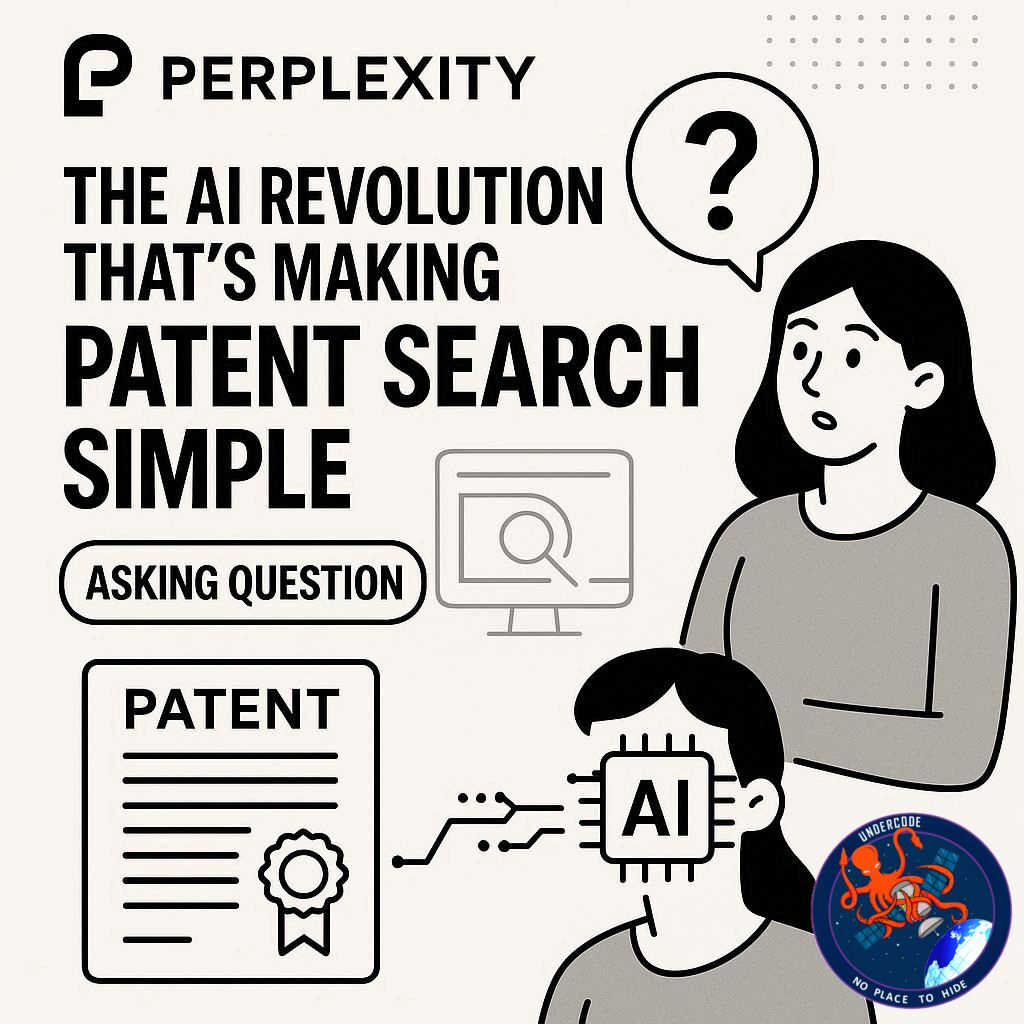
For decades, finding patents has been one of the most complex and time-consuming tasks for innovators, researchers, and entrepreneurs. The process was tangled in legal jargon, filled with technical codes, and often required professional help to navigate. But now, a new player in artificial intelligence has entered the field — and it promises to change everything. Perplexity, already known for its conversational AI search engine, has just launched Perplexity Patents, a tool that allows anyone to search the global patent landscape using plain, natural language. No codes. No guesswork. Just questions and answers.
The End of Keyword Struggles in Patent Research
Patent searching has traditionally been a slow and imperfect process. Whether someone was looking for a specific invention or trying to ensure their idea didn’t already exist, the journey usually involved juggling multiple databases like Google Patents, the USPTO, or the World Intellectual Property Organization’s archives. Each platform demanded exact keywords or classification codes, turning a simple search into a research marathon.
Perplexity’s new AI tool changes this dynamic. Perplexity Patents, launched on Thursday, is designed to democratize access to patent information by letting users ask simple questions in natural language. No prior knowledge of patent law or technical terminology is required.
The company described it as “a new era of patent intelligence,” where anyone can access accurate and contextually relevant answers within seconds. For instance, users can type questions like, “What are the latest patents in AI for language learning?” or “Show me key quantum computing patents since 2024.” Instead of forcing users to think like lawyers, the system understands human phrasing — and returns clean, structured results linked directly to the original patent documents.
How the Tool Works Behind the Scenes
At the heart of Perplexity Patents lies a patent knowledge index, a specialized AI system that understands not only the text of patents but also their context and connections. When a user enters a query, the model retrieves relevant patents and intelligently groups them based on related themes.
What makes it powerful is its conversational flow. After one query, users can ask follow-up questions, compare different inventions, or explore similar technologies — all within the same search session. Ask about “fitness trackers,” and it won’t just show patents on wearable devices but also suggest related innovations in health monitoring and activity sensors.
The tool doesn’t stop at official databases. It expands the search to blogs, research papers, code repositories, and even video content — identifying “prior art” that might not be filed as a formal patent but still matters for originality and innovation analysis.
Access for Everyone, at No Cost
Currently in beta, Perplexity Patents is completely free to use. Those with Perplexity Pro or Max subscriptions gain access to more powerful models and advanced configurations, but the core experience is open to everyone.
To try it, users simply visit the Perplexity website. From there, they can immediately start exploring the intellectual property universe with plain questions — no legal dictionary required. This move could drastically lower the barrier to innovation, making patent research as accessible as a Google search.
What Undercode Say:
Perplexity’s latest innovation isn’t just another AI experiment; it’s a strategic disruption of a deeply bureaucratic industry. Patent research has long been the territory of legal professionals, consultants, and specialists who charge thousands to interpret databases. By removing that dependency, Perplexity is rebalancing the field. It gives startups, inventors, and researchers a tool to verify originality or find inspiration before investing time and money into development.
The natural language processing (NLP) foundation here is crucial. Traditional search tools rely heavily on syntax — the specific arrangement of words or codes — which makes them rigid. Perplexity’s approach focuses on semantics, understanding meaning rather than phrasing. This aligns with the growing trend in AI search technology, where intent outweighs keywords.
From a business standpoint, this launch positions Perplexity as more than a ChatGPT competitor. It’s moving into applied intelligence, blending search with expert systems that solve real-world problems. Patent discovery is an ideal starting point because it combines massive text data, high complexity, and universal demand.
It also raises a broader question: Will this make patent lawyers obsolete? Probably not — but it will transform their work. Instead of spending hours sifting through archives, they can now focus on strategy and interpretation. The same applies to corporate R&D departments, where AI could replace early-phase manual searches with instantaneous insights.
Another interesting dimension is data transparency. Patent databases have always been public but inaccessible in practice due to their technical nature. By simplifying language input, Perplexity effectively opens this hidden world to everyday innovators. A student, a freelancer, or a startup founder can now explore the same intellectual territory as a Fortune 500 research team. That’s democratization in action.
There’s also a strategic parallel between Perplexity Patents and the ongoing trend of AI-as-a-Researcher. As more AI tools learn to read, summarize, and compare massive datasets, we are heading toward a future where “search” becomes “analysis.” Instead of delivering lists of documents, these systems generate insights, patterns, and historical context — much like a human expert would.
The implications stretch beyond innovation. Governments, journalists, and educators could use tools like this to track patent trends, identify emerging technologies, or even detect monopolistic patterns in patent ownership. The same AI that answers “What are the top AI patents in 2025?” could be used to uncover who’s dominating an entire field.
Perplexity’s move also signals confidence in public trust. Unlike some competitors, they’ve chosen to make this tool free. That decision builds a user base, tests the model at scale, and positions the brand as a socially conscious AI company. It’s both good ethics and good business.
In essence, Perplexity Patents isn’t just simplifying patent search; it’s quietly redefining how knowledge is discovered and shared. The future of research could look less like databases and more like dialogue — human questions answered by intelligent, context-aware AI systems.
🔍 Fact Checker Results
✅ Perplexity officially launched Perplexity Patents on Thursday, offering natural language patent search.
✅ The tool is currently free and in beta, available via Perplexity’s official website.
✅ It retrieves results from patent databases and external public sources, expanding traditional search coverage.
📊 Prediction
🚀 Expect academic researchers, startups, and legal tech companies to adopt Perplexity Patents rapidly in 2025.
💡 Within two years, natural language patent search could become a standard industry tool, reducing entry barriers to innovation.
🤖 This launch hints at a broader shift — from keyword-driven databases to AI-powered reasoning engines that understand and explain the world’s knowledge.
🕵️📝✔️Let’s dive deep and fact‑check.
References:
Reported By: www.zdnet.com
Extra Source Hub (Possible Sources for article):
https://www.stackexchange.com
Wikipedia
OpenAi & Undercode AI
Image Source:
Unsplash
Undercode AI DI v2
Bing
🔐JOIN OUR CYBER WORLD [ CVE News • HackMonitor • UndercodeNews ]
📢 Follow UndercodeNews & Stay Tuned:
𝕏 formerly Twitter 🐦 | @ Threads | 🔗 Linkedin | 🦋BlueSky | 🐘Mastodon


