
Listen to this Post
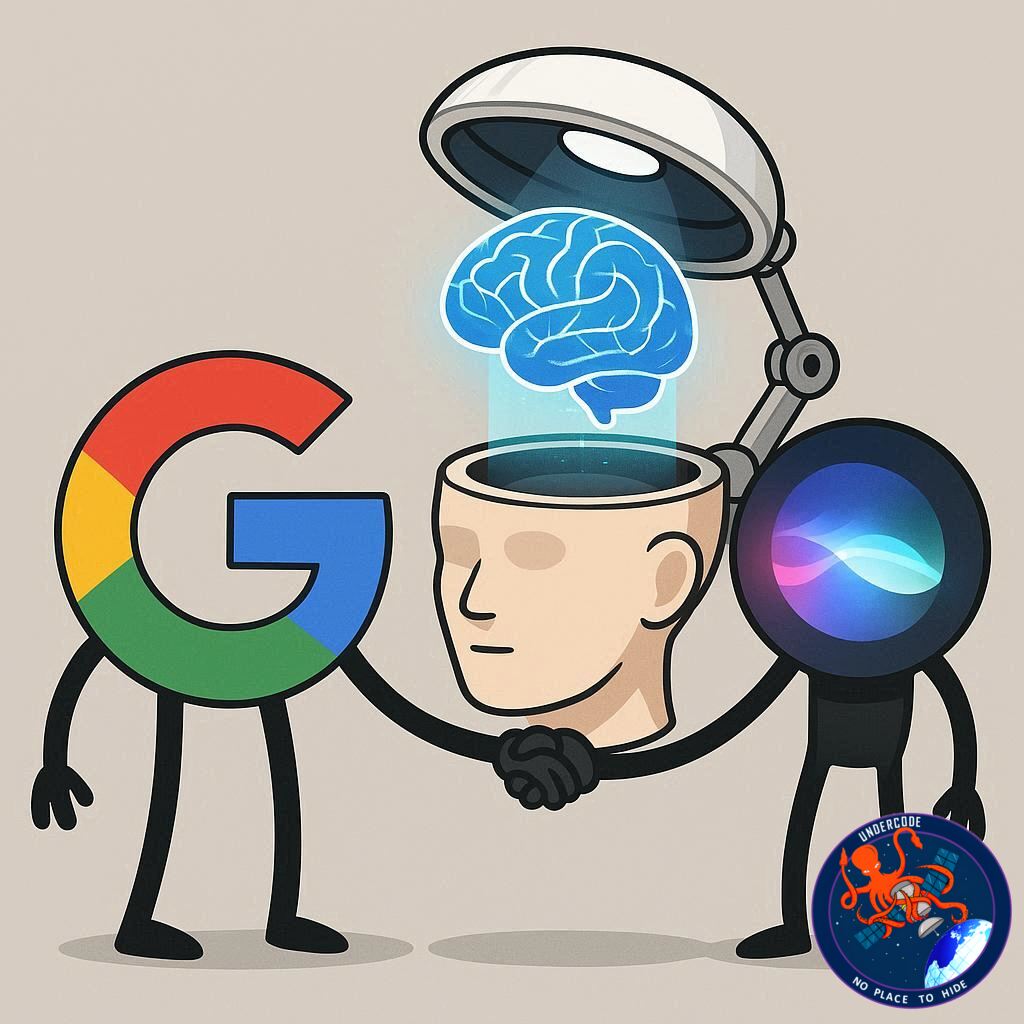
A New Dawn for Siri and Apple’s AI Ambitions
In a move that has stunned the tech industry, Apple is reportedly preparing to integrate Google’s Gemini AI model into a redesigned version of Siri. This marks one of the most unexpected collaborations in modern tech history—two giants long considered bitter rivals now finding common ground in the escalating race for artificial intelligence dominance.
According to Bloomberg’s Mark Gurman, Apple’s revamped Siri is expected to debut around March 2026, as part of the company’s ambitious Apple Intelligence initiative. Alongside this transformation, Apple is also preparing new hardware releases, including a smart home display, an upgraded Apple TV, and a next-generation HomePod mini—each designed to showcase Siri’s new intelligence.
The Surprising Alliance: Apple and Google’s AI Convergence
The new Siri will reportedly “lean” on Google Gemini, the search giant’s most advanced generative AI model. Rather than developing everything in-house, Apple is said to be paying Google to customize Gemini specifically for Siri’s architecture. This means Siri will soon be capable of handling natural conversations, context-aware interactions, and AI-powered web queries far beyond its current limitations.
For years, Apple has championed self-reliance and privacy-first development, keeping its software ecosystem tightly sealed. But as the AI race accelerates, even Apple seems to recognize that collaboration—once unthinkable—may now be essential. Building and maintaining large-scale AI infrastructure is immensely expensive and complex. By partnering with Google, Apple gains access to cutting-edge capabilities while continuing to focus on its signature strength: user experience and ecosystem integration.
Siri’s Make-or-Break Evolution
This is more than just another software update—it’s being called one of the biggest overhauls in Siri’s history. Apple’s goal is to evolve Siri from a reactive voice assistant into a proactive, intelligent digital companion capable of performing sophisticated tasks, learning user habits, and adapting to real-world context.
Still, as Gurman notes, the stakes are high. After years of frustration and underwhelming performance, Siri’s reputation has waned. Many users have turned to alternatives like Alexa, Google Assistant, or ChatGPT-based systems. Apple’s challenge isn’t just to improve Siri—it’s to rebuild trust. “There’s no guarantee users will embrace it, that it will work seamlessly, or that it can undo years of damage to the Siri brand,” Gurman cautioned.
Apple Intelligence: The Grand AI Blueprint
At the heart of this transformation is Apple’s broader Apple Intelligence vision—a push to weave AI deeply into every corner of its ecosystem. The goal is to make intelligence invisible yet omnipresent: enhancing the iPhone, iPad, Mac, and home devices without overwhelming users with unnecessary complexity.
The rumored smart home display, for example, will reportedly feature a wall-mount option and advanced speaker integration, serving as both a media hub and a voice assistant control center. These innovations are designed to highlight the upgraded Siri’s enhanced responsiveness and awareness, turning Apple’s home ecosystem into a seamlessly intelligent environment.
This collaboration also underscores a broader industry trend. As AI models grow more powerful and costly, even the world’s richest companies are finding it impractical to go it alone. Strategic partnerships, data sharing, and infrastructure collaborations are becoming the new norm, blurring traditional lines of competition.
What Undercode Say:
Apple’s decision to collaborate with Google marks a philosophical shift in its identity as much as a technological one. For over a decade, Apple built its empire on independence—hardware and software designed in perfect isolation from external influence. Partnering with a direct competitor like Google would have once seemed unthinkable, even sacrilegious. Yet, here we are, witnessing the very boundaries of competition dissolve under the gravitational pull of AI advancement.
This move reveals a sobering truth: AI innovation has become too vast for any single company to master alone. Training models like Gemini or OpenAI’s GPT requires not only astronomical computing power but also massive datasets, continuous refinement, and global-scale infrastructure. Apple, for all its resources, simply cannot replicate that speed without collaboration.
In a way, Apple is acknowledging a new hierarchy of value—where intelligence, not hardware, defines the user experience. The iPhone, once Apple’s crown jewel, now becomes the vessel for something even more valuable: adaptive intelligence that grows and learns with its user.
But the risks are just as monumental. Apple’s brand has always revolved around privacy, control, and exclusivity. Integrating Google’s model—despite promises of customization—introduces an element of vulnerability. Even if data handling is safeguarded, public perception may shift. Will users trust that Siri’s newfound intelligence doesn’t come at the cost of their privacy? That’s the delicate balance Apple must manage.
Strategically, however, this could be Apple’s smartest move since the iPhone launch. It positions the company to leapfrog years of research, accelerating its AI evolution without compromising product quality. By focusing on experience design while outsourcing raw AI power, Apple is effectively doing what it does best: refining complexity into simplicity.
If executed well, Siri’s Gemini integration could mark a turning point—not just for Apple, but for the entire tech ecosystem. It could redefine how collaboration works among rivals in the AI era, setting a precedent where innovation transcends corporate rivalry.
And if it fails? The fallout would be equally historic. A misstep here could tarnish Apple’s credibility in AI and embolden its competitors. The next 18 months will be critical—a testing ground for whether Apple can merge its legendary design ethos with the unpredictable intelligence of generative AI.
🔍 Fact Checker Results
✅ Bloomberg’s Mark Gurman reported that Apple plans to integrate Google’s Gemini AI into Siri by 2026.
✅ Apple’s “Apple Intelligence” initiative is real and in active development.
❌ There is no official confirmation yet from Apple or Google about finalized partnership details.
📊 Prediction
🤖 By 2026, Siri could become the most context-aware assistant on the market, surpassing Alexa and Google Assistant in personalization.
💡 Expect Apple to unveil “privacy-protected AI” as a core marketing message to ease user concerns.
🔥 If successful, this partnership could redefine big tech rivalries, making cross-company AI integration the new frontier of innovation.
🕵️📝✔️Let’s dive deep and fact‑check.
References:
Reported By: timesofindia.indiatimes.com
Extra Source Hub (Possible Sources for article):
https://www.stackexchange.com
Wikipedia
OpenAi & Undercode AI
Image Source:
Unsplash
Undercode AI DI v2
Bing
🔐JOIN OUR CYBER WORLD [ CVE News • HackMonitor • UndercodeNews ]
📢 Follow UndercodeNews & Stay Tuned:
𝕏 formerly Twitter 🐦 | @ Threads | 🔗 Linkedin | 🦋BlueSky | 🐘Mastodon


