
Listen to this Post
🎯 Introduction
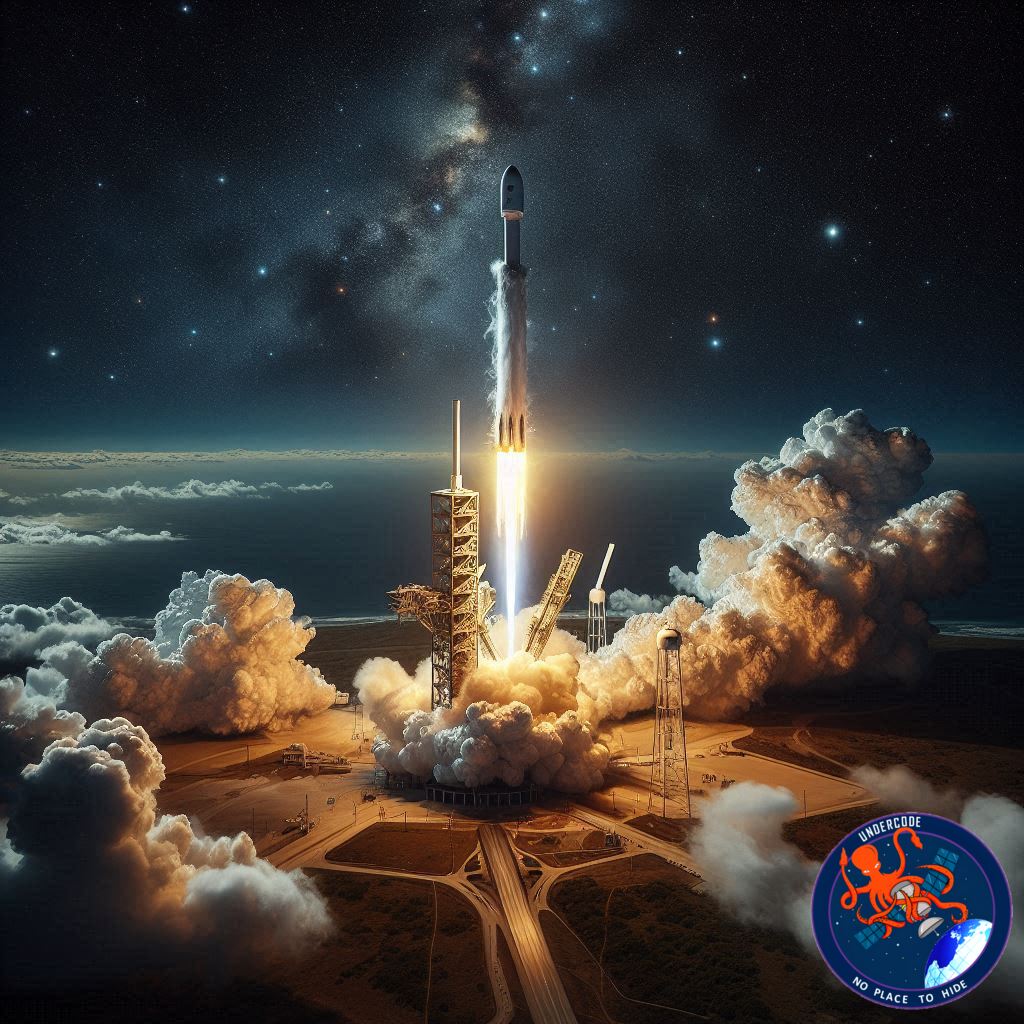
The sky over California flashed with precision and power as SpaceX’s Falcon 9 rocket delivered another milestone for modern spaceflight. Moments after propelling the Sentinel-6B satellite toward its mission, the rocket’s first stage arced back through the atmosphere and touched down gracefully on solid ground. What followed was a carefully choreographed orbital ballet, a sequence of coasting, ignition, and separation that marked another step in humanity’s effort to map and understand Earth’s oceans. This mission was more than a launch. It was a statement about reliability, engineering, and our expanding confidence in reusable rocketry.
Main Summary Paragraph (30 lines)
A Mission Anchored in Precision
The Falcon 9 returned with textbook accuracy to Landing Zone 4 East, a site known for its demanding coastal winds and tight landing corridor.
Recovery That Defines Reusability
Its smooth descent and landing reinforced
An Engineered Descent Through the Atmosphere
The first stage performed its entry burns, booster flips, and final landing burn with flawless execution, each maneuver designed to counter intense aerodynamic pressures.
A Burst of Flame Before Silence
As the booster landed, the second stage was already soaring beyond the densest layers of the atmosphere, its Merlin Vacuum engine quiet while coasting with mathematical precision.
Beginning of the 45-Minute Coast Phase
This phase is crucial, allowing the rocket to reach the correct orbital position before its next brief engine reignition.
The Upcoming One-Minute Burn
A precisely timed, short-duration burn will align the satellite’s trajectory to place it into a non-Sun-synchronous orbit, a rare path compared to many Earth science missions.
Importance of the Target Orbit
Unlike satellites that pass over each point of Earth at the same local time, Sentinel-6B’s orbit prioritizes dynamic, continuous monitoring of sea-level changes around the globe.
A Mission Dedicated to Earth Science
Sentinel-6B forms part of an international effort to measure sea-level rise with unparalleled accuracy by expanding the capabilities of its predecessor, Sentinel-6A.
Separation Scheduled Moments After Burn
Roughly five minutes after the reignition, the satellite will separate from the second stage, beginning its deployment sequence.
Orbital Release and Stabilization
Once separated, the spacecraft will deploy its solar arrays and begin calibration for its long-term data-gathering mission.
A Launch That Extends a Legacy
This mission continues decades of altimetry data collection, tracing a detailed history of how the oceans evolve.
Why the Booster Landing Matters
Each successful recovery helps SpaceX maintain regular launches without rebuilding boosters from scratch.
Impact on Future NASA Missions
NASA benefits from lower-cost launches, enabling more frequent Earth observation missions and scientific payloads.
Second Stage Accuracy Proves Reliability
Coasting and reignition require exact timing, demonstrating SpaceX’s capability to handle specialized orbital profiles.
The Moment the Satellite Takes Over
After separation, Sentinel-6B begins its autonomous operations, shifting from a passenger to a functioning scientific instrument.
International Collaboration in Orbit
This mission combines the work of NASA, the European Space Agency, NOAA, and other partners dedicated to environmental data.
A Satellite Built With Purpose
Sentinel-6B’s sensors will capture high-resolution measurements of sea surface height, adding crucial insights into climate change.
The Stakes for Ocean Science
Monitoring sea-level trends helps coastal regions prepare for flooding, erosion, and weather intensification.
A Flight With Multiple Phases but One Goal
Every burn, maneuver, and deployment serves the overarching mission of understanding Earth’s changing climate.
A Booster Touchdown That Echoed Worldwide
Spaceflight watchers celebrated yet another landing, showcasing how routine these feats have become—without losing their awe factor.
A Testament to Engineering Culture
The precision of both space and ground teams demonstrates how human coordination enhances technological success.
Looking Toward Final Deployments
With separation imminent, engineers prepare for the satellite’s first signals.
A Mission That Blends Old and New
Decades of climate science meet modern rocketry, creating a seamless handoff between generations.
The Coast Phase as a Quiet Interlude
While seemingly uneventful, it represents careful orbital math at work, ensuring the satellite reaches the exact altitude required.
Public Anticipation Builds
Space enthusiasts eagerly await the satellite’s first operational data.
Perfect Timing Defines the Mission
Every step executed so far indicates a near-flawless launch.
A Smooth Path Toward Orbit
Sentinel-6B is poised to continue humanity’s watch over global oceans.
A Launch That Matters
Beyond technology and spectacle, this mission carries the weight of scientific responsibility and environmental urgency.
What Undercode Say:
Analyzing a Launch That Blends Precision With Purpose
The mission stands as a fusion of engineering reliability and strategic environmental science. Falcon 9 demonstrated its consistency across both propulsion and recovery cycles, validating the reusable architecture that has become central to modern launch economics. The booster’s landing was not only successful but symbolically important, reinforcing that reusability is no longer experimental, it is operational.
Orbital Mechanics Meet Climate Imperatives
The 45-minute coast phase is often overlooked, yet it is a vital maneuver. It allows the spacecraft to drift into the optimal position before the short burn aligns the trajectory. This delicate timing ensures that Sentinel-6B enters an orbit tailored for its ocean-monitoring mission. Non-Sun-synchronous orbits create complex lighting conditions, but they allow for dynamic revisits over shifting ocean surfaces.
Why This Orbit Matters Now
Sea-level monitoring has evolved from an academic dataset to a frontline climate defense tool. Sentinel-6B will help validate models that influence national policy, emergency planning, and long-term climate forecasting. The precision of altimetry instruments enables experts to track millimeter-level changes, giving coastal planners early signals about flood risks.
The Booster Recovery Sets a Standard
The landing at Vandenberg reflects SpaceX’s growing adaptability at West Coast launchpads. Wind shear, coastal fog, and varying temperatures create a more challenging environment compared to Florida. Repeated success here suggests the system can operate reliably across diverse conditions.
Future Mission Frequency
With boosters returning intact, NASA and the global climate community can expect more frequent launches at lower cost. This accelerates science, creates richer datasets, and reduces reliance on decades-old satellites that remain in service out of necessity rather than efficiency.
The Strategic Value of Sentinel-6B Data
The satellite’s instruments will measure sea levels, wave heights, and ocean circulation patterns. These metrics support industries ranging from shipping to fisheries, along with policymakers managing climate impacts.
The Mission’s Bigger Story
This launch represents how commercial spaceflight and scientific agendas are intertwining. The success of one enables the progress of the other. Reusable tech empowers climate science, and climate science provides meaningful purpose to launch capability.
🔍 Fact Checker Results
The Falcon 9 first stage successfully landed, confirmed by NASA. ✅
The second stage will coast for about 45 minutes before a brief burn. ✅
Satellite separation occurs roughly five minutes after the burn. ✅
📊 Prediction
In the coming months, Sentinel-6B will begin delivering high-fidelity sea-level data, enriching Earth observation archives 📡. As reusable launches become more routine, missions of this type will increase in frequency 🌍. Expect tighter integration between commercial launch providers and global climate agencies, strengthening scientific forecasting capabilities 🔭.
🕵️📝✔️Let’s dive deep and fact‑check.
References:
Reported By: science.nasa.gov
Extra Source Hub (Possible Sources for article):
https://www.quora.com/topic/Technology
Wikipedia
OpenAi & Undercode AI
Image Source:
Unsplash
Undercode AI DI v2
Bing
🔐JOIN OUR CYBER WORLD [ CVE News • HackMonitor • UndercodeNews ]
📢 Follow UndercodeNews & Stay Tuned:
𝕏 formerly Twitter 🐦 | @ Threads | 🔗 Linkedin | 🦋BlueSky | 🐘Mastodon


