
Listen to this Post
Introduction
A new chapter in scientific automation is emerging inside the United Kingdom as Google DeepMind prepares to launch its first fully automated research laboratory. The project aims to merge advanced robotics with state-of-the-art artificial intelligence, creating a system capable of running experiments with minimal human intervention. At the heart of this initiative is a bold promise, the acceleration of material discovery and the expansion of Britain’s scientific advantage in a rapidly evolving global landscape.
the Original
DeepMind Expands Scientific Ambition in the UK
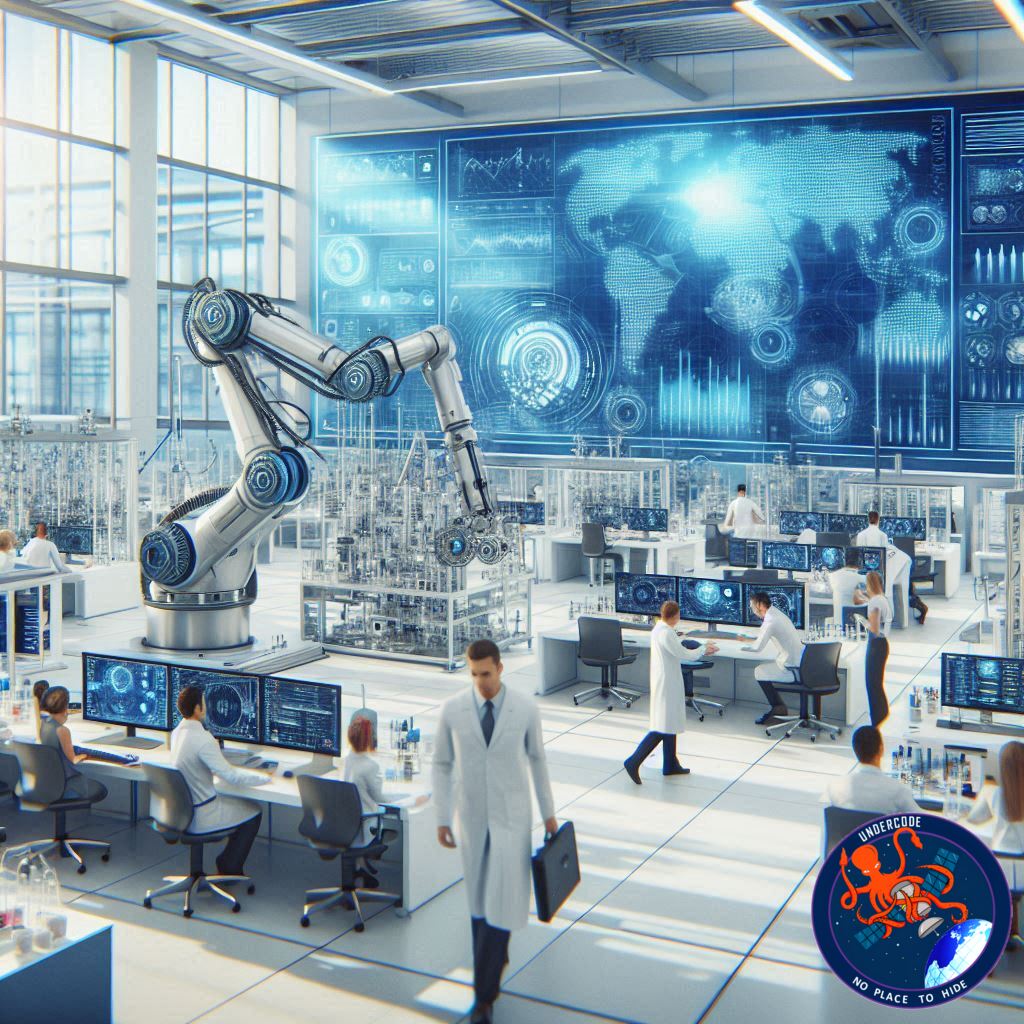
Google DeepMind has revealed detailed plans for its inaugural automated research laboratory, scheduled to open next year in the United Kingdom. The new facility will rely on integrated AI and robotics platforms to conduct independent scientific experiments. Its first mission is highly technical, focusing on designing next-generation superconductors for medical imaging and new semiconductor materials that could redefine electronic performance.
A Broader Strategic Partnership
The laboratory announcement is tied to a larger agreement between DeepMind and the UK government. As part of this collaboration, British scientists will gain priority access to some of the world’s most powerful AI research tools. This access is expected to speed up breakthroughs in areas including advanced materials, energy research, and scientific computation.
Accelerating UK Scientific Leadership
The government has highlighted potential applications that extend far beyond materials science. These include contributions to nuclear fusion, innovations across public services, and the integration of DeepMind’s Gemini AI models throughout academic institutions. The initiative reinforces the UK’s role as a major hub for AI-powered research.
Political and Scientific Endorsement
The UK Technology Secretary Liz Kendall described DeepMind as a model of successful UK-US technological collaboration, emphasizing the positive impact an AI-driven research infrastructure could have on British communities. Demis Hassabis, DeepMind’s founder, echoed this optimism, stating that AI is positioned to unlock a new era of scientific discovery. He stressed the importance of deepening ties with the UK government to support national innovation, security, and quality of life.
What Undercode Say:
Strategic Transformation of Scientific Research
DeepMind’s move to establish an automated research lab represents a structural transformation in how science is executed. Traditional research cycles depend on manual experimentation, iterative testing, and human-driven analysis. By contrast, an AI-robotic system can operate continuously, exploring thousands of hypotheses at speeds human scientists simply cannot match.
Boosting National Competitiveness Through Automation
Nations worldwide are racing to incorporate AI into their scientific workflows, and the UK’s direct connection with DeepMind gives it a rare first-mover advantage. Priority access to AI tools is not symbolic. It means British laboratories can test theories, generate simulations, and validate materials faster than many international competitors.
Economic Impact and Industrial Potential
The sectors targeted by the lab—semiconductors and superconductors—are among the most economically critical technologies of the next decade. Breakthroughs here could influence global supply chains, medical imaging quality, renewable energy systems, and quantum-scale electronics. For Britain, this research pipeline could spark new industries and revitalise existing ones.
Scientific Independence and Sovereignty
In an era where scientific capability influences geopolitical power, having domestic access to advanced AI tools strengthens national autonomy. It reduces dependence on foreign computation platforms and allows the government to embed AI discovery pipelines across universities and public institutions.
Role of Robotics in Modern Laboratories
The automated lab concept is more than a convenience. Robotics offers precision, repeatability, and safety in environments requiring microscopic accuracy or hazardous materials. When paired with AI’s capacity to generate and evaluate experimental pathways, the outcome is a self-optimising scientific environment capable of learning from its own results.
Cultural and Educational Ripple Effects
Granting UK researchers priority access to Gemini models and other DeepMind systems could transform how science is taught and performed. Students entering research programs may encounter AI-driven lab assistance tools, automated experiment schedulers, and real-time hypothesis evaluators. This shift creates a future where scientific intuition blends with algorithmic precision.
Digital Infrastructure Challenges
Despite the promise, scaling automated labs requires substantial computational resources. Data centres, network stability, and energy availability will determine whether the UK can fully leverage DeepMind’s capabilities. These constraints must be addressed to prevent bottlenecks in AI-driven discovery.
Ethical and Governance Considerations
As experiments become more autonomous, governments must establish oversight frameworks ensuring safety, transparency, and responsible AI deployment. Automated research cannot operate in a regulatory vacuum. Clear governance will be essential to maintain public trust.
Long-Term Global Influence
DeepMind’s new lab could become a global model for next-generation research environments. If successful, similar automated systems may spread across Europe, Asia, and North America, shifting global scientific production toward AI-first infrastructures. The UK stands to gain influence by being the birthplace of this transformation.
🔍 Fact Checker Results
DeepMind and the UK government have formally announced a research partnership. ✅
The automated lab’s initial focus on superconductors and semiconductors is confirmed. ✅
Priority access to AI tools for British scientists has been officially stated. ✅
📊 Prediction
The UK is poised to become one of the first nations to fully embed AI automation into national scientific production. Over the next decade, laboratories may rely heavily on autonomous experiment engines, accelerating discovery cycles and attracting global talent. This initiative could transform the UK into a core hub for AI-powered materials science and advanced computational research.
🕵️📝✔️Let’s dive deep and fact‑check.
References:
Reported By: timesofindia.indiatimes.com
Extra Source Hub (Possible Sources for article):
https://www.twitter.com
Wikipedia
OpenAi & Undercode AI
Image Source:
Unsplash
Undercode AI DI v2
Bing
🔐JOIN OUR CYBER WORLD [ CVE News • HackMonitor • UndercodeNews ]
📢 Follow UndercodeNews & Stay Tuned:
𝕏 formerly Twitter 🐦 | @ Threads | 🔗 Linkedin | 🦋BlueSky | 🐘Mastodon


