
Listen to this Post
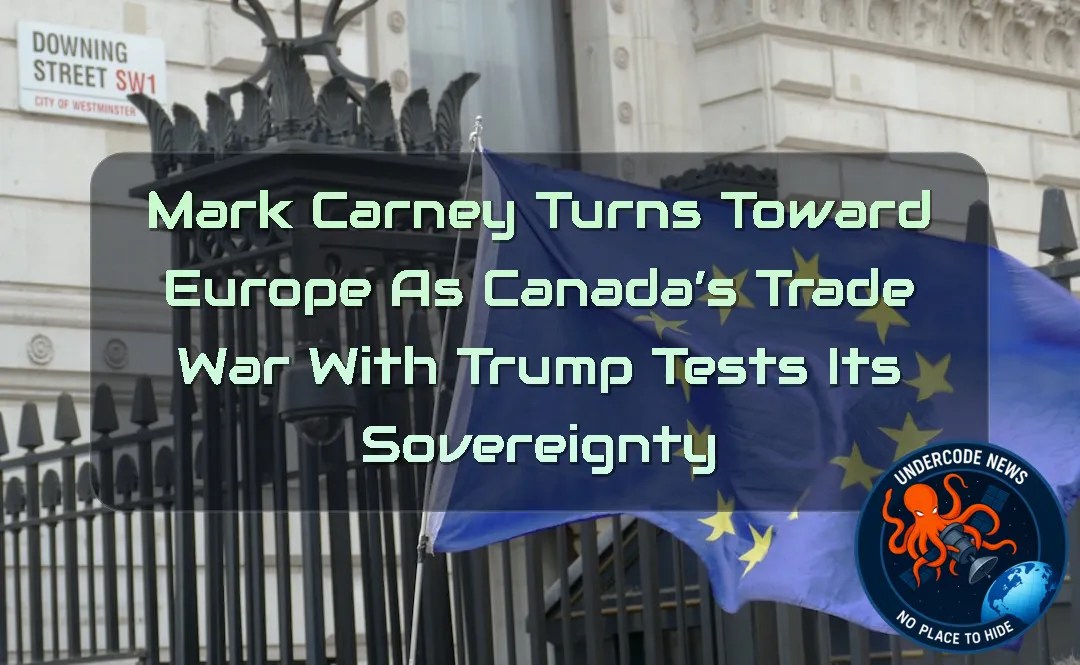 A New Chapter Opens Between Canada and Europe
Canada’s relationship with the United States is entering one of its most difficult periods in modern history, and Prime Minister Mark Carney is increasingly looking across the Atlantic for strategic alternatives. As Washington and Ottawa clash over tariffs, trade conditions, sovereignty and the future direction of North American economic relations, Carney is preparing to take his message directly to the European Parliament in September.
The visit is more than a diplomatic appearance. It arrives at a moment when Canada is attempting to reduce its dependence on the United States while strengthening partnerships with Europe and other major international economies. For Carney, the European Union represents not only a trading opportunity but also a political signal that Canada has options beyond Washington.
The European Parliament has confirmed that Carney will address lawmakers on September 17, following his attendance as a guest of honour at European Commission President Ursula von der Leusd’s State of the Union address on September 16. European Parliament President Roberta Metsola described the visit as an opportunity to deepen the relationship between Canada and the European Union.
The timing could hardly be more significant.
Carney Heads to Brussels as Washington and Ottawa Drift Further Apart
Mark Carney’s European visit comes only weeks after Canada and the United States failed to reach a new trade agreement following months of difficult negotiations. On August 21, Carney suspended the talks, arguing that the latest American proposals were unfair, economically damaging and incompatible with Canadian interests.
Carney has repeatedly emphasized that Canada wants a strong relationship with the United States, but not at the expense of its independence. In his own statement following the collapse of negotiations, he said Canada’s objectives included maintaining flexibility, independence and sovereignty while protecting Canadian businesses and workers.
That position has now become central to Carney’s foreign policy.
Rather than treating the dispute as a temporary disagreement over tariffs, Ottawa increasingly appears to view it as evidence that Canada needs a broader economic strategy. The United States remains overwhelmingly important to Canada, but Carney is attempting to build additional relationships before another crisis forces Ottawa to act from a position of weakness.
Europe Becomes More Important to Canada
The European Union is emerging as one of the most important pieces of that strategy.
Canada and the EU already maintain extensive political, economic and security relationships. Carney has been pushing for closer cooperation with Europe, including trade diversification and stronger defence ties, as Canada confronts a more unpredictable international environment.
His upcoming appearance before the European Parliament therefore carries a symbolic message. Canada is not abandoning North America, but it is demonstrating that its international identity does not begin and end in Washington.
The European Parliament itself described Carney’s visit as an opportunity to strengthen the Canada-EU bond. The invitation also comes at a politically sensitive moment, making the visit considerably more significant than a routine parliamentary address.
The Collapse of the Latest Trade Negotiations
The immediate trigger for the latest escalation was the failure of U.S.-Canada negotiations.
For months, both sides attempted to negotiate a framework capable of stabilizing one of the world’s most integrated economic relationships. There were periods when officials appeared to believe that an agreement was possible, but the remaining disagreements ultimately proved too significant.
Carney said Canada had been prepared to make concessions in areas including retaliatory tariffs and certain trade measures, but insisted that Ottawa would not compromise on issues it considered fundamental to Canadian sovereignty, industry or cultural protections.
According to Carney, last-minute American proposals changed the economics of a potential agreement enough to make it unacceptable to Ottawa. He argued that Washington was asking for too much while offering too little in return.
The United States has presented a very different interpretation, accusing Canada of making the negotiations unnecessarily difficult and resisting American demands.
The result is a relationship that has moved from negotiation to confrontation.
The 50 Percent Tariff Shock
The economic consequences are already becoming visible.
The United States has imposed tariffs of up to 50 percent on approximately $20 billion worth of Canadian goods. Reuters reported that the measures affect around 5 percent of Canadian exports to the United States, meaning the tariffs are not yet targeting the entire bilateral trading relationship, but they represent a major escalation because of the political significance of the dispute.
Canada has responded with a dollar-for-dollar retaliation strategy.
Ottawa has announced retaliatory tariffs that are scheduled to take effect on September 8, creating a new layer of pressure on businesses on both sides of the border.
The danger is not limited to the value of the goods directly affected.
Tariffs can disrupt supply chains, raise costs, delay investment decisions and force companies to reconsider where they manufacture products. In an economy as deeply integrated as Canada’s, even relatively targeted tariffs can produce consequences far beyond the original list of products.
Why Sovereignty Has Become the Central Political Issue
The word “sovereignty” has become increasingly prominent in Canadian political language because the dispute is no longer being framed simply as a disagreement over customs duties.
Carney has argued that Canada must retain the ability to determine its own trade policy, protect its industries and make independent decisions about international partnerships.
The Canadian government has also objected to American pressure concerning Canadian cultural and linguistic policies, particularly protections for the French language.
For Ottawa, these are not ordinary commercial bargaining chips. They touch the question of how much influence a larger neighbour should have over Canada’s domestic choices.
That is why
Trump’s “Lake America” Provocation
The dispute has also taken an increasingly symbolic turn.
On August 25, President Donald Trump said the United States was considering changing the name of Lake Ontario to “Lake America,” linking the proposal directly to the deteriorating trade relationship with Canada.
Lake Ontario is shared by Canada and the United States, with Ontario on the Canadian side and New York on the American side. A unilateral American naming decision would not determine what Canadians call the lake.
The proposal therefore has limited practical importance compared with tariffs, trade agreements or industrial policy.
Politically, however, it matters.
Names carry symbolism. The proposal arrived at precisely the moment when Washington and Ottawa were arguing over national independence, making it another example of how an economic dispute has expanded into a broader contest over political identity and national pride.
Canada Is Trying to Reduce Its Dependence on One Market
The most important long-term consequence of this dispute may not be a particular tariff rate.
It could be
For decades,
That integration created extraordinary advantages.
It also created vulnerability.
When Washington changes its trade policy, Canadian companies can suddenly find themselves exposed to decisions over which they have little control.
Carney’s government is therefore pursuing a strategy based on greater diversification, stronger domestic capacity and expanded access to other international markets. In his August 21 statement, Carney said Canada was already working to expand its export relationships beyond the United States and intended to significantly increase non-U.S. exports over the next decade.
Europe Is More Than a Backup Plan
It would be a mistake to view
Europe cannot instantly replace the enormous volume of commerce that exists between Canada and the United States.
Geography still matters.
Transportation costs matter.
Existing supply chains matter.
Consumer markets matter.
But Europe can help Canada create something strategically valuable: alternatives.
If Canadian companies can expand their European customer base, increase investment relationships and integrate more deeply into European supply chains, Ottawa gains greater negotiating flexibility.
That flexibility becomes especially important during future disputes with Washington.
Carney’s Middle-Power Strategy
Carney has increasingly promoted the concept of cooperation among middle powers at a time when the international system is becoming more fragmented.
The basic idea is straightforward.
Countries that are not global superpowers individually can still exert substantial influence collectively.
Canada, European countries, Australia, Japan, South Korea and other advanced economies share interests in predictable trade rules, secure supply chains, energy security and stable international institutions.
A stronger network among these countries could give governments more options when dealing with larger powers.
For Canada, this is especially important because its traditional security and economic dependence on the United States has historically limited its strategic room for manoeuvre.
The European Parliament Speech Could Become a Major Political Moment
Carney’s September 17 speech will therefore be watched closely.
The question will not simply be what he says about Canada and Europe.
European policymakers will also be listening for what Canada intends to become.
Does Ottawa want deeper economic integration with Europe?
Will Canada expand defence cooperation?
Will it encourage European investment?
Can Canada develop new export markets quickly enough to offset some of its dependence on the United States?
And perhaps most importantly, can Canada turn the current crisis into a long-term strategic transformation rather than merely a temporary diplomatic response?
Those questions will shape the significance of
Canada Cannot Replace America Overnight
There is also a major economic reality that Ottawa cannot ignore.
Even with aggressive diversification, Canada cannot simply replace the United States as its dominant economic partner within a few months.
American and Canadian industries are connected through decades of investment, infrastructure, transportation networks and manufacturing relationships.
The automotive sector is a particularly obvious example.
A vehicle or component can cross the border multiple times during production. Tariffs therefore have the potential to increase costs at several stages of the same manufacturing process.
This makes the trade conflict dangerous for both countries.
The Cost of a Prolonged Trade War
A prolonged dispute could eventually create pressure from businesses that depend on predictable cross-border commerce.
Canadian exporters could face higher costs and reduced competitiveness.
American manufacturers could face more expensive inputs.
Consumers could eventually see higher prices.
Companies could delay investment because they cannot determine what tariff regime will exist several months from now.
And governments could become increasingly reluctant to make compromises after publicly adopting hard-line positions.
That final problem may be the hardest to solve.
Trade disputes are often easier to begin than to end.
The Political Pressure on Mark Carney
Carney is also taking a considerable political risk.
A tougher stance toward Washington can strengthen Canadian national unity and demonstrate that the government is willing to defend its interests.
But economic pain can eventually create pressure for compromise.
Carney therefore has to maintain a difficult balance.
He must appear strong enough to resist unacceptable demands while keeping the door open to a future agreement.
His own recent statements have emphasized that Canada still wants a mutually beneficial relationship with the United States, suggesting that Ottawa has not abandoned the possibility of renewed negotiations.
Washington Also Has Something to Lose
It is tempting to describe the dispute as a Canadian problem because the United States has the larger economy.
That would be too simplistic.
American companies also depend on Canadian resources, consumers and industrial inputs.
Canada is deeply integrated into American energy, manufacturing, agriculture and transportation networks.
A prolonged tariff battle can therefore become economically inefficient for both sides.
The question is not simply which country can survive longer.
The question is how much economic damage both countries are willing to tolerate before political calculations change.
The Sovereignty Argument Could Outlast the Tariffs
Even if the two governments eventually negotiate a new agreement, the political impact of this dispute may continue for years.
Canadian policymakers have now experienced the risks of extreme dependence on a single major market under a highly unpredictable American trade policy.
That lesson is unlikely to disappear.
Future Canadian governments, regardless of political party, may continue investing in European, Asian and Indo-Pacific relationships.
Businesses may also reconsider their exposure to American policy changes.
The current crisis could therefore accelerate a diversification process that would have taken much longer under normal circumstances.
A Strategic Pivot, Not a Break With America
Canada’s European pivot should not be interpreted as a decision to abandon the United States.
The geographic relationship cannot disappear.
The shared border cannot disappear.
The enormous network of families, businesses, workers and communities connecting the two countries cannot disappear.
What may change is
That distinction is crucial.
Ottawa is not necessarily choosing Europe instead of America.
It is attempting to make sure that Canada has Europe, Asia and other international partners available when Washington becomes an unreliable economic partner.
What Undercode Say:
- The Real Battle Is Bigger Than Tariffs
The tariff numbers attract attention, but the deeper conflict is about strategic dependence.
- Canada Is Testing a New Foreign Policy
Carney is effectively testing whether Canada can become more economically independent without becoming economically isolated.
3. Europe Provides Strategic Depth
The EU cannot replace the American market immediately, but it can give Canada additional options.
4. Diversification Changes Negotiating Power
A country with multiple markets has more leverage than a country dependent on one customer.
5. Washington Still Holds Major Advantages
The United States remains
6. But Economic Power Is Not Absolute
Tariffs can also damage American companies that depend on Canadian inputs.
7. Supply Chains Are the Hidden Battlefield
The greatest consequences may occur inside factories rather than at political press conferences.
8. Automotive Manufacturing Is Especially Vulnerable
Cross-border production means tariffs can accumulate throughout the manufacturing process.
- Sovereignty Has Become a Domestic Political Weapon
Canadian leaders can now frame trade negotiations around national independence rather than only economic efficiency.
10. That Changes Public Expectations
Once sovereignty becomes part of the argument, compromising becomes politically harder.
11.
Comments about
12. Symbolism Can Become Strategy
Even provocative statements can influence public opinion and diplomatic calculations.
13. Canada Needs More Than Political Defiance
National unity alone cannot replace lost export revenue.
14. Economic Diversification Must Become Practical
Canada needs infrastructure, shipping capacity, financing and market access to make diversification real.
15. Europe Is a Logical Partner
Canada and Europe already share strong institutional, cultural and security connections.
- But European Markets Have Their Own Limits
European demand cannot instantly absorb everything Canada currently sells to the United States.
17. Distance Remains Important
Shipping Canadian goods to Europe generally involves more logistical complexity than selling them across the American border.
18. That Makes the Transition Expensive
Diversification requires investment before it produces significant returns.
19.
His experience as a central banker gives him an unusually strong understanding of international financial and economic systems.
20. The European Speech Is Therefore Significant
He will be speaking not merely as a politician but as an advocate for Canada’s economic repositioning.
21. Middle Powers Are Becoming More Important
The world is becoming less dominated by a simple alliance structure.
22. Smaller Advanced Economies Need Networks
Cooperation can give middle powers greater resilience against pressure from larger states.
23. Trade and Security Are Converging
Economic relationships increasingly affect defence, technology and national security.
24. Canada Understands That Shift
Ottawa is treating trade diversification as part of a broader strategic strategy.
25. Europe Also Has Reasons to Listen
The EU faces its own concerns about tariffs, supply chains and dependence on major powers.
26. Canada Can Offer Resources and Stability
Energy, critical minerals, food and industrial capacity make Canada strategically valuable to European economies.
27. Defence Cooperation Could Deepen
Economic ties could eventually support stronger security relationships.
28. The Current Crisis Creates Momentum
Political leaders often make faster structural changes during periods of crisis.
- The Biggest Risk Is Economic Retaliation Spiraling
Tit-for-tat tariffs can continue long after the original disagreement becomes unclear.
30. Businesses Hate Uncertainty
Even when tariffs affect only a limited portion of trade, uncertainty can discourage investment.
31. Canada Must Protect Its Domestic Economy
Support for affected companies and workers can buy Ottawa time, but it cannot replace international demand permanently.
32. America Also Has Incentives to Negotiate
The two economies remain too interconnected for prolonged confrontation to be painless.
33. A Future Deal Is Still Possible
The collapse of negotiations does not necessarily mean permanent separation.
- But the Old Relationship May Be Gone
Even after a new agreement, Canadian policymakers may never again assume that American trade policy will remain predictable.
35. That Is the Strategic Turning Point
The real legacy of this crisis may be Canada’s decision to stop treating diversification as optional.
36. Carney Is Betting on Resilience
His strategy depends on Canada absorbing short-term pressure while building long-term alternatives.
37. Europe Is Part of That Bet
The September visit gives Canada an opportunity to transform diplomatic language into concrete economic commitments.
38. Washington Will Be Watching
The more successful
39. The Future Will Depend on Execution
Announcements are easy. Building new export routes, factories, partnerships and investment channels is much harder.
40. Canada Is Entering a Different Era
The most important outcome may be psychological: Ottawa is beginning to prepare for a world in which its relationship with Washington can no longer be taken for granted.
Deep Analysis: Watching the Trade War From the Command Line
Why Technical Monitoring Matters
Modern geopolitical conflicts generate enormous amounts of public information. Researchers, journalists and analysts can monitor official announcements, tariff changes, market reactions and diplomatic statements through publicly available data.
Check Government Websites
A simple Linux workflow can begin by retrieving official government pages with curl:
curl -L "https://www.pm.gc.ca/en/news/statements/2026/08/21/statement-prime-minister-carney-canada-us-trade-negotiations"
Search Official Statements
Analysts can extract relevant terms with tools such as grep:
curl -L "https://www.pm.gc.ca/en/news/statements/2026/08/21/statement-prime-minister-carney-canada-us-trade-negotiations" \n| grep -Ei "tariff|sovereignty|trade|United States|Europe"
Monitor New Developments
A basic monitoring process can compare newly published government information:
curl -sL "https://www.pm.gc.ca/en/news" | grep -Ei "trade|tariff|Carney"
Track Economic Indicators
Analysts can also build datasets containing tariff announcements, affected sectors, retaliation dates and market responses:
printf "date,event,tariff,sector
" > canada_us_trade.csv
Compare Events Over Time
Once collected, the data can be processed with Python or command-line tools:
awk -F',' '{print $1 "," $3 "," $4}' canada_us_trade.csv
Watch for Policy Changes
The most important indicators are not individual political statements. Analysts should monitor whether tariffs expand, whether exemptions change, whether negotiations restart and whether Canada signs new agreements with alternative trading partners.
The Strategic Signal
The European Parliament speech should therefore be treated as one event inside a much larger policy transition.
The real test will be what Canada does after the speech.
Trade Negotiations
✅ Confirmed: Canada and the United States did suspend their latest trade negotiations on August 21, 2026, following months of difficult talks. Carney said the final U.S. proposals were unacceptable to Ottawa.
European Parliament Visit
✅ Confirmed: Mark Carney is scheduled to address the European Parliament on September 17, 2026, after attending Ursula von der Leusd’s State of the Union address as a guest of honour.
Lake Ontario
✅ Confirmed: Donald Trump publicly said he was considering renaming Lake Ontario “Lake America” amid the escalating dispute with Canada. The proposal is politically symbolic and does not itself rename the lake in Canada.
Prediction
(+1) Canada Will Accelerate Trade Diversification
- Ottawa is likely to intensify efforts to expand commercial relationships with Europe and other non-U.S. markets.
-
Canada will probably place greater emphasis on domestic production, critical infrastructure and supply-chain resilience.
-
European defence and economic cooperation with Canada could become more strategically important.
-
A future U.S.-Canada agreement remains possible, but Canada is unlikely to return to its previous level of economic dependence without building additional alternatives first.
(-1) A Quick Return to the Old Relationship Is Unlikely
- Businesses should not assume that the previous North American trade environment will return immediately.
-
Repeated tariff threats could continue to discourage long-term investment.
-
Political rhetoric may keep making compromise more difficult.
-
Even if tariffs are eventually reduced, Canadian policymakers are likely to remember the vulnerabilities exposed by this confrontation.
The Bigger Picture
The coming months could mark a turning point in Canada’s relationship with both the United States and Europe.
For decades, Canada’s economic geography seemed to dictate its strategy. The United States was next door, enormously wealthy and deeply integrated with Canadian industry. Cooperation was not simply desirable. It was the foundation of Canada’s economic model.
That assumption is now being challenged.
Carney’s decision to address the European Parliament arrives at precisely the moment when Ottawa is being forced to reconsider what economic security means. The answer emerging from Canada is increasingly clear: dependence on one powerful neighbour creates vulnerability, while diversified partnerships create resilience.
The September visit will not solve the trade war.
It will not replace the American market.
And it will not erase decades of economic integration between the two countries.
But it can mark something important.
A declaration that Canada intends to build more choices.
For Carney, Europe is therefore not merely the destination for another diplomatic trip. It is part of a larger argument about Canada’s place in a rapidly changing world.
The United States remains Canada’s most important economic relationship.
But Ottawa is beginning to make clear that it does not want that relationship to determine Canada’s future.
That may ultimately prove to be the most consequential development of this entire trade confrontation.
▶️ Related Video (80% Match):
🕵️📝Let’s dive deep and fact‑check.
🎓 Live Courses & Certifications:
Join Undercode Academy for Verified Certifications
🚀 Request a Custom Project:
Secure, high-velocity infrastructure and disruptive technological engineering. Contact our engineering team for high-tier development and proprietary systems:
[email protected]
💎 Smart Architecture | 🛡️ Secure by Design | ⭐ Trusted by Thousands
References:
Reported By: www.euronews.com
Extra Source Hub (Possible Sources for article):
https://www.pinterest.com
Wikipedia
OpenAi & Undercode AI
Image Source:
Unsplash
Undercode AI DI v2
🔐JOIN OUR CYBER WORLD [ CVE News • HackMonitor • UndercodeNews ]
📢 Follow UndercodeNews & Stay Tuned:
𝕏 formerly Twitter 🐦 | @ Threads | 🔗 Linkedin | 🦋BlueSky | 🐘Mastodon | 📺Youtube


