
Listen to this Post
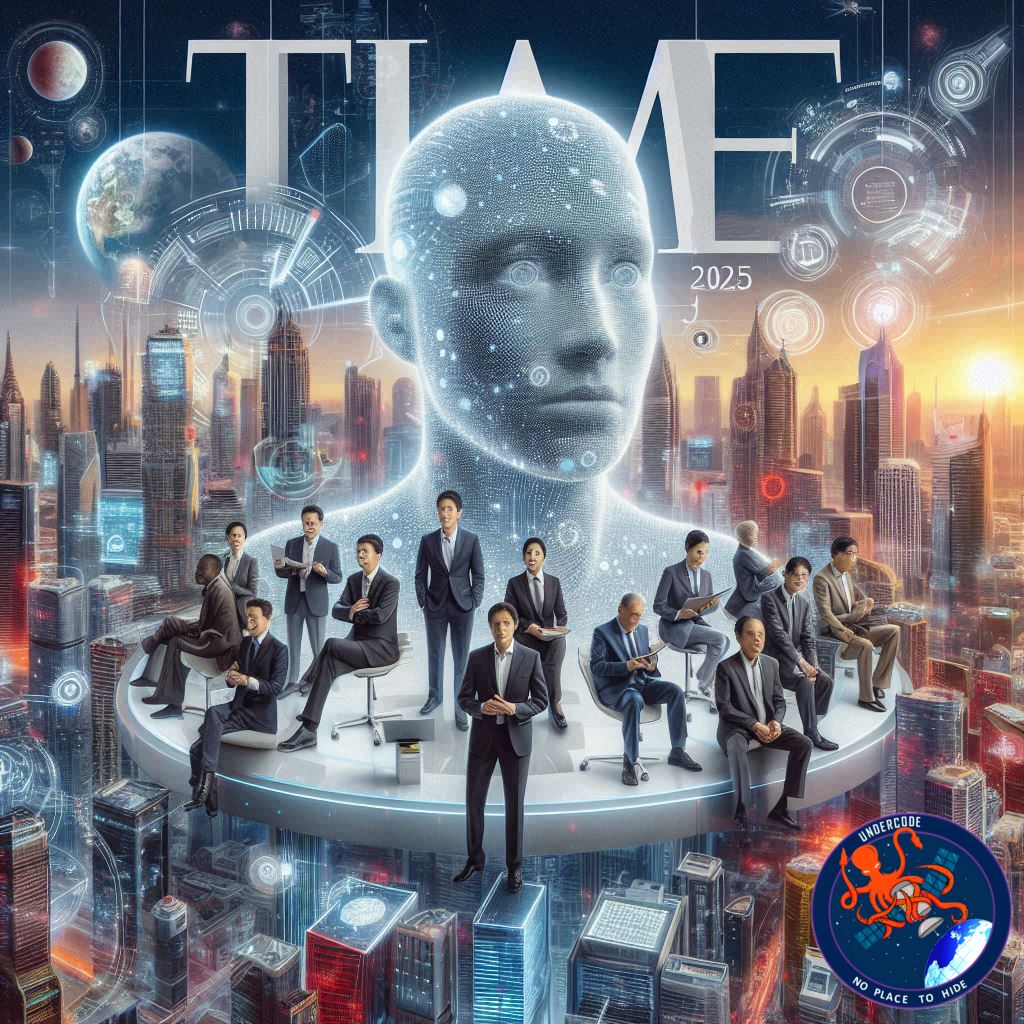
In a landmark decision, TIME Magazine has named its 2025 Person of the Year—not an individual, but a group shaping the course of human history through artificial intelligence. Dubbed “The Architects of AI”, this collective includes some of the most influential tech innovators of our era: Nvidia CEO Jensen Huang, OpenAI CEO Sam Altman, and xAI CEO Elon Musk, alongside leaders such as Meta’s Mark Zuckerberg, AMD’s Lisa Su, Google’s Demis Hassabis, Anthropic’s Dario Amodei, and Stanford professor Fei-Fei Li. TIME highlights how these figures have not only developed transformative technology but also reshaped information, geopolitics, and our daily lives.
The magazine emphasized that 2025 marked the year when AI’s full potential became undeniably visible. “There will be no turning back,” TIME declared, recognizing these innovators for “delivering the age of thinking machines, for wowing and worrying humanity, for transforming the present and transcending the possible.” Their work is not just technological; it has influenced global policy, competitive dynamics among nations, and the very fabric of human activity, from the workplace to the home.
TIME released two striking covers to celebrate this historic choice. The first, created by digital artist Jason Seiler, draws inspiration from the iconic 1932 photograph of ironworkers eating lunch on a New York City steel beam. It places AI leaders at the forefront of a symbolic technological skyline, showcasing their role in constructing a new era of intelligence. The second cover, by illustrator Peter Crowther, situates these leaders amid scaffolding forming the letters AI, symbolizing both the construction and complexity of artificial intelligence as a societal force.
The magazine notes that the AI architects raced alongside and against one another, making multibillion-dollar investments in what TIME calls “one of the biggest physical infrastructure projects of all time.” Their innovations have altered government policies, intensified international rivalries, and brought robotics and AI-driven systems into everyday life. TIME suggests that AI now rivals nuclear technology in its potential to reshape global power dynamics.
Since 1927, TIME has annually recognized individuals who significantly impact the world. In 2024, former U.S. President Donald Trump received the title, but the 2025 selection marks a pivot: highlighting collective influence over singular leadership and celebrating technological pioneers at a moment of historic change.
What Undercode Say:
TIME’s choice underscores a pivotal moment in human history where AI is no longer a tool of speculation but a decisive driver of global transformation. The selection of multiple leaders rather than a single figure reflects the collaborative and competitive nature of technological advancement. This group represents both the innovation engine and the ethical challenge AI poses to society. By including figures like Musk and Altman, TIME acknowledges their risk-taking, their bets on groundbreaking projects, and their capacity to shape markets, politics, and public perception simultaneously.
The AI revolution, accelerated in 2025, illustrates the profound interconnection between private enterprise and public consequence. Decisions made by these tech leaders—ranging from AI governance frameworks to geopolitical engagement—affect millions worldwide. Their work in developing AI systems capable of understanding, reasoning, and acting at human-level complexity has profound implications: labor markets may be disrupted, creative industries transformed, and national security redefined. AI is now a strategic asset, a point of national pride, and a global competitive edge.
The symbolic covers of TIME encapsulate a dual narrative: creation and risk. The ironworkers-inspired artwork evokes industrial-era ambition, while the scaffolding cover highlights AI as an ongoing construction project. Both metaphors emphasize that the work is iterative, high-stakes, and transformative. TIME’s recognition also implicitly acknowledges ethical dilemmas: how AI is deployed, the potential for misuse, and the societal responsibility of those who develop it.
This decision also signals a shift in how influence is measured in the 21st century. Traditional political figures may no longer dominate global headlines; technological architects—those who construct the frameworks for society’s cognitive and operational capabilities—are emerging as the new arbiters of history. The AI architects are both creators and disruptors, demonstrating that the intersection of technology and human choice defines our present trajectory.
Investors, policymakers, and global leaders will need to navigate this AI landscape with unprecedented caution and foresight. The multibillion-dollar investments these figures make not only advance AI but also shape geopolitical power structures. Countries that fail to adapt risk lagging in both economic and strategic arenas. Meanwhile, the social implications—ranging from ethical AI use to labor displacement—require robust public discourse and regulation.
TIME’s designation reinforces the message that AI is no longer a future concept but an active force redefining everything from work to international relations. The architects’ influence reflects the interconnectedness of technology, policy, and culture, reminding society that innovation carries both immense promise and responsibility. By celebrating collective impact, TIME highlights a reality where collaboration and competition coexist to push humanity into uncharted territories.
Fact Checker Results:
✅ TIME named “The Architects of AI” as 2025 Person of the Year.
✅ Covers by Jason Seiler and Peter Crowther feature leading AI innovators.
❌ Claiming AI is now on par with nuclear technology is an analytical interpretation, not a direct TIME assertion.
Prediction:
🌐 AI’s influence will continue accelerating, with technology shaping global policy, commerce, and culture.
💼 Collaboration and rivalry among AI leaders may drive multibillion-dollar innovations across multiple sectors.
🤖 Ethical oversight and regulatory frameworks will become central to balancing AI’s promise with societal risks.
🕵️📝✔️Let’s dive deep and fact‑check.
References:
Reported By: timesofindia.indiatimes.com
Extra Source Hub (Possible Sources for article):
https://stackoverflow.com
Wikipedia
OpenAi & Undercode AI
Image Source:
Unsplash
Undercode AI DI v2
Bing
🔐JOIN OUR CYBER WORLD [ CVE News • HackMonitor • UndercodeNews ]
📢 Follow UndercodeNews & Stay Tuned:
𝕏 formerly Twitter 🐦 | @ Threads | 🔗 Linkedin | 🦋BlueSky | 🐘Mastodon


