
Listen to this Post
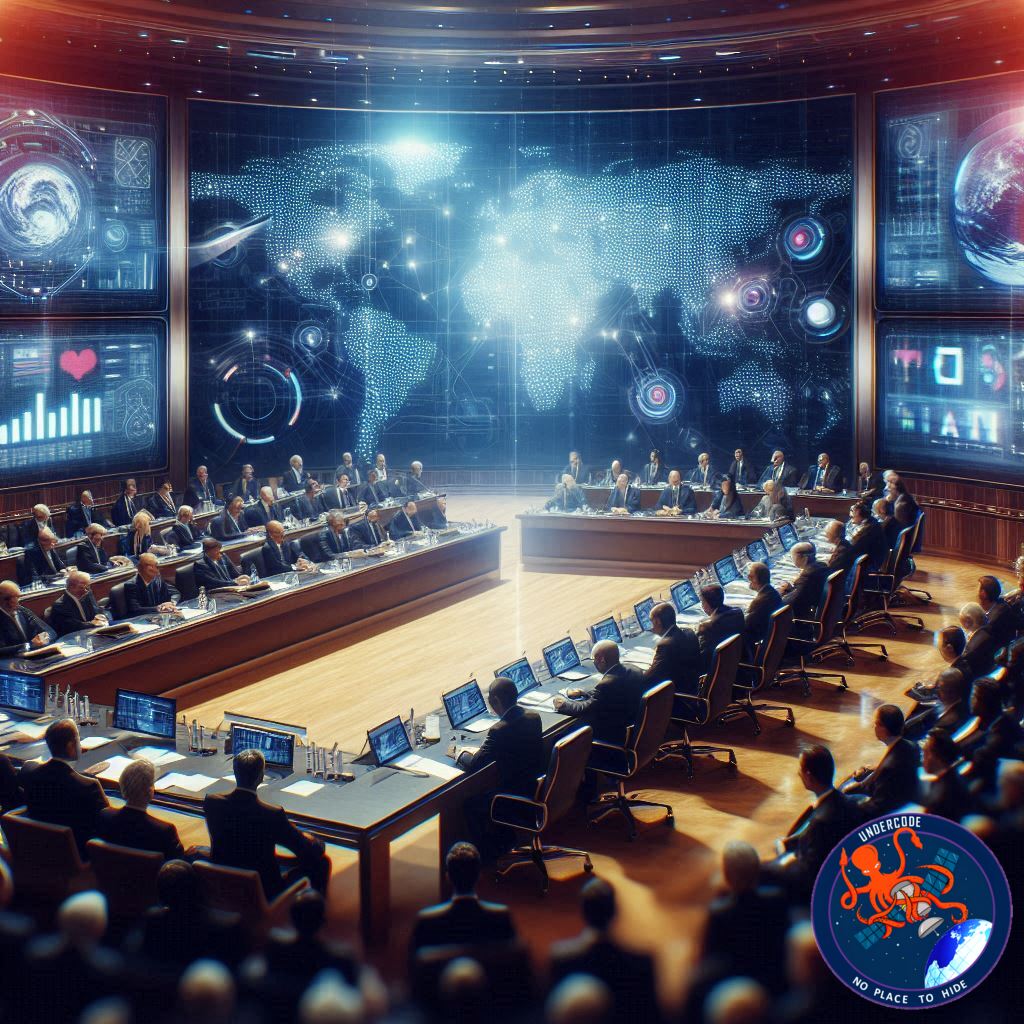
Introduction: A Single Place, Multiple Futures Colliding
In the thin air of the Swiss Alps, the World Economic Forum in Davos has often been accused of producing more symbolism than substance. This week is different. Over the span of just 24 hours, Davos became the convergence point for forces that may redefine the global order: the architects of civilization-altering artificial intelligence, a close U.S. ally openly declaring the American-led world system dead, and a defiant U.S. president prepared to redraw geopolitical lines. This is not background noise. This is history compressing itself into a moment.
A Gathering That Feels Unlike Any Other
Davos has hosted countless “historic” moments that faded into irrelevance. Yet the tone this week is unmistakably heavier. The people closest to power are no longer speculating about distant futures; they are speaking with alarming certainty. AI leaders warn of massive job losses and unprecedented wealth concentration. Political leaders question alliances once thought permanent. Markets react in real time, signaling that investors, too, sense something structural is breaking.
The AI Warning No One Can Ignore
At the center of the technology debate stood Anthropic CEO Dario Amodei, fresh off global attention for Claude Opus 4.5. Rather than celebrate innovation, Amodei delivered a stark warning. As AI capability accelerates, he argued, society risks a grotesque imbalance: vast economic gains flowing to a narrow elite while millions are left behind. This was not framed as a hypothetical. It was described as an approaching certainty unless policy intervenes.
Jobs, Wealth, and a Fractured Society
Amodei outlined a scenario where up to 10 million people could effectively “decouple” from the rest of society. Concentrated largely in Silicon Valley and a handful of global tech hubs, this group could experience GDP growth rates nearing 50%, while the broader population stagnates or declines. The implication is chilling: AI could create a parallel civilization, economically and socially detached from everyone else.
National Security and the Chip Controversy
Beyond economics, Amodei raised national security alarms. He sharply criticized President Trump’s decision to allow advanced American AI chips to be sold to China, calling it reckless and strategically dangerous. In one of the week’s most striking analogies, he compared the move to selling nuclear weapons to North Korea. For Amodei, AI is not just software—it is strategic power.
DeepMind and the Race Toward AGI
Reinforcing the urgency, Google DeepMind CEO Demis Hassabis acknowledged that the path toward artificial general intelligence is becoming clearer. While he noted that some critical ingredients remain missing, the subtext was obvious: human-level AI is no longer speculative science fiction. It is an engineering problem nearing resolution.
Canada Breaks the Unthinkable Silence
While AI executives sounded alarms about the future, geopolitics delivered its own shock. Canadian Prime Minister Mark Carney took the Davos stage and delivered a blunt assessment of the U.S.-led global order. Calling it “a pleasant fiction,” Carney declared that the old rules-based system no longer works. For America’s closest ally to say this publicly marked a profound rupture.
The Weight of Carney’s Words
Carney is not a radical outsider. He previously led both the Bank of Canada and the Bank of England. His credibility lies in stability, not provocation. That is precisely why his declaration landed so hard. When someone with his résumé says the alliance is over—not strained, not pausing, but over—it signals a fundamental realignment.
Václav Havel and the End of Pretending
Invoking Czech dissident Václav Havel, Carney compared Canada to the “greengrocer” who displays a slogan he does not believe in, simply to survive. For years, Carney implied, Canada played along with an American system it no longer trusted. Now, he urged companies and countries to “take their signs down” and stop pretending.
A Pivot Toward Beijing
The symbolism deepened when Carney revealed he had traveled to Beijing—the first Canadian prime minister to do so in eight years. He announced a new trade deal with China and remarked that Beijing had recently been more “predictable” than Washington. In diplomatic language, this was a seismic statement. Predictability, not ideology, is the currency of alliances.
Trump Takes the Stage
All of this unfolded just before President Trump was set to address Davos. His agenda promises confrontation rather than reassurance. Trump is expected to demand that Denmark hand over Greenland to the United States, framing the issue as essential to national and global security. He has already threatened punitive tariffs against allies who resist.
Greenland and the NATO Fault Line
Trump’s Greenland push has alarmed European leaders, many of whom fear it could fracture NATO itself. What once seemed an unshakable alliance now appears fragile. When territorial demands and economic coercion are aimed at allies, the line between partnership and rivalry blurs dangerously.
A New Global Architecture
Trump also plans to promote American dominance through domestic reforms and unveil his “Board of Peace,” an institution positioned as an alternative to the United Nations. Critics argue this could rival or even undermine the U.N., signaling a shift away from multilateral governance toward a more unilateral American vision.
Davos Conversations Narrow to Two Topics
Among the Davos elite, nearly every conversation revolves around two subjects: AI and Trump. The Trump discussions are filled with speculation and unease. The AI discussions, by contrast, are marked by quiet certainty. Executives are not asking whether AI will transform society—they are asking how much damage will occur before governments respond.
Markets React in Real Time
Investors did not wait for academic consensus. Following Trump’s tariff threats against eight European allies, the S&P 500 dropped 2% in a single day—its worst performance since October. A major Danish pension fund announced it would exit U.S. Treasuries, citing concerns about American debt and political instability.
Signals Beyond the Headlines
These market moves matter because they reflect institutional confidence, not public opinion. When pension funds and long-term investors begin to reposition, they are betting on structural change, not temporary turbulence.
A Week Future Historians Will Not Debate
Future historians will not need to reconstruct what happened in Davos this week. The footage exists. The statements are on record. The only open question is whether today’s leaders—and citizens—understand the significance of what they are witnessing in real time.
What Undercode Say: The Convergence of Power and Fragility
AI as the Ultimate Force Multiplier
What Davos revealed most clearly is that AI is no longer a sector—it is a force multiplier for every other domain. Economic power, military strength, political influence, and social stability now orbit around who controls advanced AI systems. This explains the intensity of Amodei’s warnings and the anxiety they triggered.
Inequality as a Design Outcome, Not a Bug
The feared concentration of wealth is not accidental. AI systems reward scale, data dominance, and capital intensity. Without deliberate intervention, inequality is not just likely—it is structurally embedded. The “decoupled” elite Amodei described is a foreseeable outcome of current trajectories.
Geopolitics in an AI World
Carney’s break with the U.S. should be viewed through this lens. Alliances are increasingly shaped by technological trust and supply chain security, not shared values. If Washington is seen as erratic while Beijing appears predictable, countries will recalibrate, regardless of ideology.
Trump as a Catalyst, Not the Cause
Trump did not create these fractures, but he is accelerating them. His willingness to pressure allies, dismantle multilateral norms, and weaponize trade is forcing countries to choose sides—or hedge aggressively.
The End of Comfortable Ambiguity
For decades, global leaders benefited from ambiguity: pretending alliances were solid while quietly diversifying risks. Davos suggests that era is ending. The ambiguity is collapsing under the weight of AI acceleration and geopolitical confrontation.
Markets as the Early Warning System
Financial markets are often dismissed as reactive, but this week they functioned as an early warning system. Capital is already moving in anticipation of a more fragmented, volatile world.
A Narrow Window for Governance
The most unsettling takeaway is timing. AI capabilities are advancing faster than political institutions can adapt. If governance frameworks are not established soon, power will consolidate by default, not design.
Davos as a Mirror, Not a Solution
Davos did not cause these shifts; it simply reflected them with unusual clarity. The danger is mistaking recognition for resolution. Awareness alone will not prevent the fractures now visible.
Fact Checker Results
Verification of Core Claims
✅ AI leaders did issue public warnings about job loss and wealth concentration.
✅ Mark Carney did publicly criticize the U.S.-led rules-based order at Davos.
❌ Long-term outcomes of AI-driven inequality remain projections, not confirmed results.
Prediction: A Fractured Decade Ahead
The Likely Path Forward
🔮 AI governance will lag behind AI capability, deepening inequality before reforms emerge.
🔮 U.S. alliances will continue to erode as unpredictability drives partners toward diversification.
🔮 Davos 2026 will look back on this week as the moment denial finally collapsed.
🕵️📝✔️Let’s dive deep and fact‑check.
References:
Reported By: axioscom_1768996626
Extra Source Hub (Possible Sources for article):
https://www.github.com
Wikipedia
OpenAi & Undercode AI
Image Source:
Unsplash
Undercode AI DI v2
Bing
🔐JOIN OUR CYBER WORLD [ CVE News • HackMonitor • UndercodeNews ]
📢 Follow UndercodeNews & Stay Tuned:
𝕏 formerly Twitter 🐦 | @ Threads | 🔗 Linkedin | 🦋BlueSky | 🐘Mastodon


