
Listen to this Post
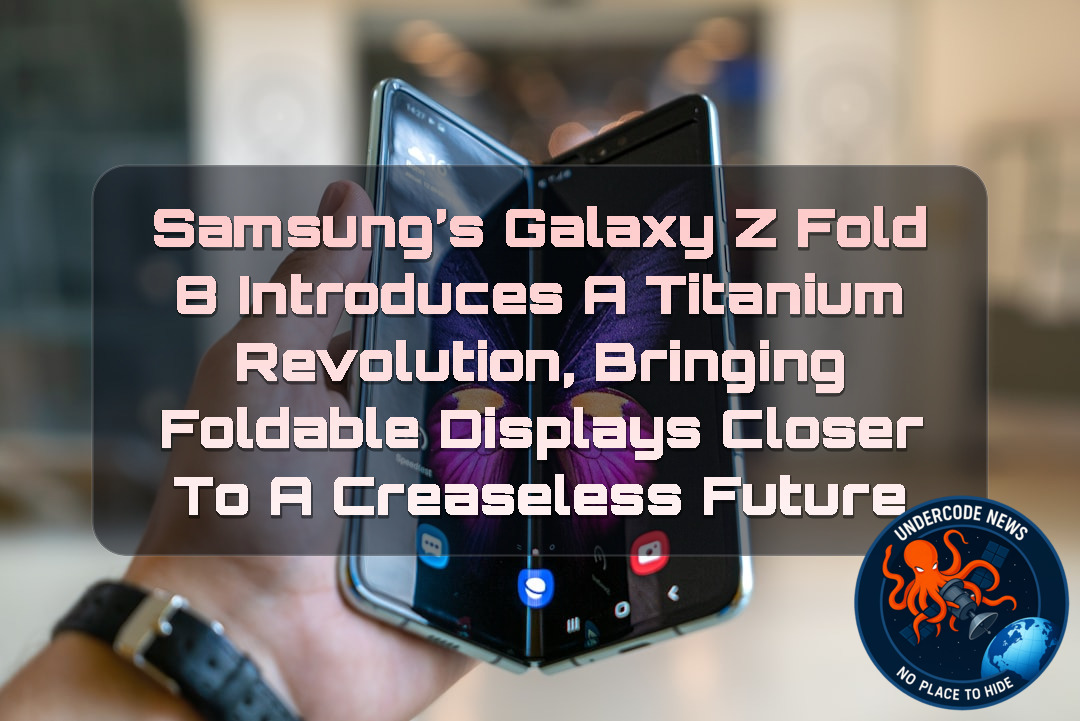 Introduction: The Foldable Phone Dream Finally Moves Forward
For years, foldable smartphones have carried one unavoidable weakness: the visible crease running through the center of their flexible displays. While companies have improved hinge designs, protective layers, and display materials, the crease has remained a reminder that foldable technology is still evolving.
Samsung, the company that helped popularize modern foldable smartphones, is now attempting to solve this long-standing challenge with its 2026 Galaxy Z Fold 8 series. The new generation arrives with several major improvements, including a third foldable model, upgraded internal hardware, and a completely new approach to display construction.
The biggest innovation attracting attention is Samsung’s new Flex Titanium technology, a material solution designed to make the Galaxy Z Fold 8 and Galaxy Z Fold 8 Ultra displays appear smoother, stronger, and more durable. Although the company has not completely eliminated the crease, it has taken another major step toward creating the seamless foldable screen experience users have been waiting for.
Samsung’s 2026 Foldable Lineup Becomes More Ambitious Than Ever
Samsung’s Galaxy Z Fold 8 generation represents one of the company’s biggest attempts to redefine the future of foldable phones. The 2026 lineup expands beyond previous years by introducing additional models, including the standard Galaxy Z Fold 8, the premium Galaxy Z Fold 8 Ultra, and the Galaxy Z Flip 8.
The new devices arrive with several important upgrades that show Samsung is no longer treating foldables as experimental luxury products. Instead, the company is positioning them as mainstream flagship smartphones capable of competing directly with traditional premium phones.
Among the biggest changes is the introduction of Samsung’s first Silicon-Carbon battery technology in a foldable device. This battery approach is expected to improve energy density, allowing manufacturers to create larger capacity batteries without significantly increasing device thickness.
However, the most talked-about improvement is not related to processing power or battery life. It is focused on the display itself.
The Foldable Crease Problem: Samsung’s Biggest Challenge
Since the first Galaxy Fold launched, the center crease has been one of the most discussed aspects of foldable phones. The flexible display must physically bend thousands of times, creating engineering challenges that traditional smartphones never face.
A foldable display requires multiple layers working together:
Flexible OLED panel
Protective film
Supporting layers
Backplate structure
Hinge mechanism
Each component must balance flexibility and durability. If the display becomes too rigid, it can break under pressure. If it becomes too soft, the crease becomes more visible over time.
Samsung’s previous foldables improved significantly, but users still noticed the fold line under certain lighting conditions. With Galaxy Z Fold 8, Samsung decided that changing the internal display structure was necessary.
Flex Titanium Technology: Samsung’s New Display Engineering Strategy
The major innovation behind the Galaxy Z Fold 8 series is Samsung’s Flex Titanium technology.
Unlike a simple external titanium frame, Flex Titanium uses a titanium alloy film embedded directly inside the display substrate. This creates a new reinforcement layer designed specifically for flexible displays.
Samsung already has experience using titanium in premium devices. Previous Galaxy smartphones and smartwatches introduced titanium bodies, while the Galaxy Z Fold 7 used a titanium display backplate.
However, Flex Titanium represents a different approach. Instead of only strengthening the exterior structure, Samsung is integrating titanium into the display itself.
The technology works by adding a lightweight but highly durable titanium alloy layer that supports the flexible panel while maintaining the ability to fold.
How Titanium Could Improve the Galaxy Z Fold 8 Display
Titanium offers several advantages that make it attractive for foldable technology.
Stronger Structural Support
Titanium has an excellent strength-to-weight ratio. This means Samsung can add reinforcement without creating a heavier device.
For foldable displays, this is extremely important because every additional layer affects:
Device thickness
Folding resistance
Hinge pressure
Long-term durability
Better Crease Control
Samsung’s goal is not only making the crease less visible when the phone is new. The company is also attempting to slow down crease development over years of use.
Repeated folding places stress on the display area. A stronger internal structure could help distribute that pressure more evenly.
Improved Long-Term Reliability
Foldable users expect their devices to survive thousands of opening and closing cycles. A titanium-supported display structure could potentially reduce material fatigue and improve lifespan.
Galaxy Z Fold 8 Ultra Becomes Samsung’s Ultimate Foldable Experiment
The Galaxy Z Fold 8 Ultra represents Samsung’s most advanced attempt to create a premium foldable smartphone without traditional compromises.
While the regular Galaxy Z Fold 8 and Ultra model receive Flex Titanium technology, the Galaxy Z Flip 8 appears to continue using a more traditional foldable display structure.
This difference suggests Samsung considers large foldable phones the best platform for introducing advanced display materials.
The larger internal screen of the Fold series creates more pressure around the folding area, meaning improvements in reinforcement provide greater benefits.
Samsung Did Not Completely Remove the Crease, But It Changed the Game
Despite the excitement around the “creaseless display” rumors, the Galaxy Z Fold 8 does not completely eliminate the fold line.
Instead, Samsung has reduced its visibility and improved the overall appearance.
This distinction is important.
A completely invisible crease remains one of the hardest challenges in flexible display engineering. The display must physically bend, meaning some material deformation is unavoidable.
Samsung’s achievement is not eliminating physics. It is reducing the visual impact of physics.
The Galaxy Z Fold 8 demonstrates that foldable technology is moving from early experimentation toward refined engineering.
What Undercode Say:
Samsung’s Flex Titanium technology represents a deeper shift in smartphone engineering.
The foldable market is no longer competing only on screen size or camera specifications.
The next major battle is material science.
For years, foldable phones improved through software optimization and hinge redesigns.
Now manufacturers are looking inside the display itself.
Titanium reinforcement shows that future smartphones may depend more on advanced materials than traditional hardware upgrades.
The Galaxy Z Fold 8 is an example of how smartphone innovation is becoming increasingly similar to aerospace engineering.
Weight reduction, structural strength, and durability are becoming the main priorities.
Titanium is already used in aircraft, spacecraft components, and medical applications because it provides strength without unnecessary weight.
Samsung bringing this material into flexible displays shows how mobile technology is borrowing ideas from other industries.
The biggest challenge for foldables has always been durability.
Consumers do not want a device that looks impressive for six months but develops problems after years of folding.
The display crease represents more than a cosmetic issue.
It represents mechanical stress.
Every fold creates pressure.
Every opening and closing cycle changes the structure of flexible materials.
Samsung’s solution attempts to manage this stress rather than simply hide it.
From an engineering perspective, Flex Titanium could provide several advantages.
It may reduce stress concentration around the folding area.
It may help maintain display uniformity.
It may prevent the crease from becoming deeper over time.
It may also allow future foldable phones to become thinner without sacrificing strength.
The introduction of Silicon-Carbon batteries alongside titanium reinforcement shows Samsung is attacking two major foldable limitations at once: endurance and durability.
The future of foldables will likely depend on combining multiple advanced technologies rather than relying on one breakthrough.
Battery chemistry, flexible materials, hinge mechanics, and software optimization must work together.
Samsung’s biggest achievement with Galaxy Z Fold 8 may not be the disappearance of the crease.
The real achievement may be making users stop thinking about it.
A successful technology transition happens when limitations become invisible.
The same happened with smartphone bezels, fingerprint sensors, and wireless charging.
At first, these technologies were noticeable.
Eventually, they became normal.
If Samsung continues improving foldable displays, the crease may become another forgotten problem.
However, competitors will not remain silent.
Companies developing foldable devices will study Samsung’s approach and attempt to create alternative solutions using different materials.
The next decade of smartphones could become a competition between material innovation companies rather than traditional hardware manufacturers.
Commands for technical inspection and device analysis:
adb shell getprop ro.product.model
adb shell dumpsys battery
adb shell cat /proc/cpuinfo
adb shell df -h
adb shell dumpsys display
For developers and researchers analyzing foldable device behavior:
adb logcat | grep -i display
adb shell dumpsys SurfaceFlinger
adb shell dumpsys window
These commands can help examine hardware information, battery status, display systems, and Android performance behavior on compatible devices.
Deep Analysis: Exploring Foldable Hardware Evolution Through System Commands
Modern smartphones are becoming complex computing platforms where hardware and software continuously interact.
Engineers analyzing foldable devices often examine:
adb shell getprop
This reveals Android system properties, including hardware identifiers and manufacturer configurations.
Battery analysis can be performed through:
adb shell dumpsys battery
This provides information about charging states and power management.
Display diagnostics can be investigated using:
adb shell dumpsys display
This helps researchers understand refresh rates, display configurations, and screen behavior.
Graphics performance analysis:
adb shell dumpsys SurfaceFlinger
This provides information about Android’s display rendering system.
Storage and system health checks:
adb shell df -h
This helps evaluate available storage and partition conditions.
Log monitoring:
adb logcat
allows developers to inspect software behavior and identify possible issues related to display drivers or system performance.
As foldable phones become more advanced, these diagnostic tools will become increasingly important for developers, repair specialists, and researchers studying next-generation mobile hardware.
✅ Samsung introduced Flex Titanium technology as a new display reinforcement approach for Galaxy Z Fold 8 models.
✅ Titanium materials are known for high strength and lightweight properties, making them useful for structural reinforcement.
❌ The Galaxy Z Fold 8 does not completely eliminate the physical display crease, but it reduces its visibility.
Prediction
(+1)
Samsung’s titanium-based display technology could become a foundation for future foldable smartphones.
Future Galaxy Fold devices may achieve significantly thinner designs while maintaining durability.
Competitors are likely to introduce their own advanced material solutions as foldable competition increases.
Silicon-Carbon batteries combined with stronger display structures could make foldables more practical for everyday users.
The perfect invisible crease remains a major engineering challenge and may require several more generations.
Premium foldable pricing could continue limiting adoption among mainstream smartphone buyers.
The Future of Foldable Smartphones Is Built on Materials
Samsung’s Galaxy Z Fold 8 series represents a new stage in smartphone evolution. The company is moving beyond simple improvements and experimenting with advanced materials to solve the biggest problems facing foldable technology.
Flex Titanium may not deliver a completely invisible crease today, but it demonstrates a clear direction for the industry.
The future of smartphones will not only be defined by faster processors or better cameras. It will be shaped by stronger materials, smarter engineering, and innovations hidden beneath the surface.
The foldable revolution is still developing, and Samsung’s latest technology suggests the next major smartphone breakthrough may come from the smallest layers inside the device.
▶️ Related Video (74% Match):
🕵️📝Let’s dive deep and fact‑check.
🎓 Live Courses & Certifications:
Join Undercode Academy for Verified Certifications
🚀 Request a Custom Project:
Secure, high-velocity infrastructure and disruptive technological engineering. Contact our engineering team for high-tier development and proprietary systems:
[email protected]
💎 Smart Architecture | 🛡️ Secure by Design | ⭐ Trusted by Thousands
References:
Reported By: www.sammobile.com
Extra Source Hub (Possible Sources for article):
https://www.twitter.com
Wikipedia
OpenAi & Undercode AI
Image Source:
Unsplash
Undercode AI DI v2
🔐JOIN OUR CYBER WORLD [ CVE News • HackMonitor • UndercodeNews ]
📢 Follow UndercodeNews & Stay Tuned:
𝕏 formerly Twitter 🐦 | @ Threads | 🔗 Linkedin | 🦋BlueSky | 🐘Mastodon | 📺Youtube


