
Listen to this Post
A Hybrid Console That Defied Expectations
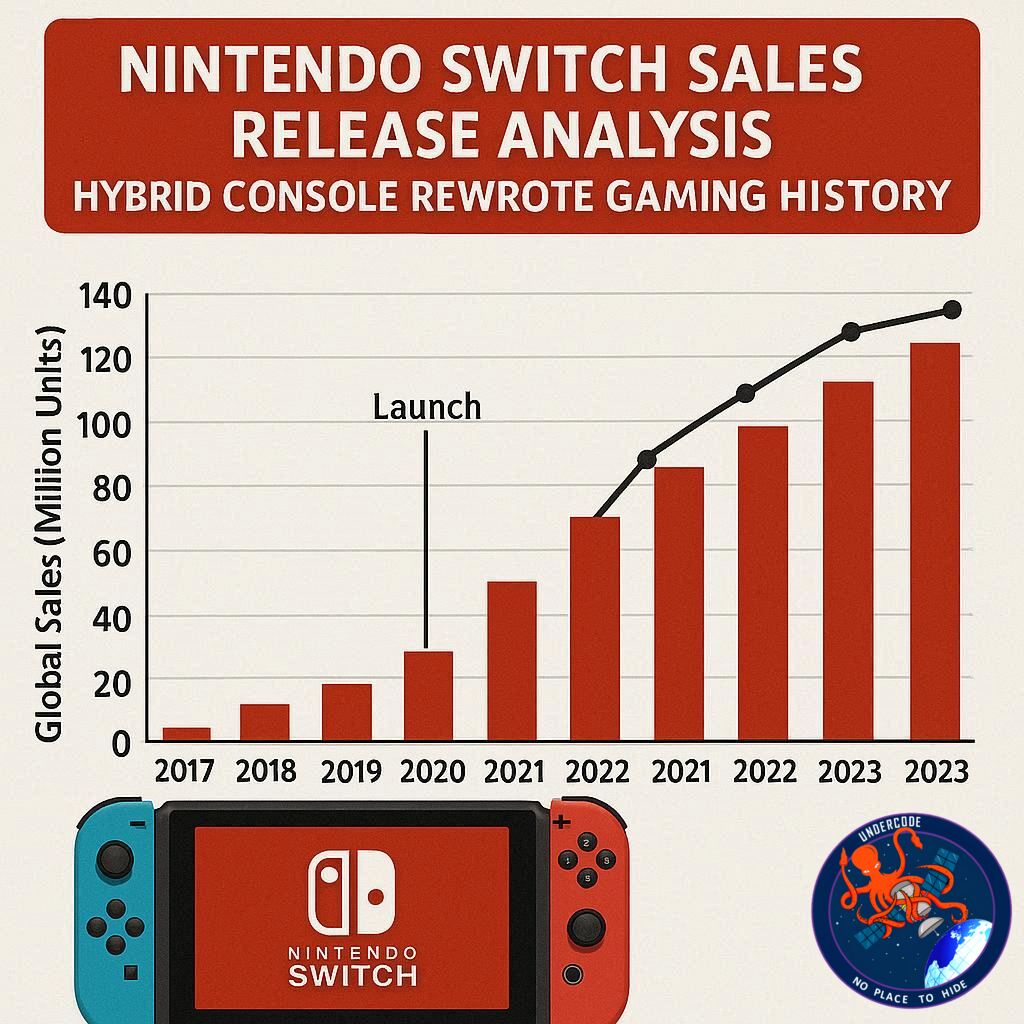
When Nintendo introduced the Switch in 2017, expectations were cautious. The company was coming off the commercial disappointment of the Wii U, and the idea of a hybrid home and handheld console felt risky. Yet eight years later, the Nintendo Switch stands as the most successful console in Nintendo’s long history, surpassing even the iconic Nintendo DS. With more than 155 million units sold worldwide, the Switch is no longer just a comeback story, it is a defining chapter in the modern gaming industry.
From Modest Launch to Historic Sales Numbers
Nintendo confirmed in its latest financial report that the Switch has officially overtaken the Nintendo DS to become the company’s best-selling console ever. In the broader console market, it now ranks second all-time, trailing only Sony’s PlayStation 2, which sold over 160 million units following its 2000 release. This achievement places the Switch in rare territory, alongside hardware that shaped entire generations of players.
Pandemic Momentum and a Perfect Market Fit
A significant portion of the Switch’s explosive growth came during the global pandemic. Lockdowns created unprecedented demand for at-home entertainment, and the Switch fit perfectly into that moment. Its flexibility allowed players to move seamlessly between handheld and TV play, while its approachable design appealed to families, casual players, and long-time Nintendo fans alike.
Software Power as the Core Growth Engine
Industry analysts consistently point to Nintendo’s software strategy as the real driver behind the console’s success. During the Switch era, flagship franchises such as Mario, Zelda, Pokémon, and Mario Kart reached new commercial highs. Even traditionally smaller franchises like Luigi’s Mansion and Mario Party achieved sales figures that once seemed unrealistic for Nintendo’s secondary titles.
A Console Built for All Ages
The Switch’s appeal extended far beyond traditional gaming audiences. Its portable nature, combined with games designed for younger players and social play, made it a common household item. The system became a shared experience rather than a niche gaming device, reinforcing its position as one of the most accessible consoles ever released.
The Arrival of Nintendo Switch 2
In June 2025, Nintendo launched the Switch 2, aiming to build on the foundation laid by its predecessor. By the end of the year, the new system had sold 17 million units, a figure Nintendo described as a “good start.” While respectable, the performance immediately sparked comparisons with the original Switch’s trajectory.
Financial Pressures and Investor Concerns
Despite celebrating sales milestones, Nintendo faced market pressure. Company shares fell 11 percent following the financial report, as investors raised concerns over software sales growth and rising memory chip costs. Nintendo president Shuntaro Furukawa acknowledged that higher RAM prices could impact profit margins in the coming years.
Economic Headwinds Facing the Sequel
Beyond component costs, broader economic challenges loom. Increased US tariffs, global inflation, and economic uncertainty across key markets may limit how far the Switch 2 can scale. Industry observers suggest that while success is likely, matching or exceeding the original Switch’s historic sales may prove difficult.
What Undercode Say:
The Nintendo Switch represents a rare convergence of timing, design philosophy, and software execution. Its success was not accidental, nor was it purely driven by nostalgia. Nintendo identified a gap between hardcore gaming hardware and casual mobile experiences, then positioned the Switch directly in that space. This strategic middle ground allowed Nintendo to avoid competing head-to-head with raw performance-focused consoles while still delivering premium gaming experiences.
What truly separates the Switch from past Nintendo successes is the consistency of its software output. Nintendo did not rely on one or two blockbuster titles. Instead, it delivered a steady cadence of high-quality releases across multiple franchises, ensuring the hardware never lost relevance. Each major release functioned as a renewed marketing cycle for the console itself.
The pandemic accelerated adoption, but it did not create demand out of thin air. The Switch was already positioned as a lifestyle-friendly device. Lockdowns merely amplified its value proposition. This distinction matters because it explains why sales remained strong even after global restrictions eased.
Looking at the Switch 2, the challenge is structural rather than creative. The original Switch benefited from low expectations and a clear redemption narrative for Nintendo. The sequel enters a market with high expectations, tighter margins, and less room for surprise. Rising memory prices directly threaten Nintendo’s traditional strategy of affordability, which has historically been central to its mass-market appeal.
Another key factor is generational fatigue. The Switch enjoyed an unusually long lifecycle, meaning many consumers may delay upgrading. Without a dramatic shift in gameplay experience or exclusive software hooks, the Switch 2 risks being perceived as an incremental upgrade rather than a cultural reset.
However, underestimating Nintendo has historically proven unwise. The company’s ability to leverage its intellectual property, combined with its cautious but deliberate hardware strategy, suggests that the Switch 2 does not need to break records to be considered a success. Selling slightly less than its predecessor could still result in one of the most profitable console generations in Nintendo’s history.
Fact Checker Results
✅ Nintendo Switch has sold over 155 million units, surpassing the Nintendo DS.
✅ PlayStation 2 remains the best-selling console with over 160 million units sold.
❌ No confirmed data yet proves Switch 2 will match the original’s lifetime sales.
Prediction
📊 Nintendo Switch 2 will maintain strong long-term sales but fall short of the original Switch’s historic peak.
📊 Rising component costs will push Nintendo toward higher software reliance for profitability.
📊 The Switch brand will remain central to Nintendo’s ecosystem well into the next decade.
▶️ Related Video (84% Match):
🕵️📝✔️Let’s dive deep and fact‑check.
References:
Reported By: timesofindia.indiatimes.com
Extra Source Hub (Possible Sources for article):
https://www.reddit.com
Wikipedia
OpenAi & Undercode AI
Image Source:
Unsplash
Undercode AI DI v2
Bing
🔐JOIN OUR CYBER WORLD [ CVE News • HackMonitor • UndercodeNews ]
📢 Follow UndercodeNews & Stay Tuned:
𝕏 formerly Twitter 🐦 | @ Threads | 🔗 Linkedin | 🦋BlueSky | 🐘Mastodon


