
Listen to this Post
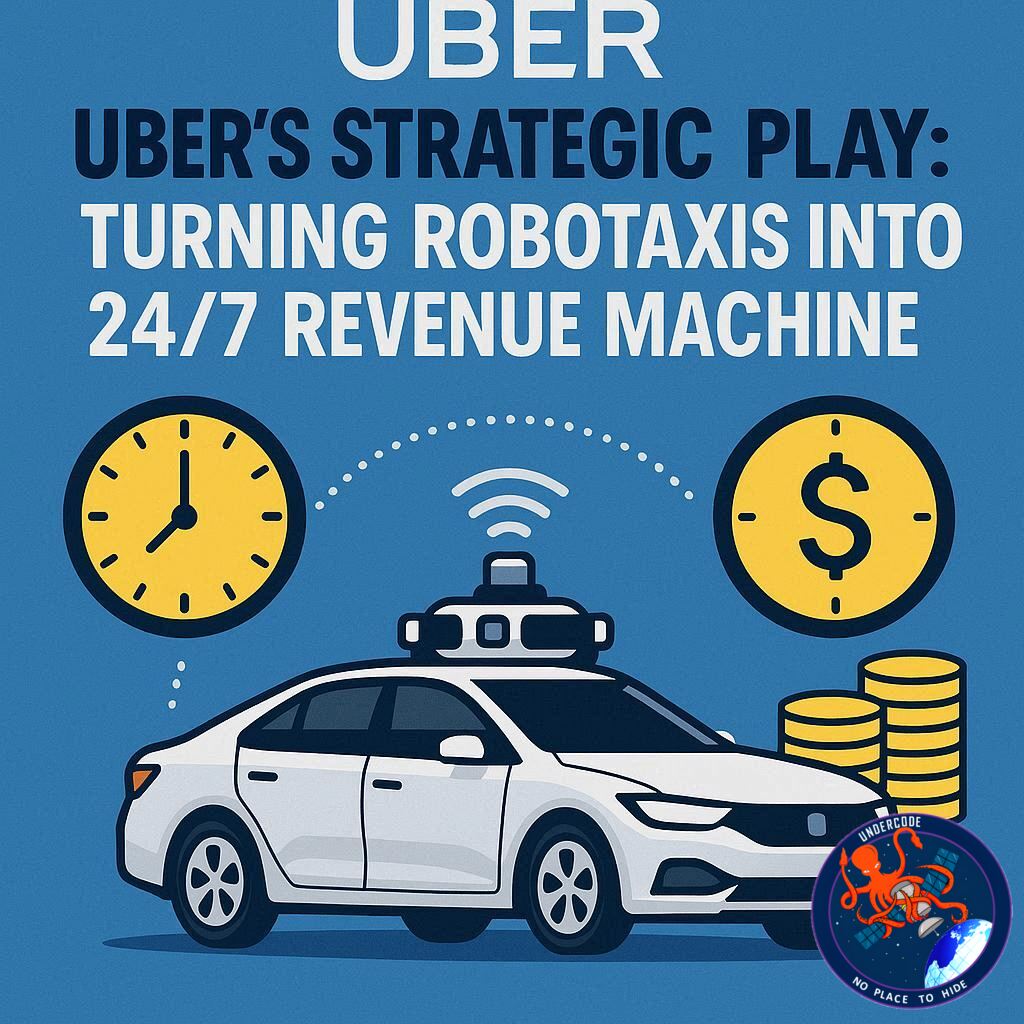
As autonomous vehicles (AVs) inch closer to becoming mainstream, Uber CEO Dara Khosrowshahi is laying out a bold vision to dominate the emerging robotaxi market. He argues that the companies that win won’t rely solely on superior AI software or ride-hailing networks—but on maximizing the utility of these vehicles around the clock. By integrating self-driving cars into a diversified logistics ecosystem, Uber aims to transform robotaxis from passive tools into multi-purpose revenue generators.
The Robotaxi Challenge: Idle Hours Are Costly
Khosrowshahi highlighted a fundamental challenge for self-driving vehicles: downtime. Even the most advanced robotaxi is unprofitable when parked. Traditional ride-hailing models often leave cars idle during off-peak hours, wasting valuable operational capacity. In his vision, Uber’s advantage lies in its diversified platform, which can pivot these autonomous vehicles seamlessly between passenger transport, food delivery, and freight logistics.
A 24/7 Logistics Ecosystem
The core of Uber’s strategy is a “multi-tasking” model for robotaxis. After completing morning rush rides, cars won’t sit idle—they will switch to Uber Eats deliveries or Uber Freight assignments. This continuous utilization ensures vehicles are generating revenue nearly all day, providing a structural edge over competitors like Waymo and Tesla, whose platforms are less integrated into logistics services.
Data-Driven Optimization
To further strengthen its autonomous capabilities, Uber is leveraging real-world data from human drivers to train its AI. Khosrowshahi emphasized that self-driving cars must become more reliable and resilient, avoiding failures such as Waymo’s San Francisco blackout, where a power outage left dozens of robotaxis stranded. By combining machine learning with operational experience, Uber aims to refine safety and efficiency simultaneously.
Financial Rationale Behind the Strategy
The numbers support this approach. While ride-hailing still represents over half of Uber’s revenue, the delivery segment grew by 29% in the fourth quarter—outpacing ride-hailing growth at 18%. By routing autonomous vehicles into this high-growth segment, Uber can offset the steep costs of autonomous hardware while squeezing more revenue out of each minute a car is on the road.
Expanding Beyond Ride-Hailing
Khosrowshahi’s message to rivals is clear: winning the robotaxi race requires thinking beyond transporting passengers. Companies that limit AVs to single-purpose ride-hailing risk underutilizing expensive assets. In contrast, Uber’s hybrid model promises continuous engagement, tapping multiple revenue streams and strengthening its market position.
What Undercode Say:
Uber’s approach represents a paradigm shift in how autonomous vehicles will be monetized. By positioning robotaxis as a versatile asset rather than a single-function service, Uber addresses one of the most overlooked challenges in AV deployment: idle time. Operational efficiency has historically dictated the profitability of ride-hailing fleets, and Khosrowshahi’s logistics-integrated model cleverly converts downtime into revenue.
The strategy also reflects an understanding of AI limitations. Training autonomous systems exclusively in controlled scenarios often leaves gaps in real-world reliability. Uber’s use of human driver data allows the AI to learn from complex urban patterns, enhancing safety while reducing the risk of operational interruptions. This is a critical differentiator, especially when competitors have suffered public setbacks, eroding trust in autonomous technology.
Financially, this multi-purpose utilization model is compelling. Autonomous hardware is costly, and without maximizing uptime, the return on investment remains distant. By funneling robotaxis into high-growth sectors like delivery and freight, Uber can accelerate profitability, hedge against fluctuations in passenger demand, and create a resilient ecosystem.
Strategically, the approach may force competitors to reconsider their business models. Waymo and Tesla, primarily software-centric, risk a slower path to profitability unless they develop similar logistics integrations. Uber’s advantage lies in its existing infrastructure—drivers, delivery networks, and freight contracts—that can immediately benefit from autonomous adoption, reducing the timeline to meaningful returns.
Operationally, Uber’s model could redefine urban mobility economics. A single robotaxi may serve multiple purposes across a day, creating a “network effect” of continuous service and data collection. This feedback loop not only optimizes routes and efficiency but also accelerates AI learning, giving Uber a technological edge while keeping costs in check.
From a market perspective, Uber’s hybrid strategy positions it to dominate multiple segments simultaneously: ride-hailing, food delivery, and freight. This diversification is particularly significant in volatile economic conditions, as reliance on a single revenue stream leaves competitors vulnerable. By contrast, Uber’s AV ecosystem distributes risk and enhances revenue predictability.
The model also opens the door to future innovations. For instance, dynamic scheduling algorithms could assign robotaxis in real-time based on regional demand fluctuations, maximizing earnings per vehicle. Autonomous fleets may eventually operate almost continuously, creating new benchmarks for urban mobility efficiency.
Uber’s vision also has broader implications for city planning and transportation infrastructure. A multi-purpose AV network reduces the need for human drivers, parking spaces, and redundant fleet resources, potentially reshaping urban logistics and commuter patterns. Cities that embrace such models may see fewer cars on the road during off-peak hours, while deliveries and freight continue seamlessly.
In essence, Khosrowshahi’s strategy signals a shift from the concept of autonomous vehicles as luxury or novelty transport toward viewing them as integral nodes in a 24/7 economic ecosystem. The success of this model will hinge on seamless AI integration, real-time operational management, and the ability to scale logistics networks globally.
Fact Checker Results:
✅ Uber’s delivery business grew faster than ride-hailing in Q4.
✅ Uber integrates human driver data to improve autonomous vehicle AI.
❌ No evidence suggests robotaxis are yet fully operational in a continuous multi-purpose model.
Prediction:
📊 If Uber successfully scales its multi-purpose robotaxi network, it could redefine the economics of autonomous fleets, forcing competitors to pivot or risk obsolescence. By 2030, urban AV networks may operate nearly 24/7, combining passenger rides, deliveries, and freight, potentially cutting operational costs by up to 30% while increasing fleet utilization.
▶️ Related Video (88% Match):
🕵️📝✔️Let’s dive deep and fact‑check.
References:
Reported By: timesofindia.indiatimes.com
Extra Source Hub (Possible Sources for article):
https://www.digitaltrends.com
Wikipedia
OpenAi & Undercode AI
Image Source:
Unsplash
Undercode AI DI v2
Bing
🔐JOIN OUR CYBER WORLD [ CVE News • HackMonitor • UndercodeNews ]
📢 Follow UndercodeNews & Stay Tuned:
𝕏 formerly Twitter 🐦 | @ Threads | 🔗 Linkedin | 🦋BlueSky | 🐘Mastodon


