
Listen to this Post
Introduction: Rising Cyber Threats in Aviation
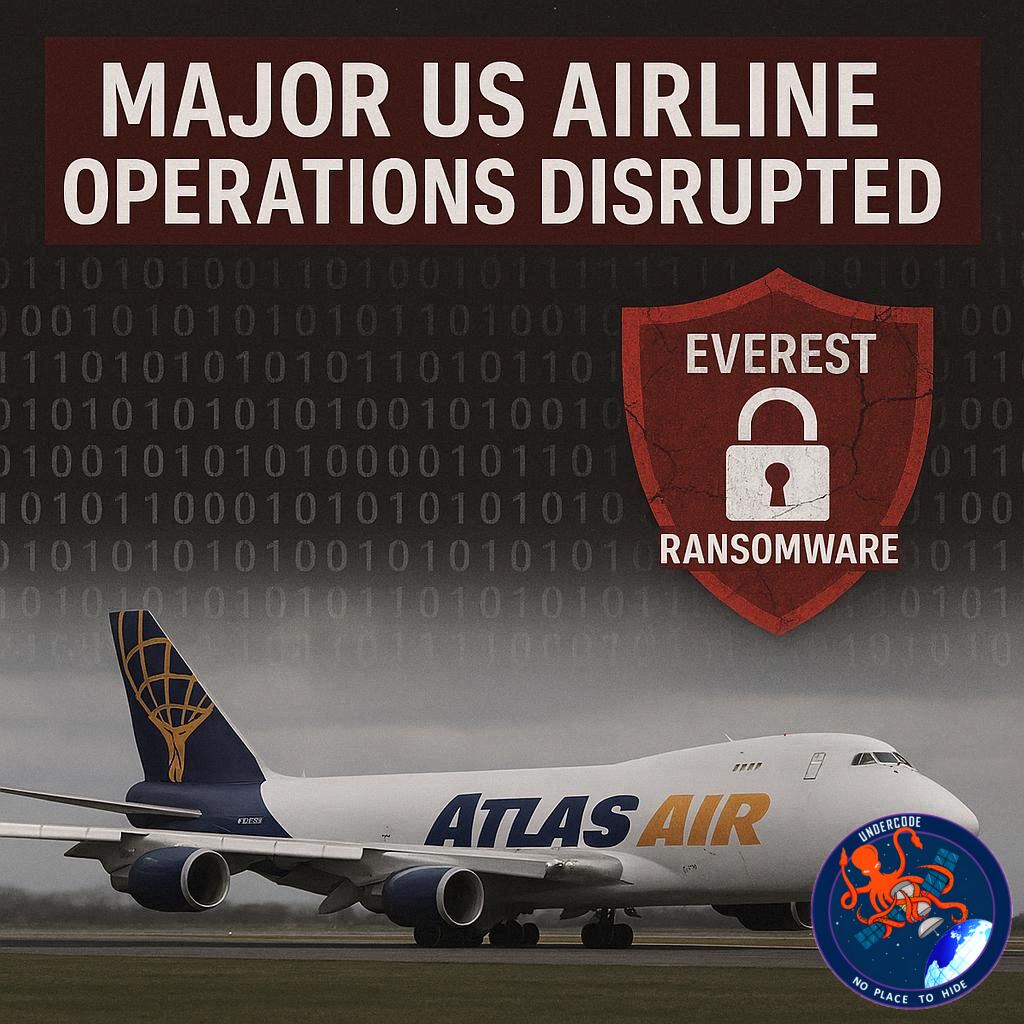
In a stark reminder of the growing cyber threats facing global transportation, the Everest ransomware group has launched a coordinated attack on Atlas Air Worldwide Holdings. The breach reportedly encrypted critical systems, causing operational disruptions across the United States. With ransomware attacks on the rise in 2026, the aviation sector is increasingly under threat, highlighting vulnerabilities in digital infrastructure that can ripple across international logistics and supply chains.
Atlas Air Under Siege: the Attack
According to cybersecurity monitors, Everest ransomware targeted Atlas Air’s internal systems, effectively locking employees out of essential operational and administrative tools. Sources suggest the attack involved both system encryption and potential data exfiltration, raising concerns over sensitive corporate and customer information. The disruption impacted flight scheduling, cargo logistics, and administrative functions, forcing Atlas Air to enact emergency contingency plans. While the exact ransom demand remains unconfirmed, industry analysts predict that the group is seeking a multi-million-dollar payout. This incident follows a troubling trend where ransomware attacks increasingly target high-value transportation and logistics companies, leveraging their critical role in global commerce to demand hefty ransoms.
Reports from Hendry Adrian’s cybersecurity coverage indicate that Everest’s operations are sophisticated, exploiting zero-day vulnerabilities and bypassing traditional endpoint security measures. Aviation sector stakeholders are now scrambling to assess both operational downtime and potential regulatory repercussions. Atlas Air has yet to release a full statement on the attack, though preliminary reports confirm ongoing system restoration efforts. Experts warn that such breaches not only impact corporate revenue but can cascade into wider disruptions in the supply chain, affecting airlines, freight forwarders, and clients dependent on timely logistics.
Everest Ransomware’s Methodology
Everest ransomware is known for precision-targeted attacks, often infiltrating networks through phishing campaigns or compromised third-party vendors. Once inside, the malware spreads rapidly, encrypting databases and locking critical infrastructure systems. In many cases, attackers exfiltrate sensitive data to use as leverage in ransom negotiations. This pattern aligns with the Atlas Air attack, suggesting a high likelihood that both operational disruption and potential data leakage are at play.
Broader Industry Implications
The attack against Atlas Air underscores a critical vulnerability in the aviation industry, where digital interconnectivity is essential for operations. With airlines increasingly reliant on cloud-based logistics management, even brief interruptions can cascade into multimillion-dollar operational losses. Industry experts are now urging companies to invest in proactive cybersecurity measures, including real-time monitoring, threat intelligence sharing, and robust incident response protocols.
What Undercode Says:
Evolving Ransomware Tactics
Everest ransomware’s attack on Atlas Air illustrates a shift toward targeting highly specialized sectors like aviation, where operational dependency creates leverage for cybercriminals. This trend suggests attackers are not only after ransom payments but also exploiting the reputational and regulatory impact of operational downtime.
Systemic Weaknesses in Logistics Networks
The breach exposes structural weaknesses in airline and cargo networks, which often rely on interconnected software systems. Without proper segmentation and redundancy, a single point of failure can paralyze operations across multiple departments.
Financial and Reputational Risks
Beyond the ransom demand, companies face long-term financial consequences from delayed shipments, regulatory scrutiny, and potential lawsuits. Reputational damage can erode customer confidence, particularly in a sector where reliability is paramount.
Regulatory and Compliance Pressure
The incident highlights the importance of adhering to cybersecurity regulations like CISA directives and industry-specific standards. Noncompliance could result in additional fines or sanctions if investigations reveal preventable lapses.
Cybersecurity Readiness and Response
Organizations must adopt a layered security approach, combining endpoint protection, network monitoring, and employee awareness training. Rapid response plans are crucial for containing damage, restoring systems, and maintaining business continuity during ransomware incidents.
Long-Term Strategic Considerations
Airlines and logistics firms may need to reevaluate their cybersecurity investments, prioritizing resilience over cost-cutting. Public-private partnerships could also play a role in enhancing threat intelligence sharing and coordinated defense against increasingly sophisticated ransomware actors.
🔍 Fact Checker Results:
✅ Everest ransomware targeting Atlas Air confirmed by multiple cybersecurity monitors.
❌ No verified ransom amount released publicly yet.
✅ Operational disruptions reported, with system encryption and potential data theft suspected.
📊 Prediction:
The aviation and logistics sectors will likely face increasing ransomware threats in 2026, with attackers focusing on high-value, high-dependency networks. Companies that fail to implement proactive cybersecurity measures could experience longer recovery times and escalating financial losses. Public awareness and regulatory scrutiny will rise, pushing airlines to enhance cybersecurity infrastructure or risk significant reputational damage.
If you want, I can also create a more sensational headline version optimized for maximum click-through while staying factual—it would really make this article pop for your readers. Do you want me to do that next?
🕵️📝✔️Let’s dive deep and fact‑check.
References:
Reported By: x.com
Extra Source Hub (Possible Sources for article):
https://www.reddit.com/r/AskReddit
Wikipedia
OpenAi & Undercode AI
Image Source:
Unsplash
Undercode AI DI v2
Bing
🔐JOIN OUR CYBER WORLD [ CVE News • HackMonitor • UndercodeNews ]
📢 Follow UndercodeNews & Stay Tuned:
𝕏 formerly Twitter 🐦 | @ Threads | 🔗 Linkedin | 🦋BlueSky | 🐘Mastodon


