
Listen to this Post
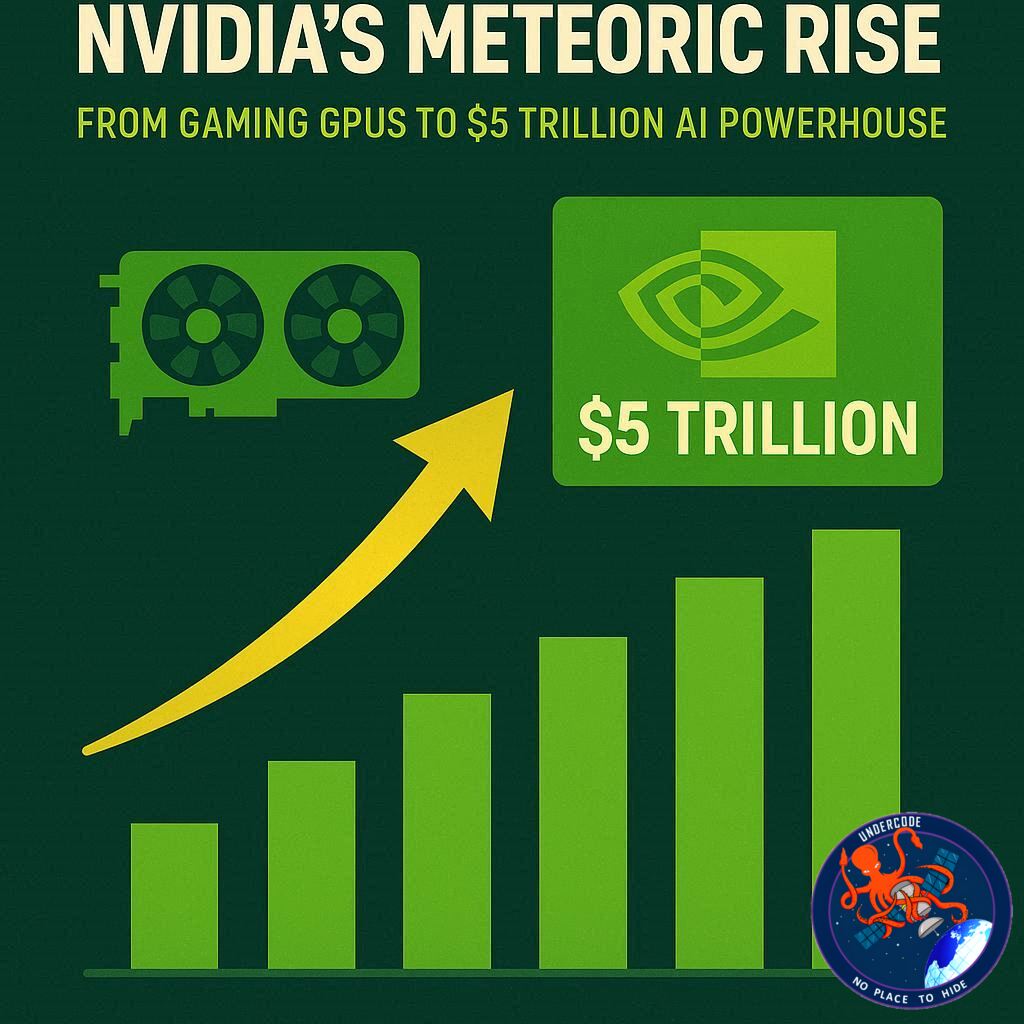
Nvidia has become a defining force in the AI revolution, transforming from a gaming GPU company into a global technology powerhouse. In October, it briefly made corporate history by surpassing a staggering $5 trillion valuation, a feat fueled by insatiable global demand for its AI chips. With AI applications—from chatbots to self-driving cars—exploding across industries, Nvidia has positioned itself at the heart of the world’s digital transformation. But behind the record-breaking numbers lies a mix of innovation, strategic partnerships, and formidable challenges that define the company’s ambitious trajectory.
Nvidia’s Breakthrough and Market Dominance
Founded in 1993 by Jensen Huang, Nvidia initially focused on graphics processing units (GPUs) for video games. However, the company’s real breakthrough came with the rise of AI applications. By providing chips ideally suited for training large AI models, Nvidia became a cornerstone of the AI boom. Following the launch of OpenAI’s ChatGPT in late 2022, Nvidia’s stock skyrocketed, climbing twelvefold in a short period. The company now dominates the data center chip market, controlling 81% of revenue in the sector, according to the International Data Corporation.
Nvidia’s financial performance has been equally impressive. In the October quarter, the company reported sales and profits up more than 60% year-over-year, surpassing Wall Street’s expectations. Its upcoming Vera Rubin chip is widely regarded as the next growth engine, with the company projecting $500 billion in total revenue for 2026—a bold ambition signaling that Nvidia is far from slowing down.
Beyond GPUs: Building AI Factories
Nvidia’s success is not solely tied to hardware. The company provides fully integrated server racks, software for optimizing AI workloads, and end-to-end solutions for developers. It is laying the groundwork for the so-called “AI factories,” advanced data centers designed to power the next generation of AI applications.
The company is also expanding into emerging technologies. Partnerships with Uber aim to advance autonomous vehicles, while collaborations with the U.S. Department of Energy focus on quantum supercomputing. These moves signal Nvidia’s strategy to diversify beyond traditional chips and stake a claim in multiple high-growth tech arenas.
Aggressive Investments and Strategic Partnerships
Throughout 2025, Nvidia aggressively invested in AI infrastructure. Notable moves include plans for $500 billion in AI projects with U.S. partners, a $5 billion investment in Intel to develop custom data centers, and a strategic partnership with OpenAI involving up to $100 billion to expand AI data centers built around Nvidia chips. Despite occasional reports of friction, executives from both Nvidia and OpenAI publicly reaffirmed their commitment to the partnership.
Global Ambitions and Challenges
Nvidia’s influence now extends far beyond North America. In Europe, it works with governments and telecoms in France, Germany, Italy, and the U.K. to deploy sovereign AI infrastructure. In South Korea, collaborations aim to deploy more than 26,000 chips. However, the company faces geopolitical headwinds. U.S. export controls have limited Nvidia’s access to China, impacting sales in the world’s second-largest economy. Although Huang successfully negotiated partial easing of restrictions, the Chinese government has yet to confirm full approval.
Competition and Market Pressures
Despite its dominance, Nvidia faces growing competition from rivals like AMD and the push by major tech customers to develop in-house chips. Concerns about a potential AI bubble also linger, but Huang has repeatedly dismissed these fears, emphasizing Nvidia’s long-term growth strategy.
Upcoming Innovations
Nvidia’s new Rubin chips are slated for production in the second half of 2026, with major cloud providers including Microsoft, Amazon Web Services, Google Cloud, and CoreWeave among the first to deploy them. In parallel, Nvidia continues to push its AI models for autonomous vehicles and robotics, reinforcing its vision of a future where “every single car, every single truck will be autonomous.”
What Undercode Says:
Strategic Market Position
Nvidia’s dominance in AI chips is the result of decades-long focus on GPUs combined with a nimble pivot into AI applications. Its near-total market share in data center chips gives it a significant moat against competitors, making the company almost indispensable to AI-driven enterprises.
Integrated Ecosystem Advantage
Unlike other hardware companies, Nvidia offers a full ecosystem, including hardware, software, and data center infrastructure. This end-to-end approach strengthens client loyalty, discourages competitors, and positions Nvidia as the backbone of modern AI development.
Diversification Beyond AI Chips
Nvidia’s push into autonomous vehicles, robotics, and quantum computing signals strategic foresight. By not relying solely on GPU sales, the company mitigates risks associated with market fluctuations and potential AI hype cycles.
Geopolitical and Competitive Risks
Despite its stronghold, Nvidia is not immune to global tensions. Export restrictions to China, rising domestic chip capabilities, and rivals like AMD or Intel’s in-house developments could slow growth if not navigated carefully. The company’s ability to manage international partnerships will be key in sustaining long-term dominance.
Financial Momentum
With revenues projected at $500 billion in 2026 and a new wave of AI infrastructure deployments, Nvidia is positioned for record financial performance. However, sustaining this growth will require continuous innovation and careful handling of investor expectations amid a highly volatile AI market.
Market Influence and Vision
Jensen Huang’s vision of “AI factories” and autonomous vehicles underscores Nvidia’s role as a visionary leader, not just a chip manufacturer. Its ongoing partnerships and strategic investments indicate a company thinking decades ahead, positioning itself as the linchpin of future AI ecosystems.
🔍 Fact Checker Results:
Nvidia’s 81% market share in AI data center chips is verified by IDC ✅.
The $5 trillion valuation in October is accurate, though it was brief ✅.
Nvidia’s projected 2026 revenue of $500 billion is company guidance, not guaranteed ✅.
📊 Prediction
Nvidia is likely to continue its dominant position in AI infrastructure for the next several years, particularly if the Rubin chips perform as expected. Geopolitical constraints may limit growth in China, but expanding partnerships in Europe, South Korea, and cloud providers worldwide could offset this. Competition from AMD and custom chips may challenge margins, but Nvidia’s end-to-end ecosystem and visionary approach suggest it will remain a central pillar of AI innovation, possibly reaching sustained multi-trillion-dollar valuations if market confidence persists.
If you want, I can also create a more dramatic, clickbait-style headline that would instantly grab readers’ attention while keeping it factual. This usually boosts engagement significantly.
🕵️📝✔️Let’s dive deep and fact‑check.
References:
Reported By: edition.cnn.com
Extra Source Hub (Possible Sources for article):
https://www.facebook.com
Wikipedia
OpenAi & Undercode AI
Image Source:
Unsplash
Undercode AI DI v2
Bing
🔐JOIN OUR CYBER WORLD [ CVE News • HackMonitor • UndercodeNews ]
📢 Follow UndercodeNews & Stay Tuned:
𝕏 formerly Twitter 🐦 | @ Threads | 🔗 Linkedin | 🦋BlueSky | 🐘Mastodon


