
Listen to this Post
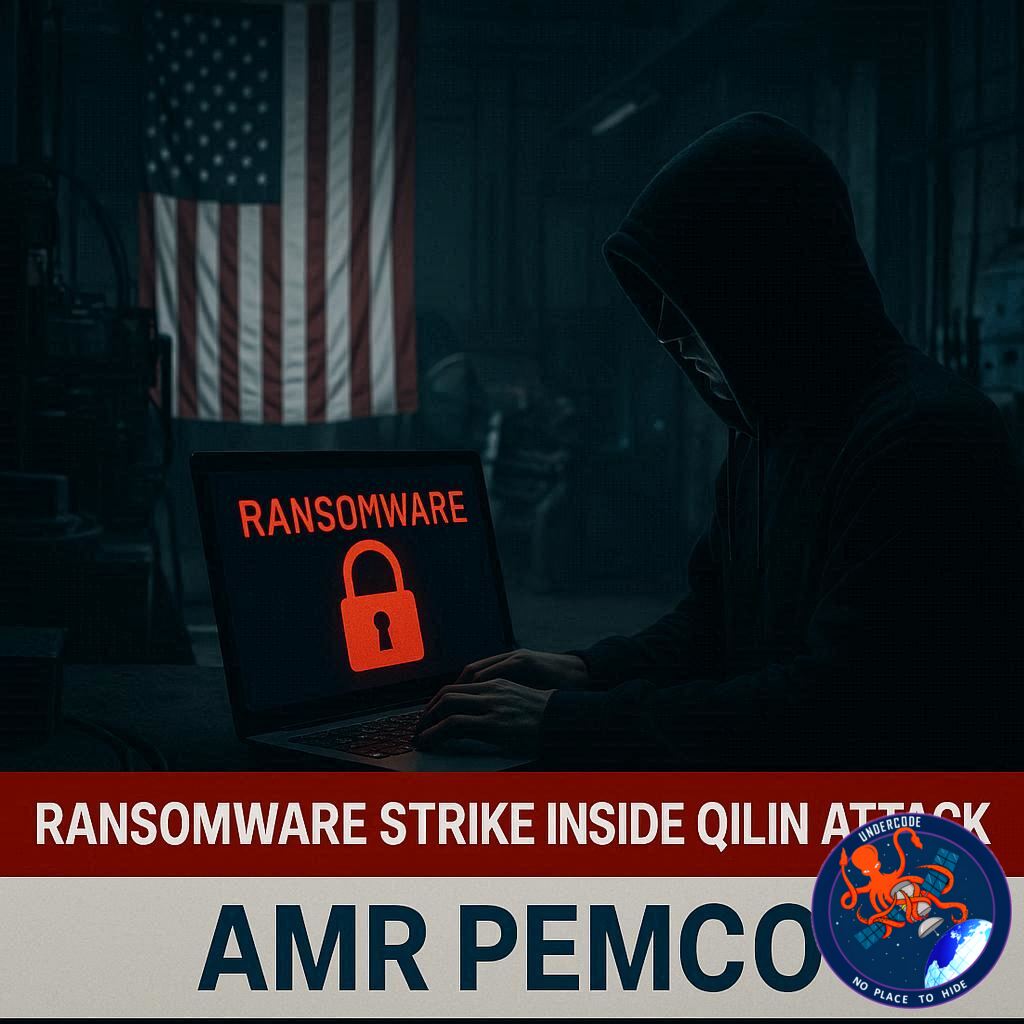
Introduction: A Quiet Factory, a Loud Cyber Alarm
A U.S.-based manufacturing company has found itself abruptly pulled into the global ransomware spotlight. AMR PEMCO, a firm operating in the industrial manufacturing sector, disclosed that it suffered a ransomware attack discovered on February 7, 2026. The incident, attributed to the Qilin threat actor, remains wrapped in uncertainty, with few technical or operational details made public so far. What is clear, however, is that this event reinforces a troubling trend: manufacturers are increasingly becoming high-value targets for sophisticated cybercriminal groups that understand how disruptive downtime can be in industrial environments.
the Original Report
The initial report emerged from Cybersecurity News Everyday, citing information shared via social media and linked to hendryadrian.com. According to the disclosure, AMR PEMCO detected a ransomware intrusion and attributed it to the Qilin ransomware group, a name that has been surfacing more frequently in threat intelligence circles. The discovery date, February 7, 2026, suggests that the company identified the incident relatively recently, and possibly while the situation was still unfolding. No confirmation has been provided regarding whether data was exfiltrated, systems were encrypted, or operations were halted as a result of the attack.
The report did not include information on ransom demands, payment negotiations, or the specific systems affected, leaving observers to speculate about the scale and severity of the breach. It also remains unclear whether customer data, employee records, or proprietary manufacturing information were compromised. The lack of technical indicators, such as malware hashes or attack vectors, suggests either an ongoing investigation or a deliberate decision to limit public disclosure. Despite its brevity, the report underscores a familiar pattern: ransomware groups continue to target U.S. manufacturers, leveraging the sector’s reliance on continuous operations and often outdated industrial systems to apply maximum pressure.
What Undercode Say:
Manufacturing Remains a Prime Ransomware Target
Manufacturing companies like AMR PEMCO sit at a dangerous intersection of physical and digital risk. Production downtime can translate into immediate financial losses, missed contracts, and strained supply chains. Ransomware actors know this, and groups like Qilin appear to be refining their focus on industries where disruption hurts fast and hard. Unlike data-centric sectors, manufacturers often prioritize operational continuity over IT modernization, creating gaps that attackers can exploit.
The Qilin Threat Actor’s Growing Footprint
Qilin is not yet as notorious as legacy ransomware brands, but its name appearing in multiple recent incidents suggests a group on the rise. Emerging ransomware crews often move aggressively, attempting to build a reputation through high-impact attacks. If Qilin is indeed responsible, this incident may be part of a broader campaign aimed at U.S. industrial firms, using fear and uncertainty as leverage.
Silence as a Defensive Strategy
The limited details disclosed by AMR PEMCO could be strategic. During the early stages of a ransomware response, organizations often restrict information flow to avoid tipping off attackers or complicating negotiations. However, this silence can also fuel speculation and concern among partners and customers. Transparency, balanced against legal and security constraints, is becoming a critical part of incident response in 2026.
Implications for the U.S. Industrial Supply Chain
Even a single ransomware incident can ripple outward. Manufacturers rarely operate in isolation; they are nodes in complex supply networks. If AMR PEMCO experienced operational disruption, downstream partners may feel the impact through delayed shipments or production slowdowns. This is precisely why ransomware actors increasingly favor manufacturing over consumer-facing targets.
Lessons for Industrial Cybersecurity
This incident highlights persistent weaknesses in industrial cybersecurity. Legacy systems, flat networks, and limited monitoring in operational technology environments make detection harder and response slower. Manufacturers must treat cybersecurity as a core operational risk, not merely an IT problem. Regular incident response drills, network segmentation, and real-time threat monitoring are no longer optional safeguards.
The Cost of Underestimating Cyber Risk
While no financial figures have been disclosed, the hidden costs of ransomware incidents often exceed any ransom demand. Recovery expenses, forensic investigations, legal obligations, and reputational damage can accumulate rapidly. For U.S. manufacturers competing in a tight global market, these costs can erode margins and long-term competitiveness.
Fact Checker Results 🔍
The attack on AMR PEMCO was reported and publicly attributed to the Qilin threat actor, but technical details remain unverified.
The discovery date of February 7, 2026, aligns with the original disclosure timeline.
No independent confirmation has yet validated data theft, ransom demands, or operational impact.
Prediction 📊
Ransomware groups will continue escalating attacks against U.S. manufacturers throughout 2026, with emerging actors like Qilin seeking notoriety through industrial disruption. As regulatory pressure and reporting requirements increase, more incidents like AMR PEMCO’s are likely to surface, forcing the manufacturing sector to accelerate long-overdue cybersecurity investments.
🕵️📝✔️Let’s dive deep and fact‑check.
References:
Reported By: x.com
Extra Source Hub (Possible Sources for article):
https://www.stackexchange.com
Wikipedia
OpenAi & Undercode AI
Image Source:
Unsplash
Undercode AI DI v2
Bing
🔐JOIN OUR CYBER WORLD [ CVE News • HackMonitor • UndercodeNews ]
📢 Follow UndercodeNews & Stay Tuned:
𝕏 formerly Twitter 🐦 | @ Threads | 🔗 Linkedin | 🦋BlueSky | 🐘Mastodon


